A ceasefire in the Iran war will deliver badly-needed relief to economies battered by the world’s worst ever energy crisis, but hopes the truce will quickly restore normal oil and gas flows from the Middle East are almost certainly misplaced.
U.S. President Donald Trump on Tuesday agreed to a two-week ceasefire, conditional on Iran pausing its blockade of oil and gas shipments through the Strait of Hormuz, the narrow waterway that typically handles about one-fifth of global oil trade. Iran’s foreign minister Abbas Araqchi said Tehran would halt counter-attacks and guarantee safe passage for vessels transiting the strait.
Get the Latest US Focused Energy News Delivered to You! It’s FREE:
How quickly the ceasefire will take full effect, however, remains unclear. Iran launched further attacks on Israel and Gulf countries shortly after Trump’s announcement, underscoring the fragility of the deal. The war, now in its sixth week, has claimed more than 5,000 lives across nearly a dozen countries and badly damaged vital regional infrastructure, including oil and gas facilities. Financial markets nonetheless welcomed the news. Japan’s benchmark Nikkei jumped 5% to a one-month high, while Brent crude prices tumbled roughly 13% to around $95 a barrel by 0300 GMT, as traders priced in a near-term easing of supply risks.
QUICK RELIEF VALVE
A temporary halt in fighting and the reopening of Hormuz would allow Middle Eastern exporters to ship significant volumes of oil that have been trapped inside the Gulf since hostilities began, offering global energy markets some immediate relief.
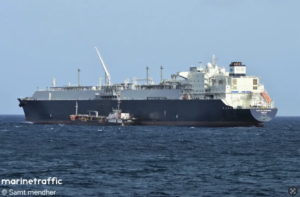
Around 130 million barrels of crude oil and 46 million barrels of refined fuels are currently floating on roughly 200 tankers in the region, according to data from analytics firm Kpler. Another 1.3 million tonnes of liquefied natural gas are also stuck on vessels awaiting safe passage.
For Asia, which relies on the Middle East for 60% of its oil and 80% of gas imports, the disruption has been particularly severe. Several countries have been forced to curb industrial output and ration fuel supplies following the abrupt cut in deliveries. The release of these trapped volumes would therefore ease the most acute pressure on Asian economies and energy systems.
But clearing the backlog of cargoes is only part of the problem. Getting tankers out of the Gulf is one thing; persuading shipowners and charterers to send vessels back in is quite another.
The unprecedented blockade of Hormuz has caused severe disruption to global shipping markets by sharply reducing tanker availability, pushing freight rates to record highs. Many shipowners are likely to remain extremely cautious about re-entering the region during what is, at best, a shaky and time-limited ceasefire, fearing their vessels and crews could once again become trapped if hostilities resume.
That caution would in turn constrain any attempt to revive normal export flows.
OIL PRODUCTION TO LAG
Middle East oil exports via Hormuz collapsed by around 13 million barrels per day (bpd) in March, equivalent to roughly 13% of global consumption, according to Kpler. While Saudi Arabia and the United Arab Emirates managed to divert some shipments through alternative routes, the disruption forced regional producers to shut in an estimated 7.5 million bpd of output in March, including 2.8 million bpd in Iraq and 1.9 million bpd in Saudi Arabia, the world’s largest exporter, according to U.S. Energy Information Administration estimates.
As matters stand, much of that production is unlikely to come back quickly.
Restarting oilfields, especially at the scale found in the Middle East, is a complex, time-consuming process that can take weeks at best. National oil companies such as and the UAE’s Adnoc are likely to hesitate before restoring output without greater clarity on the durability of the ceasefire.
Moreover, refineries, fields and export terminals damaged by missile and drone strikes will require months, and in some cases years, to repair. The region also faces a shortage of specialised equipment and skilled labour, which could further slow restoration efforts.
Crucially, without confidence that sufficient tankers will be available to load crude oil, diesel and jet fuel, producers will be reluctant to risk restarting fields and refineries only to find they cannot move the output.
LASTING SCARS
Were Washington and Tehran to agree on a permanent cessation of hostilities that led to the full reopening of Hormuz, oil and gas trade could eventually return to more normal operations. But even under that more optimistic scenario, the war is likely to leave lasting scars on global supply.
In the medium term, the oil market could remain 3 to 5 million bpd tighter over the next few years than pre-war expectations, due to damage to export infrastructure and the need to rebuild depleted inventories, according to Saul Kavonic, head of energy research at MST Marquee.29dk2902l
Unless the warring sides strike a firmer peace deal, the two-week ceasefire now taking shape risks being little more than a short-term patch in what has become an unprecedented global energy crisis. (The opinions expressed here are those of Ron Bousso, a columnist for Reuters.) Enjoying this column? Check out Reuters Open Interest (ROI), your essential new source for global financial commentary. Follow ROI on LinkedIn, and X. And listen to the Morning Bid daily podcast on Apple, Spotify, or the Reuters app. Subscribe to hear Reuters journalists discuss the biggest news in markets and finance seven days a week.
(Ron Bousso)
Share This:
More News Articles