Cross-market themes of structural fragility, exposure to external headwinds, and an ongoing need for resilience have only been amplified in early 2026.
Those same themes provide the pointers for a path of recalibration and resilience through to 2030 and beyond.
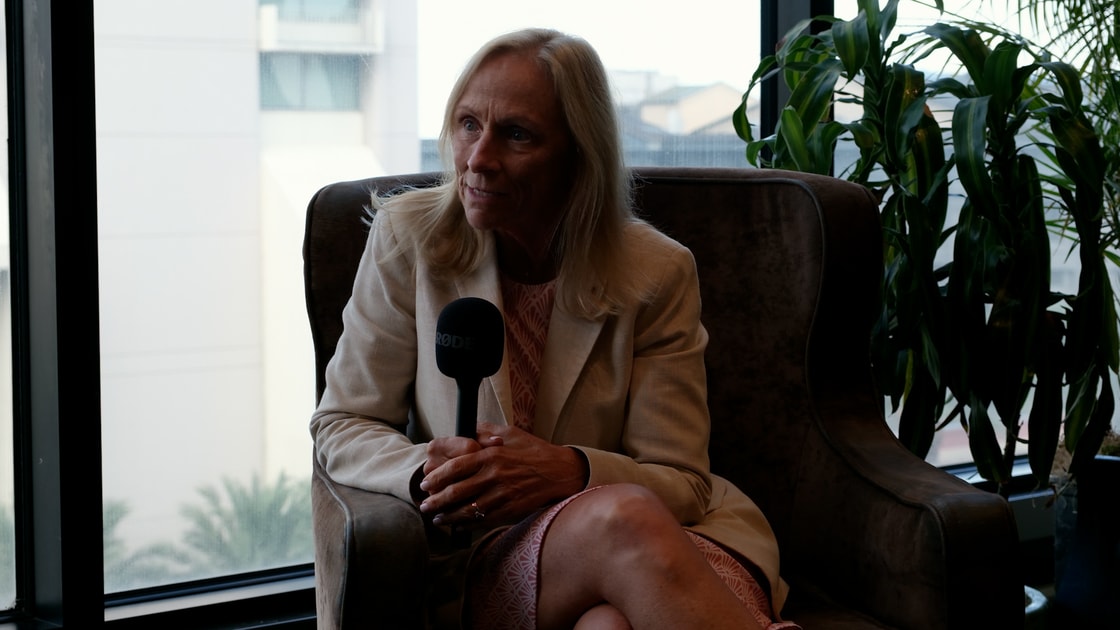
That’s the view of Rob Cockerill, Global Content Director for gasworld, in the latest instalment of the Vision 2030 series of thought leadership, as he reflects on industry performance in 2025, the escalation in conflict in the Middle East in recent weeks, and what all of these events can tell us about the road ahead.
…
With the publishing of the fiscal results of the industry’s major players in recent weeks, we have a steer on both the pathways and the fault lines that shaped the industrial gases sector in 2025.
After the onset of war in Iran, the effects across the wider Gulf region, and the effective closure of the Strait of Hormuz, we have seen a compounding effect emerge.
Cross-market themes of structural fragility, exposure to external headwinds, and an ongoing need for resilience are only amplified.
All of which provides pointers for the path ahead to 2030 and beyond.
What did the financials tell us?
The quarterly and full-year reverberations of the industry’s major players reinforced our analyses: on first glance, it’s been a more challenging year than expected for the global industrial gases business.
In truth, it’s at least 15 months now at the time of writing, if not more, with these dynamics still very much in play as 2026 got underway.
Moving targets in trade and tariffs. A relatively flat industrial engine at best. Rising costs and squeezed margins. Pockets of promising growth in some regions offset by a sense of drag in others. Geopolitics more influential than ever before, and evidently shaping the agenda more directly than ever in first quarter 2026.
In the midst of such headwinds, one must acknowledge the wins, the partnerships and the immense efforts undertaken in the pursuit of shared successes. There have been many examples across the industry, often discussed and showcased across gasworld’s platforms and international events.
In such times, it’s also about perspective and how you frame both the challenges and the opportunities. That message has surely been emboldened by the conflict in the Middle East this year and the many-splintered effects.
Framing the year: Resilience over reckoning
If this past 18 months had a single defining characteristic for the industrial gases sector, it would be resilience under pressure. Few industries are as closely tethered to the rhythms of global industry, and this year those rhythms were anything but steady.
Slower economic growth, muted industrial output in selected key markets, and persistent geopolitical and inflationary headwinds all weighed on demand. Expectations around the pace of the energy transition, once buoyant, have been tempered by reality as projects took longer to sanction and policy momentum softened in places.
Yet the story of the year gone by is not one of retreat — it is one of adaptation.
The broader macroeconomic backdrop may have proved challenging, but the industrial gases industry continued to advance in quieter, meaningful ways. Innovation continued. Incremental gains in efficiency, digitisation, plant design and gas management strengthened the industry’s long-term position.

©Shutterstock
We saw this noted in various fiscal narratives across the year and in the last quarter, as well as so many examples of this in action across gasworld’s 2025 events calendar, from CO2 Summits in Rotterdam and Denver to industrial gas conferences in Utrecht and Bangkok. Carbon capture and utilisation technologies proliferated; compression solutions and their applications evolved; cryogenic transport and storage equipment continued to push the boundaries the world over.
Critically, the sector demonstrated discipline. Capital was allocated carefully, projects were prioritised strategically and, in some instances, very publicly so, and companies showed a renewed willingness to balance ambition with realism — the hallmark of a mature, enduring industry, as we have seen so many times before.
Growth where it counts
Even in a slow-growth world, pockets of acceleration stood out. Semiconductors once again underlined their strategic importance, driving demand for ultra-high purity (UHP) and specialty gases.
One only has to look at the insights emanating from gasworld’s European Specialty Gas Summit in Utrecht last year for evidence of this. When the event returns in June this year, this time in Frankfurt, Germany, semiconductors will once again shine as the hot hub for industrial and specialty gases growth.
Electronics, healthcare, and advanced manufacturing continued to provide ballast where traditional heavy industry softened.
Regionally, the Asia-Pacific reaffirmed its role as the engine room of industrial gases growth. Investment, urbanisation, and industrial expansion across the region helped offset slower conditions elsewhere, highlighting the increasingly multi-speed nature of the global market.
Energy transition: A longer road, not a dead end
We’d have to say that 2025 also brought a recalibration of expectations around decarbonisation. Hydrogen, carbon capture, and clean energy projects progressed more slowly than many hoped – but did progress, nonetheless.
The lesson of the year may have been that the energy transition is not a straight line, but a long arc, and industrial gases remain central to its trajectory. Industrial gases will continue to underpin progress, even when momentum ebbs and flows.

©Shutterstock
The lesson of the last few weeks is that the energy sector as a whole is a long arc, with steep curvatures in given moments as supply chains and markets twist and contort in response to world events. We are still as dependent upon, vulnerable to, and needing to diversify from the same storied energy systems we’ve built our economies from.
Going the distance
For full disclosure, this column was all but published at the time of the first attacks on Iran on 28 February. The conflict required a pause in thinking, however, and a whole new focus on reporting.
We’ve seen key infrastructure damaged and/or at risk, one of the world’s most critical trade corridors effectively blocked, and markets rocked by the uncertainty cascading throughout supply chains.
Amidst that pause, it became clear, however, that the conflict ultimately converges on – and underlines – so many of the themes I wanted to convey here in this article.
What stood out most to me in the past year is not any single deal, project, or technology breakthrough — but the industry’s collective composure. In a year when expectations were repeatedly reset, the industrial gases sector resisted the urge to over-promise or overreact. Instead, it focused on what it has always done well: delivering reliability, enabling progress, and quietly solving problems at the heart of global industry.
That steady hand matters. Industrial gases rarely occupy the spotlight – this has for so long been the self-proclaimed ‘Invisible industry’ after all – yet they remain indispensable to manufacturing, to healthcare, to electronics, and increasingly to the long-term decarbonisation of the world’s industrial base. The work continues even when headlines move on.
What has stood out in first quarter 2026, against the backdrop of even bigger headlines at the hand of major conflict, is how that same steady hand will need to prevail.
Uncertainty remains, but so does opportunity. Demand fundamentals remain intact. Structural growth drivers are unchanged. The industry has proven its ability to weather uncertainty and emerge stronger, more efficient, and more focused. It will now need to do so once again, in the face of constricted supply chains, swings in (helium) supply and availability, and external pressures around energy pricing and volatility.
The conversations we are having – and still need to have – around recalibration, resilience, innovation and pragmatism feel more grounded, more constructive, and more pressing than they did a year ago – even just three months ago.
This is an industry built not for moments, but for the long-term; yet how we respond through innovation, partnership and an unwavering commitment to serving the industries that shape the modern world in the weeks ahead may help to determine the path of the years ahead. And in an uncertain global landscape, that kind of resilience may be the most valuable asset of all.
![POWER Digest [October 2026]](https://energyheadlines.com/wp-content/uploads/2026/09/ai-generated-solar-array-RAwm8e.jpeg)