By
2 min ago 3 min read
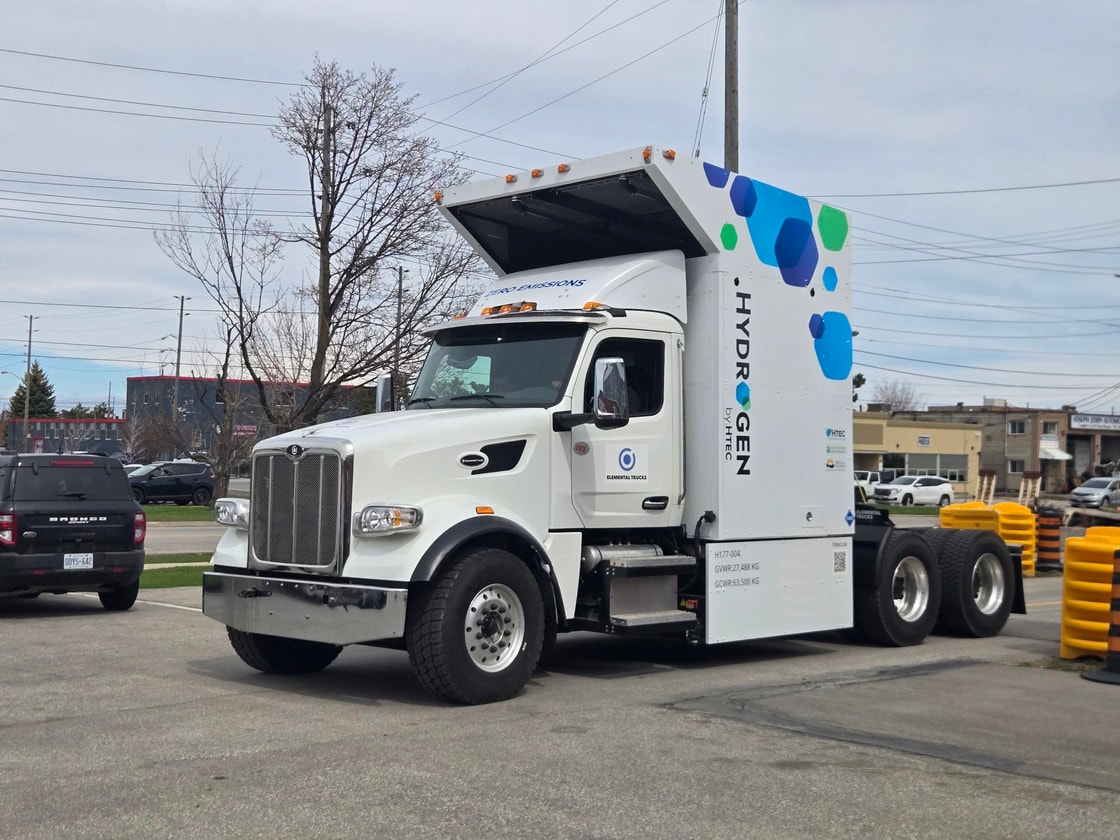
Canadian zero-emissions vehicle manufacturer Elemental Trucks (ETI) has unveiled a huge 63.5-tonne hydrogen fuel cell truck with up to 1,000km of range.
According to the firm, it will be the first commercially available hydrogen fuel cell truck of its size in North America, with its payload capacity and range comparable to diesel trucks.
The truck uses 360kW of fuel cell power and can carry up to 110kg of hydrogen fuel. Elemental did not name the fuel cell supplier for the truck but told H2 View “most” of its systems are “off-the-shelf” with the fuel cell coming from a “supplier in production.”
The reveal builds on the increasingly notable case for hydrogen in heavy-duty mobility.
While battery electric vehicles have taken a lead in the passenger vehicle sector with improvements to range and recharge times, these remain limiting factors to heavy-duty, long-haul transport.
Hydrogen, while criticised for the low energy efficiency that comes with converting electricity to hydrogen and then into kinetic energy, is seen as a route to support the heaviest applications.
However, ETI acknowledged that the truck cannot unlock widespread use.
In a statement, the firm said without a dense network of high-capacity refuelling stations and access to low-cost clean hydrogen, deployment risk is being “throttled by logistical gaps.”
“The time to invest in the fuelling network is now, to ensure Canadian trucks can power the Canadian economy,” ETI said.
Station network rollouts are no easy feat, with economics hinging on high vehicle throughput, while vehicle uptake relies on station availability.
Canada’s own network is highly dispersed, with only a handful of public stations operational in British Columbia and Quebec – a distance some five times higher than the ETI truck’s claimed range.
Tune into the conversations shaping gases and energy. The 1895 Podcast from gasworld Global Insights (GWGI) brings you weekly analysis, insights, and interviews in a laid-back, conversational style.
Each episode explores:
• The biggest industry news and talking points
• Regional, technological, and application trends
• The role of gases in today’s energy transition
Listen and subscribe on , , – or wherever you get your podcasts.