By
56 min ago 2 min read
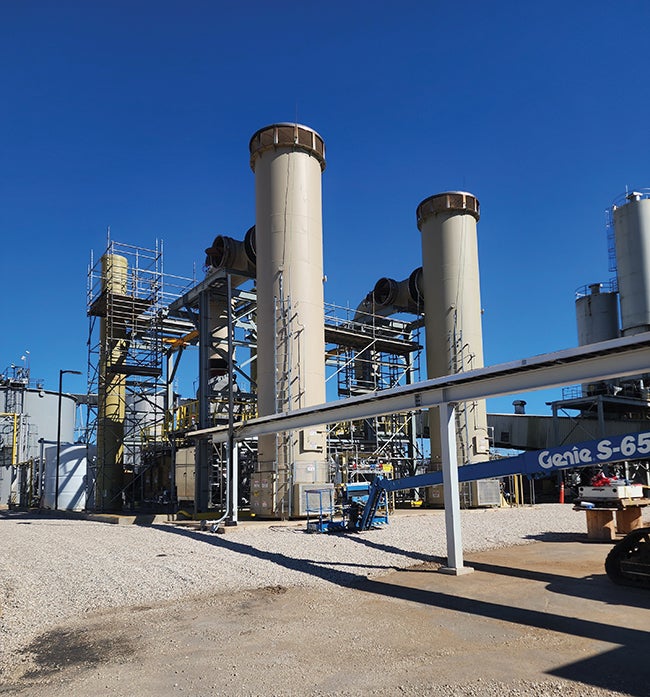
US carbon transformation company Twelve has started commercial-scale production of electro-sustainable aviation fuel (e-SAF) at its AirPlant One facility in Moses Lake, Washington, with an initial production capacity of around 50,000 gallons per year.
Believed to be the first commercial-scale facility in the US to produce e-SAF, AirPlant One uses captured carbon dioxide (CO2), water, and renewable electricity to produce hydrocarbon fuel molecules via an electrolyser.
The facility runs on 100% hydropower from the Columbia River, with CO2 sourced from local ethanol producers.
Twelve’s power-to-liquids (PtL) process produces a drop-in e-SAF compatible with existing aircraft, fuel infrastructure, and distribution networks.
The company said the technology is designed to scale across additional production sites and support future growth in synthetic fuel supply.
In 2022, global technology firm Microsoft and US aviation company Alaska Airlines jointly supported the scale-up of AirPlant One through strategic investment and fuel offtake agreements.
Alaska Airlines plans to operate regular domestic flights using e-SAF produced at the facility, while Microsoft has entered a book-and-claim SAF agreement to help reduce emissions associated with business travel.
Construction of AirPlant One began in July 2023, with Calgary-based engineering firm Vista Projects providing front-end engineering and design (FEED), procurement, and construction services.
Scott Mussbacher, CEO of Vista Projects, said, “AirPlant One is proof that a first-of-a-kind CO2-to-SAF facility can be engineered for scale… and brought to commercial operation.”
In addition to e-SAF, the facility produces e-Naphtha, a chemical feedstock used in plastic, solvent, and synthetic fibers, using renewable energy, CO2, and water.