- Data center developers are struggling to connect to the power grid and facing resistance from local communities due to concerns about power bills, land and water usage, and job threats.
- A start-up called Span.io Inc. is proposing a solution where homeowners can host small data center units in their backyards in exchange for discounted power and internet services.
- The AI industry is shifting towards distributed systems, with companies like Microsoft and Span exploring alternatives to giant single-site data centers, which can strain power grids and face years-long grid-interconnection queues.
Data center developers are struggling to connect to the power grid and, not unrelatedly, connect with people.
Perhaps half the data center projects due to start operating this year won’t arrive on time, according to Currence, an artificial intelligence analytics firm. Trouble accessing electricity is a big reason, but so is resistance. Concerns about rising power bills, along with land and water usage and AI’s threat to jobs, have more than 70% of Americans opposed to data center construction in their area. Some 75 projects worth an estimated $130 billion were blocked or delayed in the first quarter alone, according to Data Center Watch.
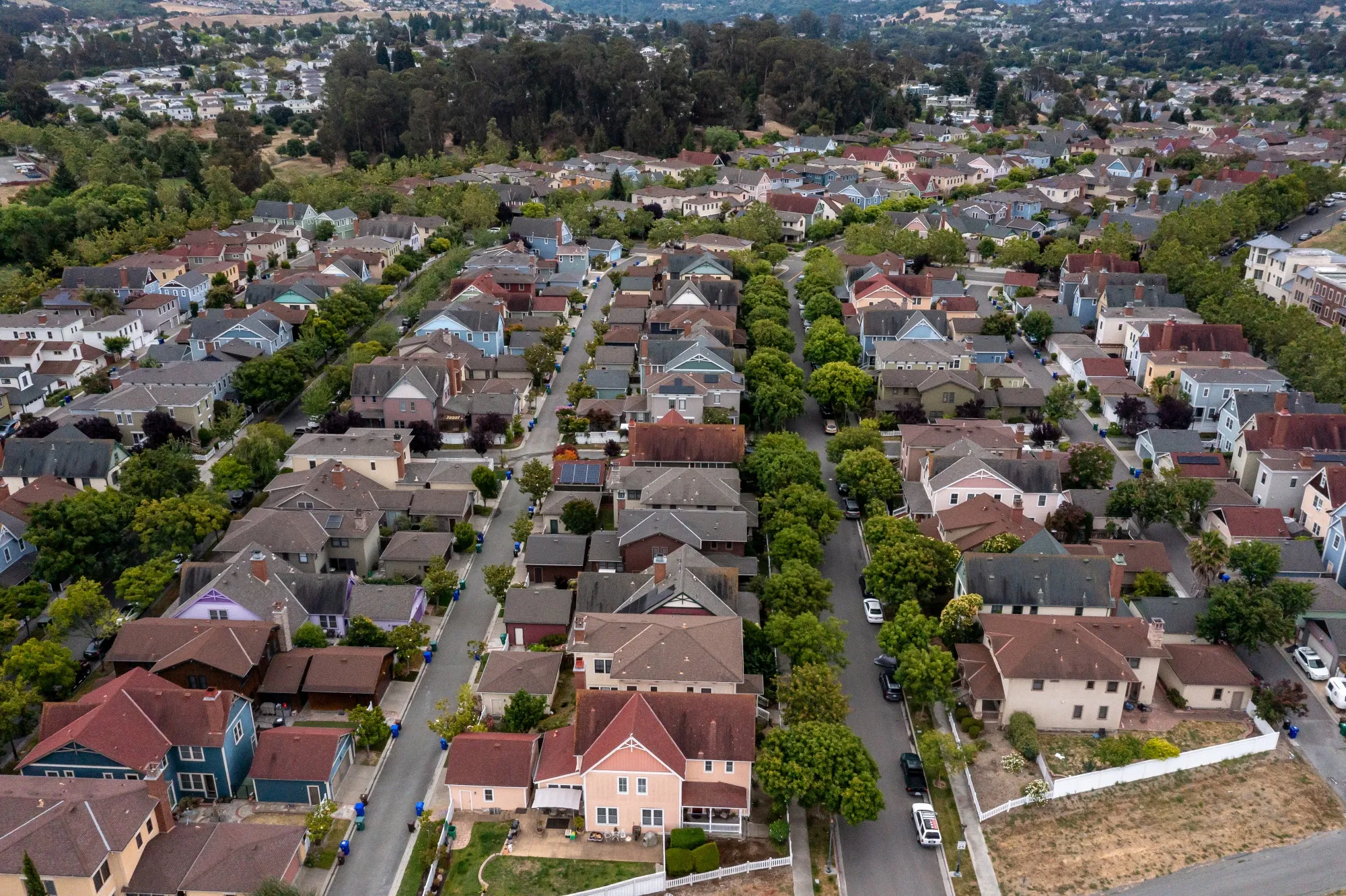
One start-up, Span.io Inc., is proposing a solution: If people are worried about giant data centers being near their homes, why not just co-opt those homes? Span’s model exchanges backyard access for discounted power and internet services, a way for AI to reward, rather than burden, households. An ingenious idea, but also a potent sign of how a technology sector used to the frictionless scaling of software is confronting the physical complications of energy.
Get the Latest US Focused Energy News Delivered to You! It’s FREE:
Hyperscalers clearly have the will, and the financing, to build giant data centers, but they can’t easily get around yearslong grid-interconnection queues and equipment backlogs. Out of more than 80 gigawatts of new data center capacity planned for 2027 and 2028, analysts at Jefferies Financial Group Inc. think 30-40 gigawatts would be a positive outcome.
One problem is that while giant single-site data center complexes are the most efficient means for training leading-edge AI models, they also present a huge strain for power grids. A 1 gigawatt data center running 90% of the time draws more electricity than the entire state of Rhode Island. By 2030, training runs for the most advanced AI models could draw between 4 and 16 gigawatts, according to Epoch AI, a research nonprofit.
An alternative is to distribute the training load across multiple sites, linked by high-bandwidth fiber. While this adds complexity, it takes advantage of different levels of power availability in different areas, without overwhelming local utilities. Microsoft Corp. has already launched such a network at scale in Wisconsin and Georgia.
Now Span wants to take that down to the micro level with its XFRA nodes. These units, housing Nvidia Corp. chips and a cooling system, attach to a house and work in conjunction with Span’s core product, a smart electrical panel that manages a home’s electrical loads to expand its usable capacity, plus a home battery. A network of 8,000 nodes would equate to a 100 megawatt data center. Span says the homeowner gets a smart electrical panel plus power and internet service at a flat, discounted fee, while the company sells computational capacity to AI developers.
Like Span’s panels, these nodes leverage untapped resources hiding in plain sight: homes already connected to the grid but which rarely use anything like their entire electrical capacity. Installing nodes in subdivisions should take months rather than years. There are drawbacks, not least relying on slower internet connections. Still, Epoch AI concludes this is not an insurmountable barrier for distributed compute. Such networks’ proximity to end-users should lend itself well to inference applications, which generate output from trained models.
Whether suburbia starts sprouting mini-data centers remains to be seen. Regardless, the concept itself says much about AI’s energy predicament.
Hyperscalers’ want power faster than utilities can respond. The result has been workarounds.
Span’s approach fits a wider pivot to distributed systems. Hybrid data centers, which use onsite generation to reduce their load on the grid, are growing fast and now represent 15% of planned capacity, according to Jefferies. At the extreme end, Space Exploration Technologies Inc.’s “Colossus” data center sites in Tennessee and Mississippi have used or are installing dozens of onsite natural gas turbines, sometimes without permits.
The latter is also a cautionary tale. SpaceX has been sued for polluting neighborhoods in Memphis, prompting the Trump administration to intervene on behalf of Elon Musk’s company, claiming its Grok chatbot — yes, that Grok — is critical to national security. It’s no doubt nice for trillionaires to have friends in high places, but move-fast-and-pollute-things is no way to foster popularity.
The AI backlash is inextricably linked to energy. Hyperscalers’ first sin was attempting to simply commandeer a grid built and paid for by ordinary ratepayers over the last century by locking up existing power plants, as Chris Ruppel, vice president of power at Keel Infrastructure Corp., writes here. That prompted a wave of new measures forcing data centers to pay for their grid needs, across 16 states and with new rules pending in another 10, according to CreditSights.
New York legislators recently passed a measure blocking data center construction altogether for one year, which awaits Governor Kathy Hochul’s signature. Federal energy regulators on Thursday directed power grids to speed up data center grid connections, but in return for developers agreeing to curtail use when needed or pay their own way for new generation or transmission upgrades.
Hyperscalers must address their social license to operate. Tax revenue for struggling rural areas helps, but the industry could also take a leaf out of Span’s book by offering locals permanent ways to help them address the issue at hand: affordability of power. As Jigar Shah, cleantech investor and former Department of Energy official, argues here, it would cost gigawatt-data center developers a small fraction of their potential revenue to install household solar and batteries at scale across surrounding areas, cutting household bills immediately and sustainably. Fixing AI’s energy conundrum isn’t just a problem of technology, it’s an obligation of equity.
This column reflects the personal views of the author and does not necessarily reflect the opinion of the editorial board or Bloomberg LP and its owners.
Share This:
Next Article
More News Articles