By
just now 2 min read
A €17m ($19.4m) Finnish research project plans to integrate methane pyrolysis technology into a future steelmaking value chain to produce clean hydrogen and solid carbon.
The Future Sustainable Electric Steel Mill (FutSteel) project, led by the University of Oulu and steelmaker SSAB, aims to develop a new steel production chain based on electric arc furnaces (EAF) and modernised hot rolling processes.
Methane pyrolysis technology firm Hycamite will contribute to the efforts by looking to integrate its hydrogen and solid carbon technology into the value chain.
The technology splits methane into hydrogen and solid carbon using an oxygen-free reaction, which Hycamite claims requires just 6 to 10kWh of energy per kilogramme of hydrogen.
The firm’s Head of Carbon Products, Niina Grönqvist, said solid carbon is needed in EAFs to provide slag foaming to improve energy efficiency, and protect electric arcs and furnace refractories.
Hycamite has not said how its hydrogen would be used in the process. Hydrogen is already used in steelmaking as a reducing and protective atmosphere in annealing, galvanising and heat-treatment furnaces, although these applications consume far smaller volumes than hydrogen-based ironmaking.
Additionally, the firm claims the efficiency of its process means that the majority of the process energy could be supplied using excess heat from a steel plant.
“Hycamite’s technology requires, in principle, only about one-eighth of the energy used in electrolysis to produce hydrogen, and much of that energy can be sourced from excess heat generated by the steel plant,” Chief Operating Officer, Laura Rahikka said.
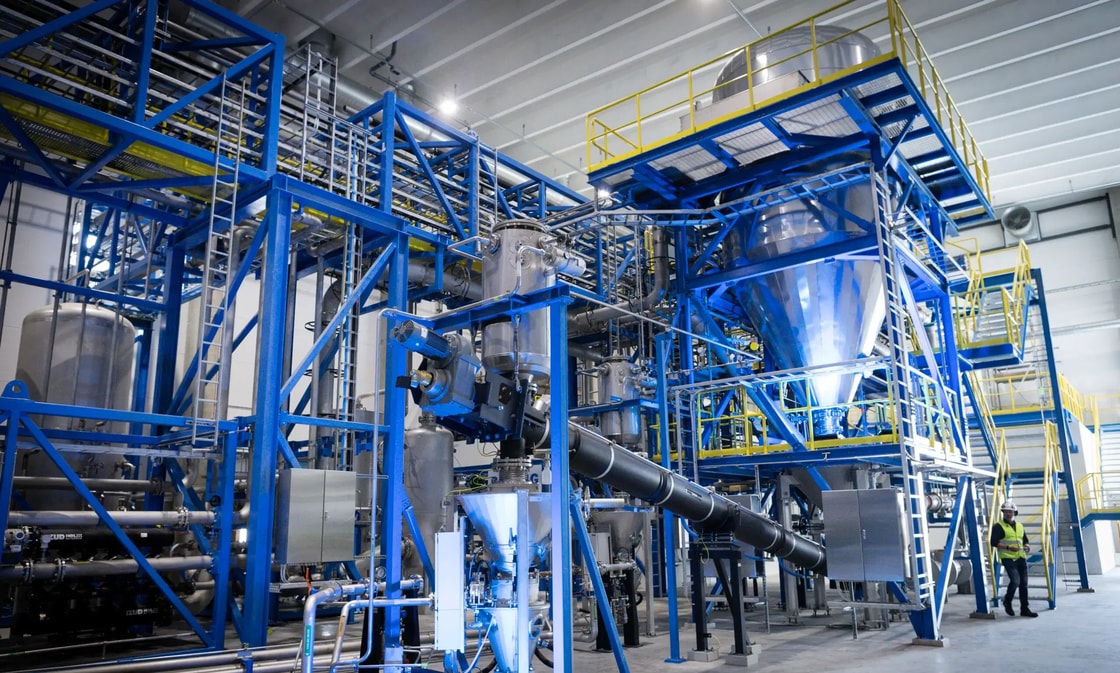
The company has been operating a customer sample plant in Kokkola, Finland, since Q3 2025, with the capacity to produce 2,000 tonnes of hydrogen and 6,000 tonnes of carbon per year.
If successfully integrated, the technology could allow future EAF-based steel plants to produce both hydrogen and a carbon product already used in steelmaking from a single process.
The project comes as European steelmakers face the dual pressures of decarbonisation and growing competition from global steel overcapacity, which has eroded the industry’s competitiveness.