By
30 min ago 3 min read
Air Products is targeting a 35% reduction in the carbon intensity of its operations by 2035 as it works towards carbon-neutral operations by 2050.
The industrial gas company announced the target in its 2026 Sustainability Report, which also expands its greenhouse gas reporting to include all material Scope 3 emissions categories.
Scope 3 emissions arise across the wider value chain, including the supply of raw materials.
Eduardo Menezes, CEO of Air Products, said, “This sustainability report…reflects changes we’re making to align our disclosures with emerging regulatory requirements.”
Europe’s Corporate Sustainability Reporting Directive (CSRD) will slowly introduce the disclosure of Scope 3 emissions over the coming years, and California has introduced climate disclosure bills that include Scope 3.
Carbon intensity objective
To achieve the 2035 carbon intensity objective, Air Products will improve operational efficiencies, procure low-carbon energy, deploy lower-carbon production technologies and increase the mix of its products and portfolio.
The report states that the development of infrastructure, markets, and supply chains will be shaped by enabling decarbonisation policies and standards.
Anil Patel, Global Director of Sustainability at Air Products, said, “Progress on industrial decarbonisation is shaped by factors beyond individual projects.”
“Our climate strategy reflects these dependencies and is designed to remain responsive as technologies, regulations and systems evolve,” he added.
Greenhouse gas emissions
Air Products GHG emissions for 2025 totalled 81.8 million tonnes of CO2 equivalent (CO2e) including Scope 1, market-based Scope 2 and Scope 3 emissions.
Scope 1 emissions, generated by Air Products’ operations reached 15.1 million tonnes of CO2e in the Americas, almost double that of any other region. Global Scope 1 emissions for 2025 reached 24.9 million tonnes of CO2e.
In Asia, Scope 1 emissions reached 7.6 million tonnes of CO2e and across Europe emissions totalled 1.1 million tonnes of CO2e.
Scope 2 emissions are indirect GHG emissions associated with purchased energy. Global Scope 2 emissions totalled 18.6 million tonnes of CO2e.
Across the Americas, Scope 2 emissions reached 3.2 million tonnes of CO2e compared to 14.2 million tonnes of CO2e in Asia.
In terms of Scope 3 emissions, the largest GHG outputs were reportedly from investments (12.6 million tonnes of CO2e), use of sold products (8.8 million tonnes of CO2e) and downstream leased assets (5.7 million tonnes of CO2e).
Air emissions (non-GHG)
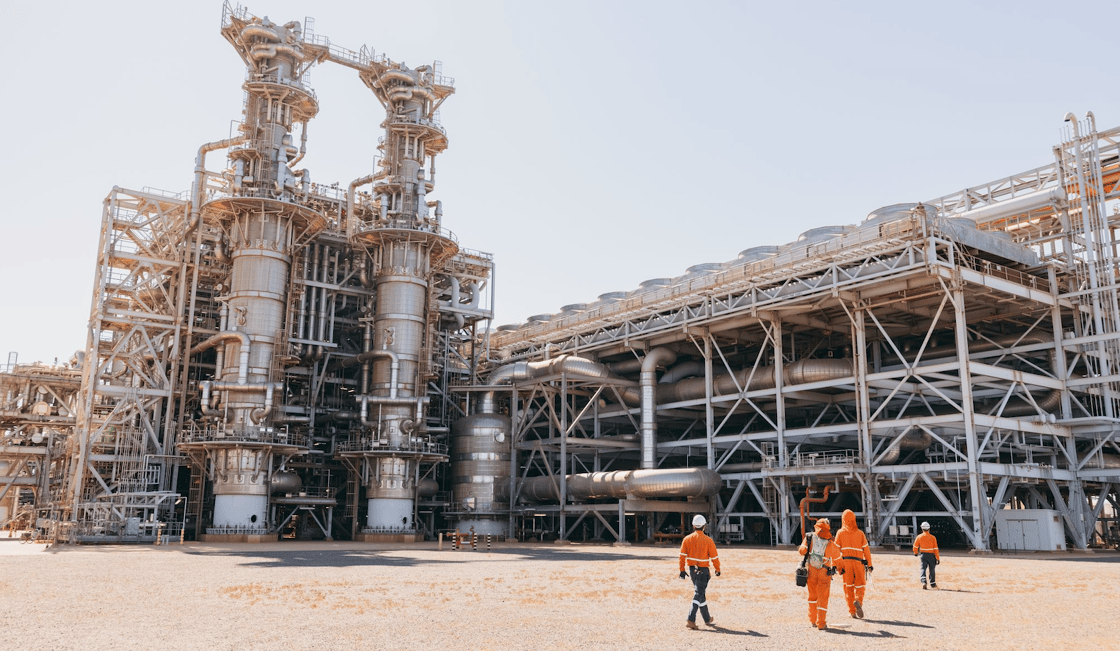
Outside of GHG emissions, Air Products also generates non-GHG emissions through combustion processes associated with its hydrogen, syngas and utility operations.
In 2024, nitrogen oxide emissions totalled 1,518 tonnes, increasing to 1,751 tonnes in 2025 – an increase of around 15%.