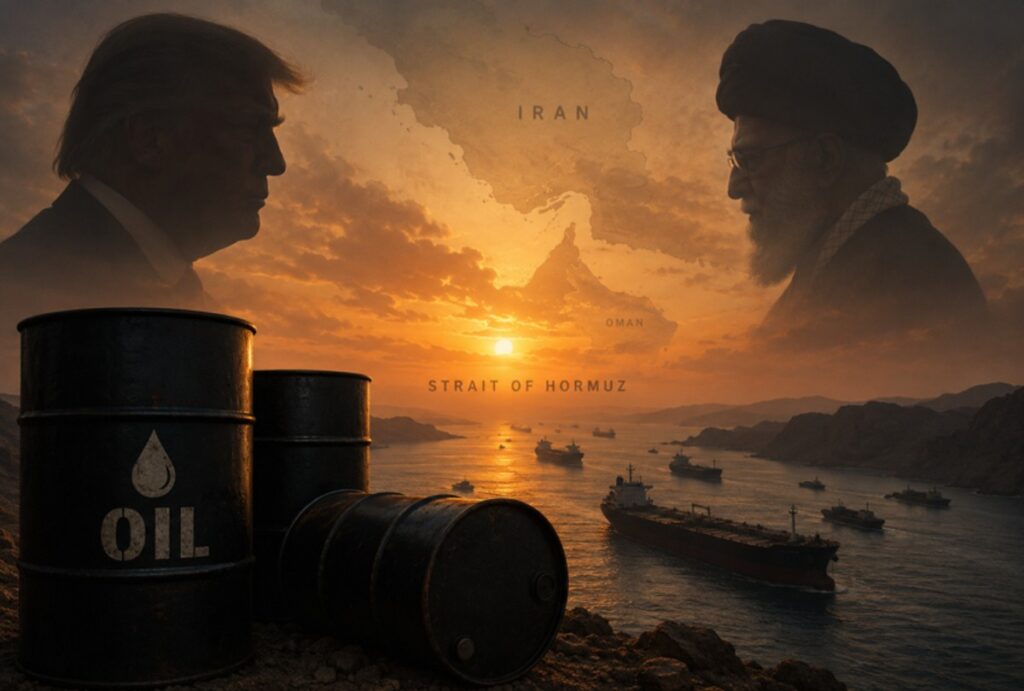
Iran said on Monday it was still in control of the Strait of Hormuz and not seeking to resume peace talks with the United States, after President Donald Trump halted a two-week bombing campaign that his top brass told him had run its course.
Following 13 successive nights of intensifying bombing that provoked Tehran to fire on U.S. bases in response, Trump halted the campaign over the weekend. Iran said it would pause its own attacks for as long as the U.S. pause in bombing endures. Trump’s decision to suspend the campaign reflected advice from his top brass that the bombing, aimed at breaking Iran’s grip on strait, had reached the limits of what it could achieve, according to a U.S. official and widespread U.S. media reports.
Get the Latest US Focused Energy News Delivered to You! It’s FREE:
The U.S. official told Reuters that military commanders had advised the president that they were running out of targets. The official said the chairman of the Joint Chiefs of Staff, General Dan Caine, had also expressed concern over the depletion of air defence weapons used to protect U.S. bases in the region.
Similar reports indicating that civilian and military aides had advised Trump to halt the campaign were carried over the weekend by the New York Times, CNN, Axios and other news outlets.
The U.S. ambassador to the United Nations, Mike Waltz, said on Sunday Trump had paused the campaign to allow room for negotiations.
But the spokesperson for Iran’s Foreign Ministry, Esmail Baghaei, said in a televised press conference on Monday that Iran had not asked to resume peace talks with the United States. The end of the U.S. bombing campaign sent oil prices tumbling in the hope that disrupted global supplies could resume flowing. Brent crude, which had briefly ticked above $100 a barrel last week for the first time since May, fell around 7.8% by mid-morning on Monday to just under $90.
But in a clear bid to signal that the U.S. bombing had failed in its objective, Tehran indicated it was still in control of the world’s most important waterway for energy markets.
IRAN STATE MEDIA SAY SIX SHIPS TURNED BACK IN STRAIT
Several Iranian state media outlets carried the same report, citing an “informed source” as saying that Iran had turned around six “offending ships” on Monday morning that had attempted to cross the strait without its permission. One of the vessels, the source said, had had “an accident”.
“As previously announced, the traffic route in the Strait of Hormuz is the route specified by Iran, and other routes are contaminated and have no way out,” the Iranian state media reports quoted the source as saying.
Trump launched his renewed bombing campaign to punish Iran after Tehran fired on ships using a route through the strait that has been promoted by the United States, which has told vessels to sail close to the coast of Oman.
Iran says ships may pass only through a channel that runs closer to its own coast, which it controls and where it intends to impose transit fees.
The two weeks of renewed U.S. bombing killed scores of people in Iran and destroyed bridges and tunnels across the south as well as military targets. Four U.S. service members were killed by Iran’s return fire against U.S. bases in neighbouring Arab states. Iran also struck civilian infrastructure in Gulf countries in what it said was retaliation for U.S. strikes on civilian targets.
Last week Iran’s Houthi allies threatened to extend the disruption to global oil supplies to a second major waterway by announcing a blockade of Saudi Arabia’s oil industry in the Red Sea, sending oil prices even higher.
The halt to the renewed U.S. bombing campaign leaves no clear indication of what leverage Washington can exert to achieve Trump’s aim to break Iran’s grip on the strait.
Washington and Tehran reached an agreement in June on a framework for talks meant to take place by the end of August to resolve major issues such as Iran’s nuclear programme. But the sides have disputed the meaning of the memorandum’s language about the Strait of Hormuz, with Washington insisting it requires Tehran to allow free travel while Iran says it grants it the authority to supervise transit.
Iran aims to formalise its control over the strait by reaching an agreement with Oman, which controls the opposite shore. A senior Omani delegation was in Tehran over the weekend discussing the future of the strait.
The foreign ministers of Qatar, the United Arab Emirates and Saudi Arabia each had held phone calls to discuss the strait with Oman’s Foreign Minister Badr Albusaidi, according to reports on Monday on Qatari, UAE and Saudi state media.
Israel’s Prime Minister Benjamin Netanyahu, who launched the war in February alongside Trump but has not participated in the U.S.-Iranian negotiations to end it, is due to meet Trump in Washington early this week.
(Writing by Peter Graff; Editing by Sharon Singleton)
Share This:
More News Articles