The SHANTI Bill – to give it its full name, the Sustainable Harnessing and Advancement of Nuclear Energy for Transforming India (SHANTI) Bill, 2025 – completed the legislative process in December. The bill brings together various elements of nuclear development under a single, comprehensive structure, to support India’s clean-energy transition and the country’s long-term objective of achieving 100 GWe of nuclear capacity by 2047.
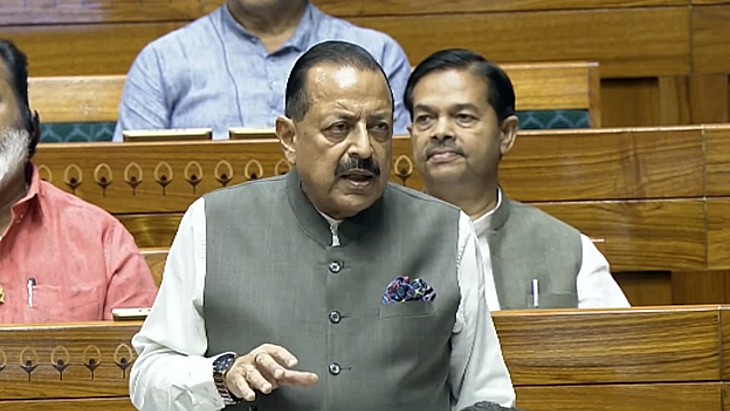
Ahead of the publication of the rules and regulations, Minister of State Jitendra Singh told India’s lower house, the Lok Sabha, on 12 August that the SHANTI Act will “enable a wider participation of both public and private sectors” in India’s nuclear energy industry.
As well as repealing the two earlier laws covering India’s nuclear energy programme – the Atomic Energy Act, 1962 and the Civil Liability for Nuclear Damage Act, 2010 – the new legislation consolidates and modernises India’s nuclear legal framework, enabling limited private participation in the nuclear sector under regulatory oversight. It also, amongst other things, grants statutory recognition to India’s nuclear regulator, the Atomic Energy Regulatory Board.
The new rules envisage the grant of a “single composite licence authorising the building, owning, operating, decommissioning” of nuclear power reactors (with the term “nuclear reactor” including “deuterium-tritium reaction based fusion reactors” as well as nuclear fission-based reactors). It also sets out the framework for licensing of, amongst other things, fuel cycle facilities; uranium and thorium exploration, mining and processing; the manufacture of radiation sources and non-power applications; and foreign and domestic trade and transportation of nuclear fuel, equipment, technology, and radioactive substances.
For foreign-designed reactors, a licence will only be granted for designs that have already been certified or approved by the regulatory body in its country of origin – with “country of origin” defined as “those countries which are self-reliant in nuclear reactor design and supply chain ecosystem whose regulatory approvals are trusted globally.” Such designs must be “operational either in country of origin or any other foreign country”. It also stipulates that “technology intended to be imported or acquired domestically does not adversely affect the interest of India, does not constitute an unreasonable risk to public health and safety and is in conformity with the national policies framed under the Act”.
For projects where a site or technology has not yet been selected, the licensing authority may grant in-principle approval, allowing an applicant to proceed with negotiations with reactor technology vendors and for acquiring the land and other necessary infrastructure.
Interested persons and organisations have until 4 September to submit suggestions and feedback on on 14 August.