Wednesday, 19 February 2025
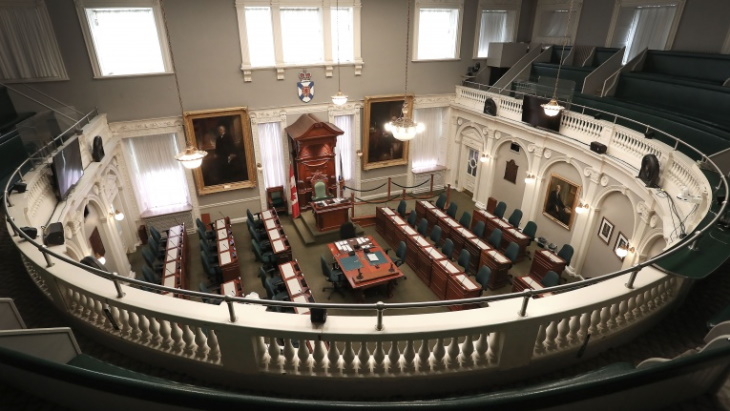
Repealing the legislated prohibition on uranium exploration and mining would allow for research to better understand opportunities for developing this resource, the provincial government said. “Having accurate data on the amount and location of uranium is the first step. It will also help protect Nova Scotians from health and safety risks. The repeal allows government research only. All industry activity regarding uranium will continue to be prohibited through an existing ministerial order that will remain in place under the Mineral Resources Act.”
Canada is the world’s third-largest uranium producer, and while uranium is on Canada’s critical mineral list, it has not been on Nova Scotia’s because of the prohibition. While uranium exploration is regulated provincially, mining and processing are regulated by the federal government through the Canadian Nuclear Safety Commission.
According to World Nuclear Association, all of Canada’s uranium is currently mined in northern Saskatchewan. While exploration has concentrated on northern Saskatchewan, new prospects extend to Labrador and Nova Scotia as well as Quebec, Nunavut Territory in the far north, and the Elliott Lake area in Ontario where uranium has been mined in the past.
However, three provinces, none of which are familiar with uranium mining, have banned uranium mining and exploration: Nova Scotia (since 1981), British Columbia (1980-87 and from 2008) and Quebec (since 2013).
“Canada is one of 31 countries that signed a declaration to triple nuclear energy by 2050 – it is a key tool in the fight against climate change,” Rushton said. “We can create jobs, make our economy more resilient to future Trump threats and join the global fight against climate change.”
Repealing the uranium exploration ban was one of five pieces of legislation proposed in the bill. The others included: amending the Petroleum Resources Act to create the potential for hydraulic fracturing to access onshore natural gas; amending the Public Utilities Act to extend Efficiency Nova Scotia’s demand-side management plan by one year while key changes to the electricity system are put in place; repealing and replacing the Agrologist Act to better address the agriculture industry’s needs; and modernising the Agricultural Weed Control Act to better protect against noxious weeds.
“Legislation introduced today, 18 February, will lift blanket bans and pave the way for dialogue to ensure natural resource development can happen safely, unlocking a path toward job creation, boosting the economy and making Nova Scotia more self-sufficient,” the government said.
“The world is demanding critical minerals and other natural resources in the transition to net-zero by 2050. Nova Scotia can be a safe, responsible and ethical source of those materials and we need to remove barriers to explore all our options,” said Tory Rushton, Minister of Natural Resources. “If we’re going to use natural resources here, we should be having the conversations about extracting them here and keeping all the jobs and economic benefits for Nova Scotians.”