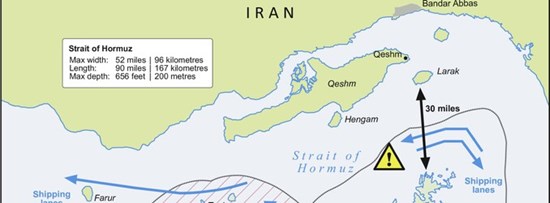
In a market update sent to Rigzone late Thursday, Rystad Energy mapped four potential U.S.-Iran conflict scenarios to assess their impact on oil prices.
These four scenarios comprise a “full resolution”, a “narrow deal”, a “stalemate”, and a “fighting restarts” pathway, and each were assigned their own probabilities of occurring, the update showed.
The first scenario of a “full resolution” and “physical normalization remov[ing]… the [price] premium” was given just a five percent chance of happening in the update, which highlighted that “a full resolution requires rapid de-escalation, binding nuclear limits, sanctions relief, and free passage”.
Under this scenario, “Asian refiners regain access to suitable sour grades, and the high margin environment lifts refinery runs”, the update outlined, adding that “product cracks normalize as Gulf refinery output and exports return, though strong initial crude intake will slow Brent’s decline”.
Rystad went on to project that, under this outcome, “governments have little incentive to refill SPRs [Strategic Petroleum Reserves] while the first export wave clears, but as the market loosens, that window becomes attractive for buying”.
“This strategic buying, combined with recovering refinery demand, provides underlying support against further downside,” it added.
A “narrow deal” scenario, spurring “managed recovery and unresolved risk” was given a 40 percent chance of occurring in the update, the highest of all the scenarios.
“The intensity of recent attacks declines in the coming days, and diplomacy again becomes the main channel of interaction,” Rystad projected under this scenario.
“An interim agreement restores trade without settling the nuclear issue or removing Iran’s maritime leverage. The path includes a geopolitical risk premium and a lag while Gulf tanks are cleared, loading programs are rebuilt, and shipping confidence is restored,” it added.
“Margins stay elevated during the transition as Asia competes for Persian Gulf sour barrels, U.S. refiners lean harder on Canadian and South American heavy grades, and Europe absorbs more light sweet crude while competing for middle distillates,” it continued.
“Strong cracks support crude demand wherever feedstock is available, with SPR refilling providing an additional source of demand once the market stabilizes,” it went on to state.
Stalemate, Fighting Restarts
A “stalemate” scenario was given a 35 percent chance of happening in the update, which pointed out that, under this path, “the world learns to trade around the threat”.
“The intensity of recent attacks declines in the coming days, but less sharply than in the narrow-deal case,” Rystad noted.
“Saudi exports from the Yanbu port remain critical here: around four million barrels per day exits the terminal, with approximately 2.5 million barrels per day continuing south through Bab el-Mandeb,” it added.
“This case assumes the route stays operational, although current threats and recent attacks keep freight and insurance costs elevated,” it continued.
Rystad went on to outline under this scenario that, “if current market flow dynamics persist and worsen, prices are likely to rise in the coming weeks given the global crude and liquids balance deficit”.
“SPR releases can cap spikes but cannot correct the crude slate mismatch. Asian refineries short of sour feedstock may cut runs even when light sweet barrels are available, preventing high margins from generating a full supply response and keeping diesel and jet cracks strong,” it added.
“Cracks would likely shift across the product slate, with lighter products weakening as strength concentrates toward the middle of the barrel. Europe and complex U.S. refiners would likely compete more aggressively for Atlantic and heavy sour barrels,” Rystad noted.
“Strategic stocks are unlikely to be refilled immediately in this scenario, making each flare-up more price-sensitive,” Rystad warned.
Finally, Rystad’s update gave a “fighting restarts” scenario, under which “two waterways close and the deficit overwhelms market buffers”, a 20 percent chance of happening.
“This case represents sustained escalation,” Rystad said.
“Negotiations collapse, direct U.S.-Iran fighting continues and broadens, and regional actors and Persian Gulf energy infrastructure face increasing spillover risk,” it added.
“Bypass flows have further downside as the Houthis close Bab el-Mandeb. Saudi exports moving south from Yanbu therefore fail to reach their intended markets, removing the main outlet that had offset lost Hormuz traffic,” it continued.
Rystad noted in the update, under this scenario, that some Yanbu barrels can move north through the Suez Canal and the Suez-Mediterranean (SUMED) pipeline but warned that this is not a full replacement.
“Fully laden very large crude carriers (VLCCs) face draft and size limitations on this route, requiring Suezmax or smaller vessels, partial loading, or additional handling through SUMED,” Rystad said in the update.
“Constraints on vessel availability, port and pipeline capacity, and freight costs – plus the diversion of barrels away from Asian buyers – mean the full volume cannot be rerouted from south to north, although European refiners stand to gain from this flow shift,” it added.
“A wide geopolitical premium is further driven by the combined physical loss across Hormuz and Bab el-Mandeb flows, compounded by refinery feedstock shortages and persistent stop-start Gulf product exports,” it continued.
“As crude and product tanks fill across the Middle East, the resulting back pressure forces deeper upstream shut-ins than in early March,” it said.
Rystad went on to state that, under this path, “refinery margins and product cracks rise sharply but fail to translate into additional supply”.
“Asian refiners cannot easily replace Gulf sour crude, while the loss of Middle Eastern diesel and jet exports tightens an already exposed product market. Strong cracks support crude purchases, but refinery economics will not fully convert into actual runs in this case,” it added.
Rystad projected that coordinated SPR releases would become likely, but said usable stocks are limited by location, crude quality, and refinery compatibility.
“Previous SPR releases have already drawn down global stocks, in some cases to minimum levels, so the market enters this phase with fewer buffers available,” Rystad pointed out.
“Meanwhile, severely elevated crude and product costs destroy demand across road fuels, aviation, petrochemicals, and price-sensitive emerging markets,” it added.
“These effects, combined with non-Gulf supply growth and limited trade adaptation, will ease crude markets through 2027,” Rystad said under this scenario.
The Bigger Question
Janiv Shah, Vice President, Commodity Markets – Oil, at Rystad Energy, highlighted in the update that “while oil flows through the Strait have fallen sharply since March, the market has so far been able to absorb the disruption through a combination of inventory drawdowns, alternative supply routes and spare production capacity”.
Shah warned, however, that the bigger question now is how long those buffers can continue to offset supply losses.
“The market is no longer pricing risk based on geopolitics alone, it is focused on the resilience of physical oil flows,” Shah said.
“If disruptions continue, oil prices are more likely to rise than they were earlier in the conflict,” Shah added.
“Much of the world’s spare production capacity has already been used, while strategic and commercial oil inventories are lower than when the war began, leaving the market with fewer buffers against a prolonged supply disruption,” Shah continued.
Shah went on to state that, as the conflict evolves, the direction of prices will ultimately depend on three factors. These are “whether crude flows into Asia can be maintained, whether refiners can adapt to a changing mix of crude grades, and how geopolitical developments unfold,” Shah pointed out.
“The probability of higher prices increases as the conflict escalates, but the magnitude of that increase will depend on how these physical market dynamics play out,” Shah concluded in the update.
Low Probability for Return to Large Scale Conflict
In an oil and gas report sent to Rigzone on Thursday by the Macquarie team, Macquarie strategists noted that the reintroduction of geopolitical risk premium had driven the recent oil price rally, “along with a short squeeze propelled by historically high short interest prior to the ceasefire’s collapse”.
“Although kinetic exchanges are not as telegraphed and choreographed as they were in March through May, we are still assigning a medium probability of modest escalation from here but a low probability for a return to a large scale conflict, absent a serious miscalculation by either side,” the Macquarie strategists added in the report.
In a statement sent to Rigzone late yesterday, Ian Solis, Data Analyst, Tech/Maritime-Ops at Wood Mackenzie, said, “for months, the market treated Yanbu as the answer to Hormuz risk”.
“The problem is that Yanbu has its own chokepoint. If Bab al-Mandeb comes under sustained disruption from a declared Houthi naval blockade, Asia stands to lose a major crude supply artery,” he warned.
“What looked like diversification was in reality a shift from one strategic bottleneck to another,” he went on to state.
Yanbu
Wood Mackenzie noted in its statement that Saudi Arabia redirected virtually all crude exports through its East-West Petroline to Yanbu on the Red Sea following the closure of the Strait of Hormuz in late February, “reaching a peak of approximately 4.07 million barrels per day in March”.
The company added, however, that, by June, “those volumes had declined to approximately 2.39 million barrels per day – a 41 percent reduction from peak, according to Wood Mackenzie vessel tracking and cargo data”.
Wood Mackenzie highlighted in the statement that, in March, 86.7 percent of Saudi liftings originated from Yanbu,” representing 121.9 million barrels across 77 cargoes at an average of approximately 4.07 million barrels per day”.
“That concentration rose to 93.6 percent in April, 94.3 percent in May, and 98.6 percent in June, with only a single cargo of approximately one million barrels clearing the Gulf at Ju’aymah during the month,” it added.
“Despite the near-total concentration of exports through Yanbu, volumes have declined steadily from the March peak,” it continued.
“By June, Yanbu loadings had fallen to approximately 2.39 million barrels per day – a 41 percent reduction from the March peak and a 66 percent decline from Saudi Arabia’s January total export level of approximately 7.96 million barrels per day across both Gulf and Red Sea terminals,” it said.
Wood Mackenzie went on to state that the destination profile for Saudi Red Sea crude in June and July reflects a clear shift toward South and East Asian markets.
“Of recorded cargoes, 11 were directed to Ain Sukhna in Egypt for onward pipeline movement, five to Malacca, four to Karachi, three each to New Mangalore and Sikka in India, and two each to Ulsan and Yeosu in South Korea and Yokkaichi in Japan,” Wood Mackenzie highlighted.
“No direct European crude deliveries were recorded from Saudi Red Sea terminals during this period,” the company added.
“Refined product flows from the region have continued at reduced levels. Wood Mackenzie’s Global Refined Waterborne Products tracking recorded 171 MEG-origin product cargoes in June and July, including jet fuel deliveries to Pembroke in the United Kingdom and Le Havre in France and ULSD movements to Constantza in Romania,” it continued.
“Four product cargoes loaded at Jubail on the Saudi Gulf coast in early July, indicating limited commercial passage for smaller vessels,” it went on to state.
To contact the author, email