EU member states should reconsider plans to decarbonise gas-fired power with carbon capture and storage (CCS), amid high costs, weak project performance and limited deployment, according to a briefing from the Institute for Energy Economics and Financial Analysis (IEEFA).
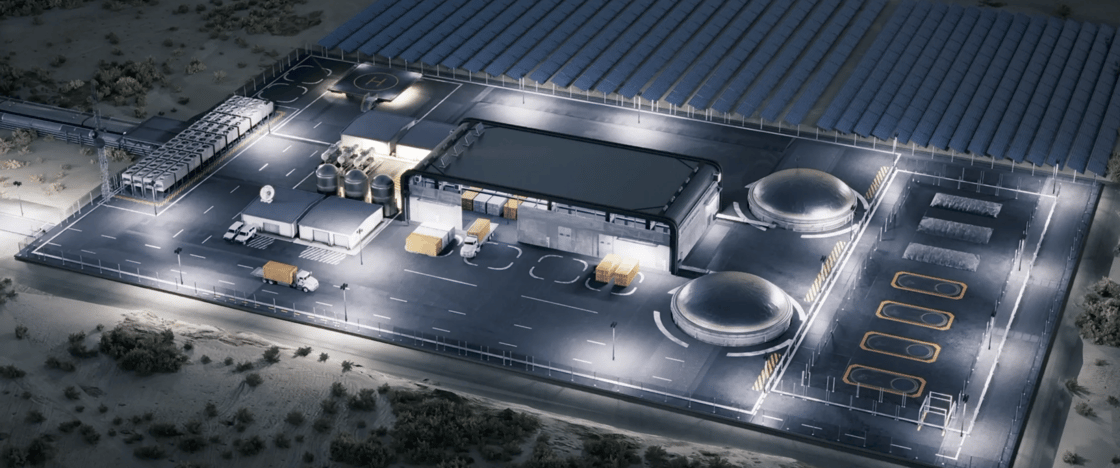
The briefing highlights £23bn ($31bn) in subsidies for Net Zero Teesside, a UK project aiming to be the world’s first gas-fired power station with CCS.
The project is expected to deliver less than 3% of the UK’s 2050 CCS target and will largely be funded by electricity consumers.
The renewables-leaning IEEFA noted that Europe has no successful CCS projects attached to gas-fired power plants and previous efforts in the UK were cancelled because of high cost and poor performance.
“Substantial subsidy requirements and underperforming pilot projects mean CCS with gas power is a high-risk strategy for EU countries,” said Andre Reid, an IEEFA energy finance analyst and author of the briefing.
The European Commission’s 2024 Industrial Carbon Management Strategy does not exclude CCS for power generation and leaves the door open for Member States to use the technology for gas power plants.
“EU Member States should approach the technology with caution, as it may divert resources away from more cost-effective and technically proven renewable energy solutions,” said Reid.
IEEFA estimates that CCS costs for the power and heat sector in Europe are more than €150 ($175) per tonne of CO2, including €64 ($75) per tonne for capture and €88 ($103) per tonne for transport and storage.
This is around double the current EU Emissions Trading System price of €76 ($89) per tonne.
“Assuming the EU ETS price remains at similar levels over the coming years, there is little economic incentive for infrastructure owners to apply CCS without subsidies,” noted Reid.

A map of the Net Zero Teesside project ©NZT Power
A separate 2022 IEEFA review also found that many projects underperform. Out of 13 operating global CCS projects, most captured below design levels of 90%, while some failed outright.
Even if economics worked, delivery is slow. Projects often take 10 to 15 years to develop. This is made worse by the lack of an operational CO2 pipeline network in the EU.
“There are potential transport projects linking to storage sites, albeit these projects remain at the early stages of planning,” explained Reid. “Until the EU ratifies international agreements, exporting CO2 to potential storage sites in Norway or Denmark is uncertain.”
As of March 2025, there were 18 proposed gas power CCS projects across Europe. Most involve retrofits or new builds with integrated capture.
Of these, 14 have disclosed capacity, totalling around 27 million tonnes of CO2, according to the International Energy Agency (IEA) CCUS Projects Database.
The UK accounts for the vast majority of activity, representing 92% of planned capture across 15 projects.
Given these constraints, some EU countries may look to hydrogen as an alternative route to decarbonise gas-fired power.
But this remains a costly and relatively early-stage option. On a levelised cost of electricity basis, hydrogen-fired power can be up to ten times more expensive than gas plants equipped with CCS, largely due to high fuel costs.
“The cheapest way to decarbonise gas power stations is to reduce the need for them – through renewables, energy storage and stronger grids,” said Reid.
However, energy system models still point to a role for dispatchable low-carbon power. The IEA projects gas with CCS could account for up to 10% of global electricity generation by 2050 in net zero pathways.