Wednesday, 25 June 2025
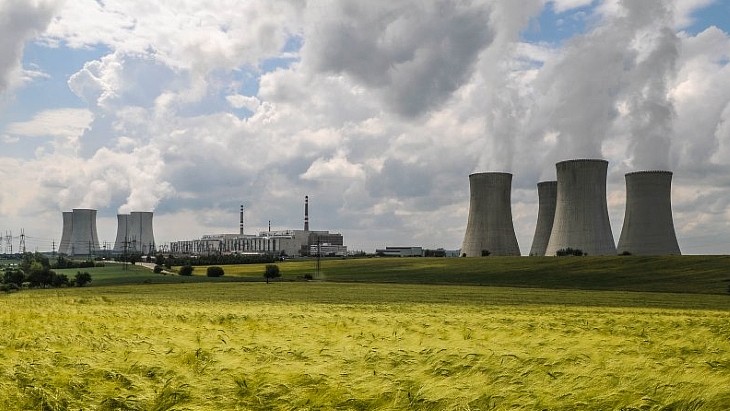
The Czech Republic is planning new nuclear capacity and in July last year announced Korea Hydro & Nuclear Power (KHNP) was the preferred bidder, ahead of EDF. The KHNP bid was said to be for around CZK200 billion (USD8.6 billion) per unit, if two were contracted. France’s EDF brought a case to the Czech competition authority challenging the tender process, which was dismissed in April on the basis that the tender was run under a security exemption, so did not fall within the competition authority’s remit.
That decision cleared the way for the planned signing of the official contracts with KHNP on 7 May. However EDF succeeded in securing a last-minute court injunction in a Czech regional court on 6 May to stop the contract being signed until its case relating to the tender process – whether the competition authorities should be able to consider EDF’s arguments relating to it – had been heard in court.
In response, the project development company Elektrárna Dukovany II and KHNP both appealed to the Czech Supreme Administrative Court and succeeded in getting the injunction lifted, before signing the contracts for the new nuclear earlier this month.
The regional court in Brno has now heard the substance of EDF’s argument that the competition authorities should have been able to consider its objections to the tender process. Because of the interest in the case, a limit was imposed of 20 members of the public to be allowed into the hearing.
The Brno regional court’s decision has been reported in a variety of Czech media outlets, including which said the court “sided with the Competition Authority, which had rejected EDF’s objections, stating that since the selection process relied on a national security exemption, formal objections were not allowed under Czech law”. It is possible to appeal against this decision, although at the time of writing there has been no comment from EDF.
EDF’s objections to the tender process include the belief that the KHNP offer price and the inclusion of a guarantee that the construction would not be delayed or become more expensive, would be “unfeasible without illegal state aid given the prices in the nuclear industry”. EDF says that if their rival bidder had state support it would breach European Union rules. As well as the court action in the Czech Republic, the European Union is conducting a preliminary review “to assess whether potential foreign financial contributions received by the Party (KHNP) constitute foreign subsidies and, if so, whether those foreign subsidies distort the internal market with respect to the project”.
KHNP rejects that case and welcomed the supreme court’s decision earlier in June to dismiss the regional court’s original injunction, saying it reaffirmed “the integrity and transparency of the Czech Republic’s tender process and clears the way for the timely advancement of this strategically important project”.
The Dukovany II Power Plant (EDU II) project company said earlier this month that the tender for the supplier of the new nuclear units “was carried out in all phases in a fully transparent manner and under fair conditions”. The Czech government says that according to the “expert opinion of the Ministry of Industry and Trade, the EPC contract with the company KHNP was not subject to the Regulation on Foreign Subsidies. This was due to both the nature of the contract itself and the fact that the tender procedure had been initiated before the effective date of this Regulation”.
Nuclear power in the Czech Republic
The Czech Republic currently gets about one-third of its electricity from the four VVER-440 units at Dukovany, which began operating between 1985 and 1987, and the two VVER-1000 units in operation at Temelín, which came into operation in 2000 and 2002.