The debate over just how much became heated when a Chinese company said it has a low-cost AI model that could upend the sector’s energy needs.
DeepSeek created a global stir after releasing information that said the company’s DeepSeek-V3 required less than $6 million worth of computing power from Nvidia H800 chips. The company’s AI Assistant, which is powered by DeepSeek-V3, already has surpassed rival ChatGPT to become the top-rated free application available on Apple’s app store in the U.S.
COMMENTARY
The news brought a market rout for chipmaker and AI leader Nvidia, which lost $589 billion in market value on Jan. 28. It also “calls into question the significant electric demand projections for the U.S. [as] AI represents ~75% of overall U.S. demand forecasts through 2030-35 in most projections,” according to a note Monday from investment bank Jefferies’ power and utilities research team.
How much electricity demand could be curtailed by an AI model using significantly less computing power? Researchers are scrambling for an answer, but DeepSeek’s reported efficiency improvements at least suggest that forecasts of exponential power demand growth may need to be redone.
Jefferies in its note wrote that the DeepSeek news would threaten “the bull thesis on independent power producers and most integrated utilities [that] is entirely dependent on data centers.” U.S. utilities and energy companies involved in the data center space also saw their stock prices take a hit, as did shares of advanced nuclear technology companies including NuScale and Oklo.
The Jefferies’ note also said that “a slowdown in data center projections … would have an adverse impact on the higher premium utilities that investors expect to increase rate base.” But the bank also thinks Monday’s market selloff was overblown, calling DeepSeek’s launch “part of an ongoing evolution, not revolution” in the AI and software markets.
Concern, or Opportunity?
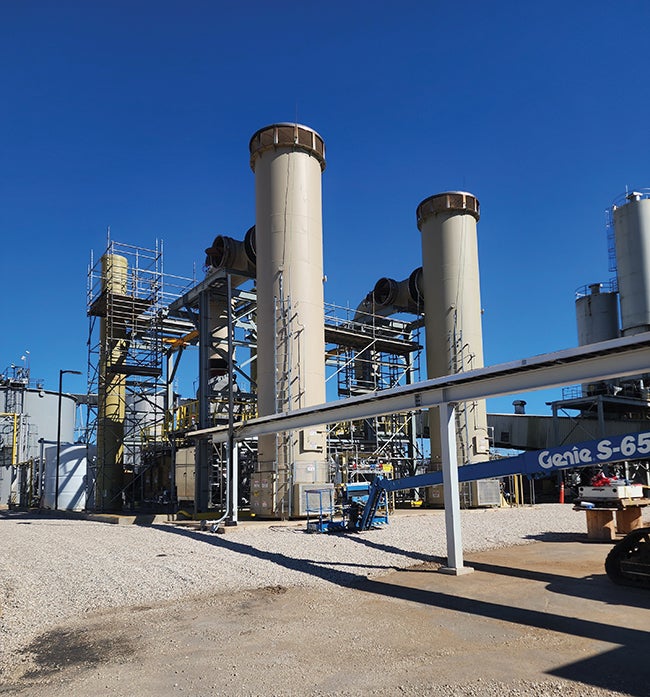
Should be worried? The answer likely is somewhere in between. Energy majors outside of the generation space continue to bet on data centers. Chevron, the second-largest oil and gas company in the U.S., has announced it is working with investment firm Engine No. 1 on a plan to build natural gas-fired power plants that would directly supply data centers.
Engine No. 1, based in San Francisco, California, is known for winning a proxy battle against Exxon Mobil in 2021. Interestingly, a 1.5-GW gas-fired power plant that would serve data centers.
Chevron and Engine No. 1 said they have ordered equipment and looked at sites that could host power plants and data centers, and said a first facility could be operating by year-end 2027.
“Artificial Intelligence is one of the most important technological breakthroughs in recent history, igniting productivity gains across our global economy,” wrote Mike Wirth, Chevron’s chief executive, in a social media post. “Today, Chevron announced a joint development with Engine No. 1 and GE Vernova to help meet the demand for scalable, reliable power solutions to enable advancements in Artificial Intelligence. The partnership will work directly with customers to develop power generation that is dedicated to and co-located with data centers. The power generators will leverage Chevron’s natural gas capabilities and utilize turbines manufactured by GE Vernova.”
The companies jointly said they expect to build 4 GW of gas-fired generation to supply data centers, and could potentially develop more capacity. Said Wirth, “The projects, which will be managed by our Chevron New Energies organization, will also be designed with flexibility to integrate lower-carbon solutions, such as carbon capture and storage and renewable energy sources.”
Chris James, founder and chief investment officer of Engine No. 1, in a statement said, “Energy is the key to America’s AI dominance. By using abundant domestic natural gas to generate electricity directly connected to data centers, we can secure AI leadership, drive productivity gains across our economy and restore America’s standing as an industrial superpower. This partnership with Chevron and GE Vernova addresses the biggest energy challenge we face.”
Data Center Deals
Two recent announcements highlight the interest for energy companies in the data center space. Nuclear power giant Constellation earlier this month said it was , in large part to acquire Calpine’s extensive fleet of gas-fired power stations. NextEra Energy, which has a current portfolio of about 1.6 GW of gas-fired generation, last week said it .
The past year was filled with announcements of technology companies securing power purchase agreements for their AI efforts, across , , , and even . President Donald Trump on Jan. 22 announced an AI joint venture, called Stargate, that could include $500 billion in investment from companies such as OpenAI, Oracle, and SoftBank. The dollars for data centers included a suggestion from Trump that they could be powered with “good, clean coal.”
Trump, even before taking office, in early January announced that Damac Properties, a company controlled by Emirati billionaire Hussain Sajwani, would make at least a $20 billion investment to build data centers in the U.S. That followed a pledge in December from Japanese billionaire investor Masayoshi Son, who during an appearance with Trump said he would invest $100 billion in U.S. projects. Blackstone, the global investment management company, in an October note said it estimates the U.S. would see $1 trillion invested in data centers during a five-year stretch, with another $1 trillion coming from international investors.
Thomas Byrne, CEO and co-founder of New York-based CleanCapital, a renewable energy investment firm, provided POWER with his insight into what that means for the U.S. energy sector, and renewable energy in particular.
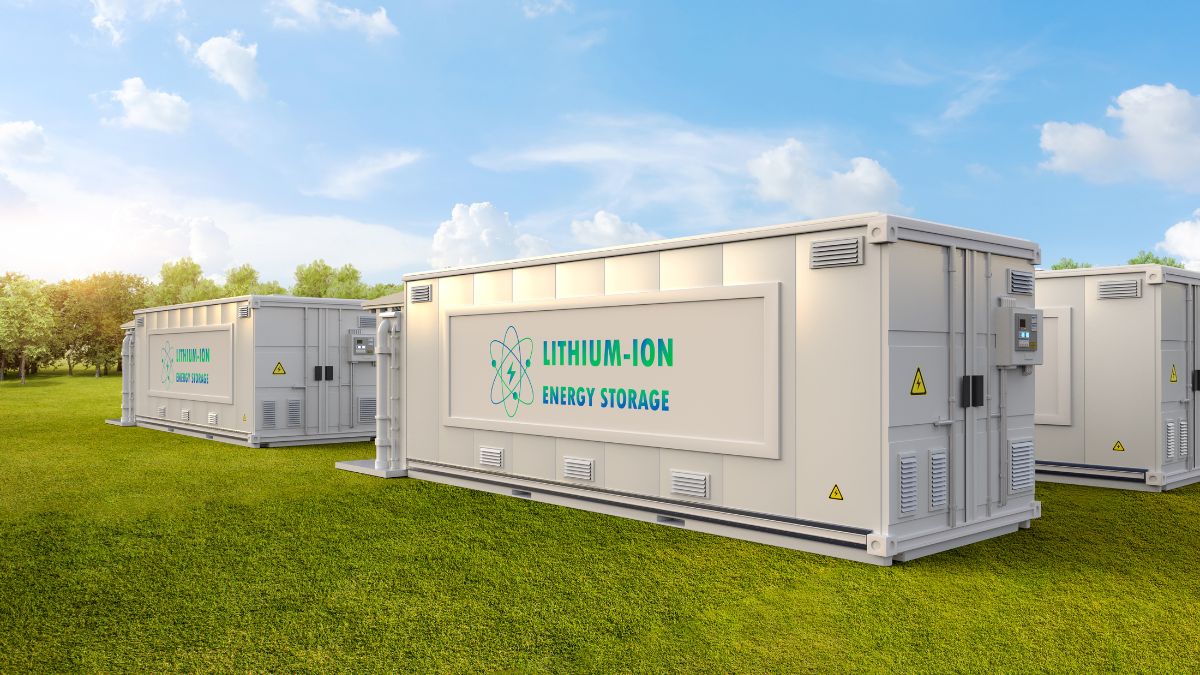
“Trump’s announcement of a $20 billion investment in data centers will be accompanied by immense new energy needs,” said Byrne. “The only way to support such load growth in such a short time is by building more clean energy, specifically solar and energy storage.
Byrne continued: “Right now, over 2,500 GW of clean energy generation capacity is backlogged in interconnection queues across the country, the majority of which is solar and energy storage. Our industry is already operating at a breakneck pace, creating scalable and reliable clean energy solutions ready for deployment but roadblocked by permitting and bureaucratic delays. As the new administration aims to attract more investments like this one—and fulfill its promise of lowering the cost of energy by half in 18 months—it must prioritize our energy infrastructure; you cannot have one without the other.”
Enter VPPs
Mathew Sachs, senior vice president, Strategy & Product, for CPower, said data center demand also can be served by virtual power plants, or VPPs. Sachs told POWER: “The No. 1 driver for VPPs is going to be load growth driven by computing and facility load for AI and data centers. AI is like a modern-day Manhattan Project. It’s become imperative for the U.S. to lead, for both security and economic reasons. Given the security concerns, we would not be surprised to see the federal government get involved to ensure there’s enough power for AI.”
Sachs added, “Wherever the supply comes from, we will have to deal with transmission and distribution constraints within the existing grid infrastructure. However, we can’t rapidly build out infrastructure, so we’re going to have to rely on resources we already have in the near-term. That means turning to VPPs, which can meet increases in demand now.”
Wherever power demand from data centers ultimately lands, analysts who have spoken with POWER agree it will create both opportunities and challenges for electric utilities and grid operators. Nick Schweissguth, director of Product and Commercial Enablement at LiquidStack, a company that manufactures advanced liquid cooling solutions for data centers, told POWER: “AI will strain the power grid, spurring new data center builds in unexpected locations. The power grid is bracing for an unprecedented challenge as AI data centers’ appetite for power threatens to overwhelm existing infrastructure. This energy crisis will spur action from both utility companies and data center operators.”
Schweissguth said, “Utility companies will embark on massive infrastructure upgrades to meet surging demand, from advanced energy storage to smart grid solutions. Data center operators will adopt a ‘follow the power’ strategy, extending and diversifying new-build locations far beyond traditional locales.”
Some analysts in the equities space said the DeepSeek model, if proven, could create more interest in development of AI infrastructure, and bring more investment from U.S. tech groups and others. J.P. Morgan Wealth Management’s Global Investment Strategy team in a note Monday wrote, “Jevons Paradox states that increased efficiency can lead to increased consumption of a resource. Lower costs for AI models could lead to faster adoption by corporations and households.”
—Darrell Proctor is a senior editor for POWER.