(Bloomberg) — Millions of barrels of crude oil continued moving through the Strait of Hormuz over the weekend despite Iran’s announcement that it had closed the critical waterway, highlighting growing uncertainty over the actual status of the world’s most important oil transit route.
Vessel-tracking data showed several laden supertankers transiting Hormuz on Saturday and Sunday, carrying crude from Saudi Arabia, the United Arab Emirates and other Gulf producers. Additional tankers were also observed entering the Persian Gulf, while liquefied natural gas carriers continued to move through the region.
The continued flow of vessels comes after Iran declared the Strait closed in response to what it described as violations of a ceasefire in southern Lebanon. However, shipping activity has persisted along routes near both the Omani and Iranian coastlines, suggesting that traffic has not been fully halted.
U.S. Central Command said Saturday that more than 17 MMbbl of oil had transited the Strait of Hormuz despite reports in Iranian media that the waterway had been closed.
The conflicting signals underscore the challenge facing energy markets as Washington and Tehran prepare for negotiations in Switzerland aimed at reaching a broader agreement following this week’s interim peace accord.
Earlier this week, hopes for a gradual return to normal shipping conditions grew after the U.S. and Iran agreed to reopen trade routes through Hormuz following nearly four months of disruption. However, Iran subsequently stated that vessels would require its authorization to transit the Strait and later announced a renewed closure, creating fresh uncertainty for shipowners and traders.
Despite those declarations, vessel-tracking data indicates that oil exports continue to move through the region. Several tankers carrying Gulf crude were observed crossing Hormuz in recent days, while additional empty tankers entered the Persian Gulf in preparation for future loadings.
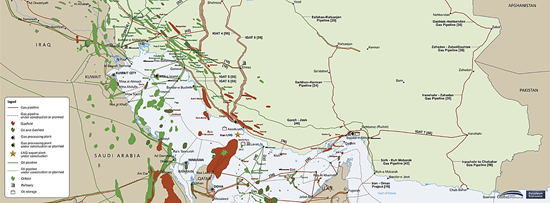
The Strait of Hormuz handles roughly one-fifth of global oil and LNG trade, making any disruption to shipping activity a major concern for energy markets.
Brent crude settled near $80/bbl on Friday after retreating earlier in the week on expectations that the interim U.S.-Iran agreement would ease supply concerns. Market participants are now closely watching whether tanker traffic can continue uninterrupted and whether upcoming negotiations can produce a more durable framework for restoring normal energy flows through the region.