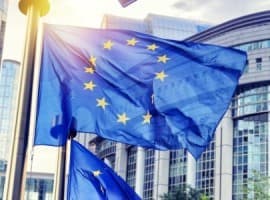
The EU Commission is currently focusing on 47 critical raw materials projects, with a target value of $22.5 billion.
However, the pressing question remains: Is this initiative timely and comprehensive enough to address the current challenges?
Amid growing geopolitical instability and a transitioning energy landscape, the European Union is under significant pressure. While global powers like China and the USA are aggressively pursuing critical minerals, the EU Commission in Brussels is taking a different approach. On March 25, the Commission made a significant announcement—it has adopted a list of 47 Strategic Projects, a first of its kind, aimed at enhancing domestic strategic raw material capacities. This move is expected to bolster the European raw materials value chain and diversify sources of supply. The Commission has reiterated that these “new Strategic Projects mark an important milestone in the implementation of the Critical Raw Materials Act (CRMA), which aims to ensure that European extraction, processing, and recycling of strategic raw materials meet 10%, 40%, and 25% of the EU’s demand by 2030, respectively.” The key message here is that EU members will require these materials to drive a green and digital transition and to support the sudden exponential increase in investment volume in Europe’s defense and aerospace industries.
Related: Trump’s Brand New Policy Tool May Upend Oil Trades
The current list of strategic projects includes 13 EU member countries: Belgium, France, Italy, Germany, Spain, Estonia, Czechia, Greece, Sweden, Finland, Portugal, Poland, and Romania. Based on the EC report, these projects span all segments of the raw material value chain, comprising 25 focused on extraction activities, 24 on processing, 10 on recycling, and two on the substitution of raw materials. The list represents 14 of the 17 strategic raw materials listed in the Critical Raw Materials Act, including lithium (22 projects), nickel (12), cobalt (10), manganese (7), and graphite (11), primarily intended for use in the EU battery raw material value chain. Regarding the EU defense industry, the list also includes magnesium (1 project) and tungsten (3 projects).
According to the current list, approximately €22.5 billion will be required as capital investment for these strategic projects. The EC has stated that these projects will be eligible for support from the Commission, national governments, and financial institutions. The EC is also committed to streamlining permitting provisions to ensure predictability for project promoters while maintaining environmental, social, and governance standards. As per the CRMA, the permit-granting process will not exceed 27 months for extraction projects and 15 months for other projects—a significant improvement from the current process that can last between five to 10 years.
As Stéphane Séjourné, EU Executive Vice-President for Prosperity and Industrial Strategy, stated: “At the very start of our most strategic supply chains are raw materials.” They are also indispensable to the decarbonization of our continent. However, Europe currently relies on developing countries for many of the raw materials it needs the most. We must increase our production, diversify our external supply, and make stockpiles. Today, we have identified 47 new strategic projects that, for the first time, will help us secure our domestic supply of raw materials. This is a landmark moment for European sovereignty as an industrial powerhouse.”
The overall drive to reduce dependence on third-party suppliers is laudable. Still, it also seems to be masking the fact that Europe’s industry and defense will not be producing nearly enough to achieve self-sufficiency. The current mining processes in EU member states are expected to become more manageable, but ESG, CSRD, or NGOs will remain significant constraining factors. The need for extensive mining operations remains, which cannot be addressed before 2040, as new mining operations typically take 15–16 years to commence—assuming all goes well. At the same time, we will not only need to examine current strategies but also become much more active globally to gain access to significant new mining operations or reserves. Without a more proactive approach—or even direct geopolitical power plays—most of the latest developments around the globe will be dominated by the Trumps, Putins, or Xis of this world. EU global mining, metals, and minerals power plays are even less effective than the efficient, fully funded mining investment strategies of Arab sovereign wealth funds such as IHC (Abu Dhabi), ADQ (Abu Dhabi), PIF (Saudi Arabia), or their mining companies, including Maaden.
International interest is already present in the new EU CRMA initiative. Media sources have indicated that four major Australian mining companies are poised to benefit, as evidenced by increased share prices over the last 24 hours. Reports suggest that Australian-linked successes include:
-
Vulcan Energy’s Lionheart Project (Germany): a geothermal lithium project
-
Talga Group’s graphite mine (Sweden): a natural graphite operation
-
European Metals’ Cinovec lithium project (Czech Republic): targeting Europe’s largest hard-rock lithium resource
-
Euro Manganese’s Chvaletice project (Czech Republic): a waste-to-value project reprocessing tailings to produce high-purity manganese
By Cyril Widdershoven for Oilprice.com
More Top Reads From Oilprice.com
- Trump: 25% Tariff On Anyone Who Buys Venezuelan Oil & Gas
- Iraq Hands BP Final Approval for Kirkuk Oil Development
- Glencore Cuts Coal as Market Glut Smothers Prices