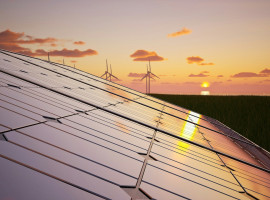
Europe’s solar power sector demonstrated its growing role in strengthening energy security during the first half of 2026, delivering record levels of electricity as fossil fuel prices surged and heatwaves pushed up power demand.
According to SolarPower Europe’s EU Solar Market Update: 2026 Mid-Year Analysis, solar became the European Union’s largest source of electricity in June, accounting for a record 25% of total power generation. Solar generation also helped the EU avoid more than €30 billion in gas imports for power generation since the start of the Middle East conflict on March 1, 2026.
Solar PV generated 282 TWh of electricity across the EU during the period, translating into estimated gas import savings of around €164 million per day, or more than €1 billion per week.
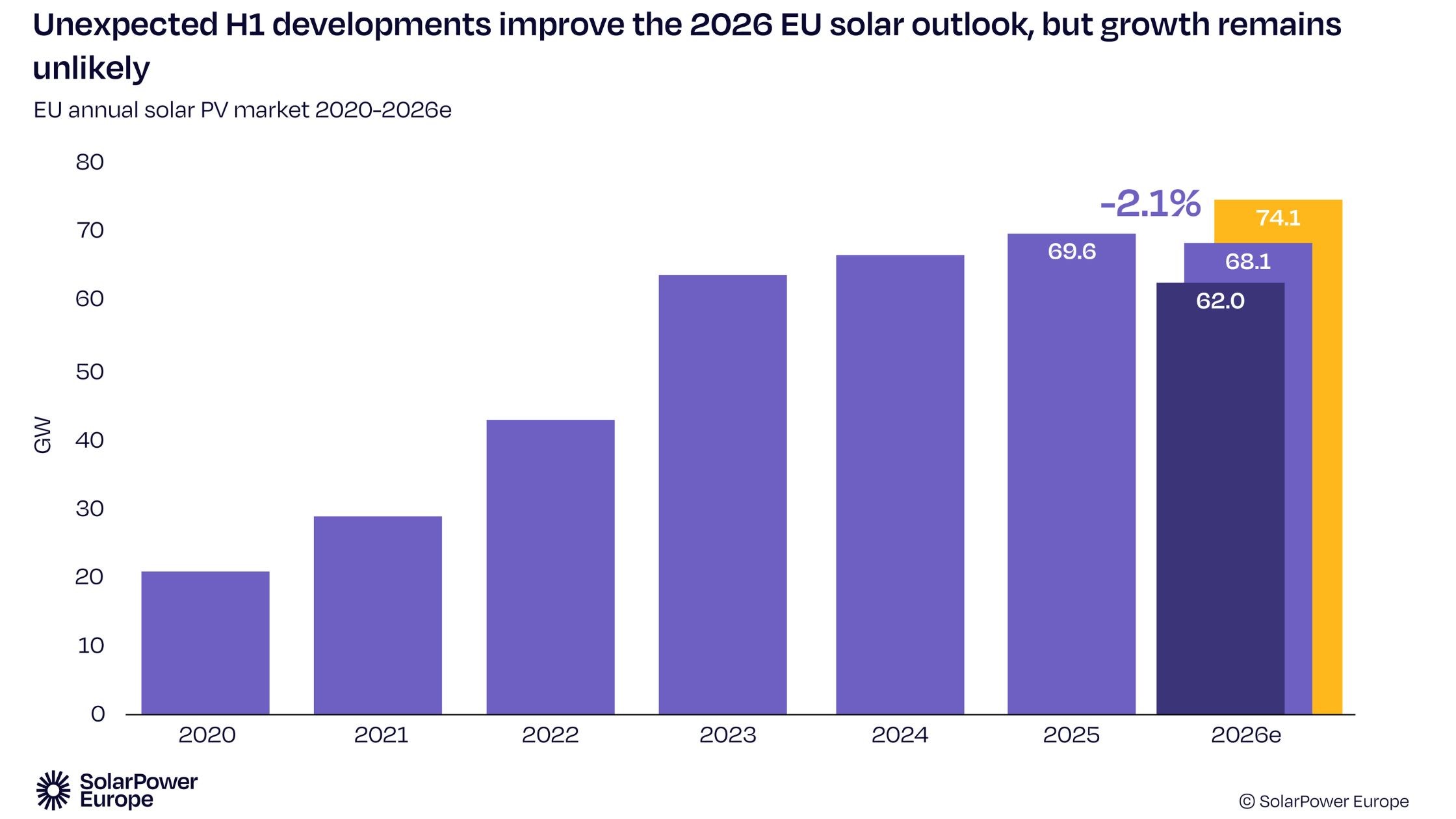
Despite the strong performance, the EU solar market remains on track for a slight contraction in 2026 compared with 2025. Preliminary data shows that solar deployment increased slightly during the first half of the year compared with the same period in 2025, supported by renewed concerns over fossil fuel prices and energy security.
However, weakening policy support, regulatory uncertainty, insufficient flexibility and growing grid constraints continue to weigh on the market outlook.
“Europe should not need an energy crisis to make the case for solar,” said Walburga Hemetsberger, CEO of SolarPower Europe. She urged policymakers to strengthen investment conditions and accelerate development of grids, storage and flexibility to support continued solar growth.
Solar’s contribution to Europe’s electricity system has also continued to expand. For the second consecutive year, solar supplied more than 20% of EU electricity generation in May, June and July. In June, its 25% share made it the bloc’s largest electricity source for the month.
The performance came as extreme summer temperatures placed additional pressure on Europe’s power system. Higher temperatures increased electricity demand for air conditioning, while warmer rivers and low water levels affected the output of some nuclear and hydropower facilities. Solar generation helped offset some of this pressure by supplying electricity during periods of high demand.
Nevertheless, the market is facing growing policy and infrastructure challenges. France has reduced support for rooftop solar, while changes to the New Green Savings Programme in Czechia have affected residential demand. Germany is also considering reforms that could reduce support for new rooftop solar systems from 2027.
At the same time, grid bottlenecks and regulatory uncertainty are making investment decisions more challenging across several European markets. The rapid expansion of solar is also contributing to rising curtailment, declining solar capture rates, more frequent negative-price periods and sharper evening price peaks where grid and flexibility investments have failed to keep pace.
SolarPower Europe said that maximising the benefits of solar will require greater investment in battery storage, electrification, flexibility and grid infrastructure. Without stronger progress in these areas and more stable policy and regulatory frameworks, the EU could struggle to sustain solar growth and remain on track to meet its 2030 solar target.
The findings underline the growing importance of solar in Europe’s energy security while highlighting the need for coordinated investment in the infrastructure required to integrate increasing volumes of renewable generation.
Subscribe to get the latest posts sent to your email.