Monday, 3 March 2025
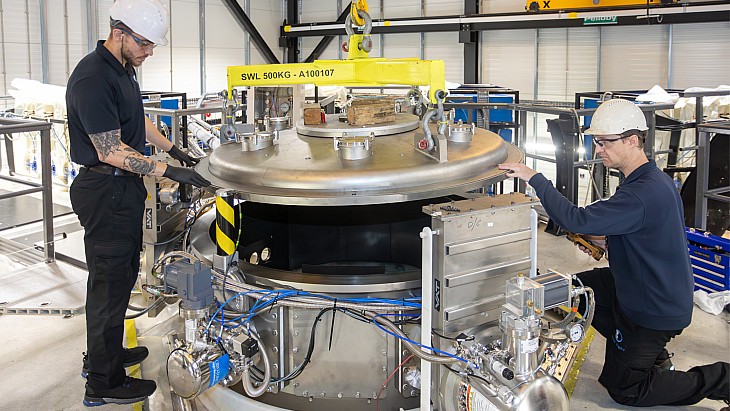
The Oxfordshire-based company says it is seeking to commercialise the pioneering technology it has developed during its work towards creating a fusion power plant. By dropping its plans for such a plant, and instead targeting commercial partnerships with others, it aims to “capitalise on the huge inertial fusion energy market opportunities enabling earlier revenues and lowering the long-term funding requirement”.
The basics
Nuclear fusion is the process by which two light nuclei combine to form a single heavier nucleus, releasing a large amount of energy. First Light, which was founded by Nick Hawker and Yiannis Ventikos in 2011 as an Oxfordshire University research spin-off, has been pursuing a form of inertial confinement fusion called projectile fusion, which creates the extreme temperatures and pressures required to achieve fusion by compressing a target containing fusion fuel using a projectile travelling at a tremendous speed. The projectile hits its amplifier, which focuses the energy onto the fusion fuel.
Last year First Light used its amplifier when it became the first private fusion company to conduct an experiment on Sandia National Laboratories’ Z Machine in New Mexico in the USA. It set a new pressure record for quartz at Sandia’s facility, raising it from 1.5 terapascal to 1.85, while also maintaining the sample conditions required for high-precision measurements.
The change in strategy means it is discontinuing Machine 4, its proposed ignition demonstration plant which it had been working on with the UK Atomic Energy Authority and Tracetebel. Machine 4 was intended to have “a stored electrical energy of c.100 mega joules with the capability of launching projectiles at 60 kms per second. This speed on impact inside the target will accelerate to about 200 kms per second as a result of First Light’s exclusive amplifier technology”.
The new strategy
First Light Fusion says it “plans to enter into commercial partnerships with other inertial fusion companies and schemes where its amplifier technology can form a critical and complementary part of a commercial fusion power plant, regardless of driver approach … by designing targets for all inertial driver schemes, including lasers, First Light will be a critical enabler in the realisation of commercial fusion energy. The company will focus on the design and manufacture of consumable ‘targets’ embedded with its proprietary amplifier technology, tailored to meet potential partners’ specific needs”.
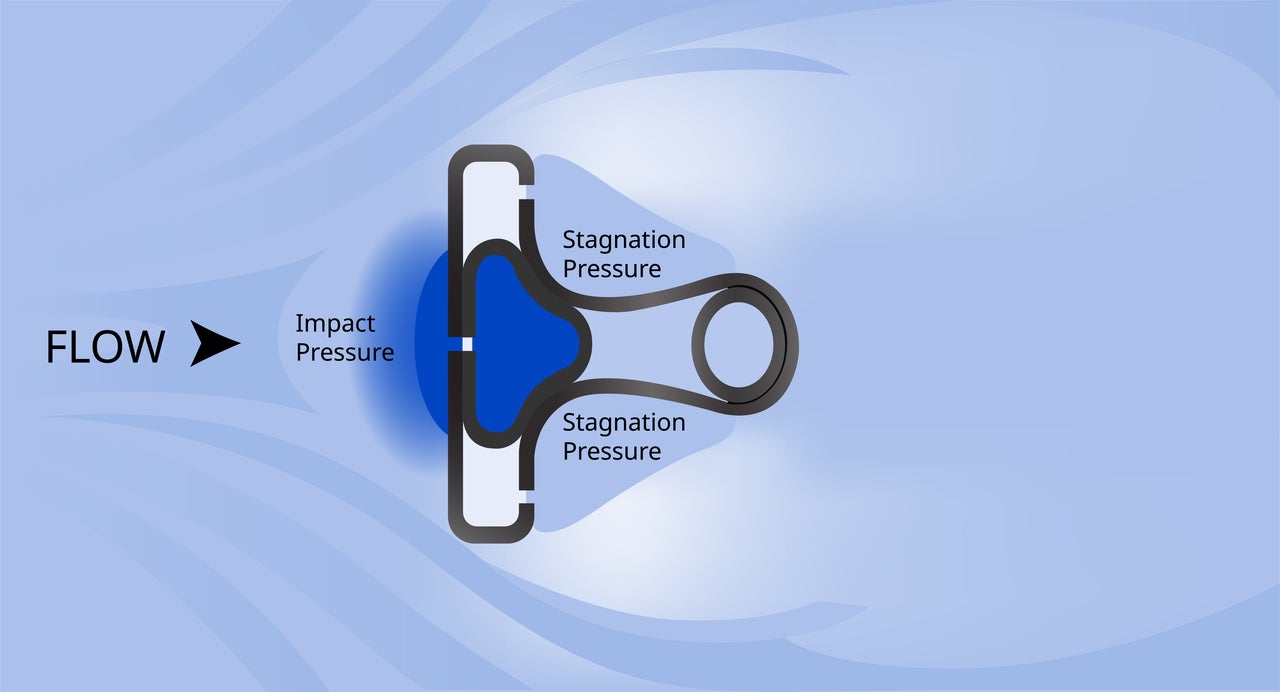
The company says its technology, which concentrates and shapes pressure to amplify power, enables fusion power plants to be built smaller, more simply and cheaply and could “revolutionise fusion power’s economic and commercial feasibility”.
It also aims to partner with companies, universities and institutions in non-fusion sectors “that can benefit from its unique technology and research facilities (the UK’s largest two-stage gas gun and Europe’s largest pulsed power machine) across sectors including space exploration and defence”. It says it is in discussions with “multiple companies and institutions” relating to sectors including space exploration, defence and energy, where there is a requirement to test materials under extreme pressures.
First Light says its technology “will enable other companies to access pressure ranges that could otherwise only be reached on very large, expensive machines. First Light’s amplifiers can more than double levels of pressure and increase speed by 75% on existing gas guns, unlocking exciting new R&D opportunities”.
An example of non-fusion opportunities includes beginning work with the Open University and NASA in the USA to “explore the potential applicability” of using its amplifier technology to test how materials sent into space react under the types of high speeds and pressures “which can’t be replicated on conventional gas guns”.
Part of a wider trend?
There are a growing number of companies seeking to develop a nuclear fusion power plant, using a variety of different approaches. According to the has been invested in recent years. There have been a number of cases of firms who are seeking to develop fusion plants being able to monetise their discoveries and ground-breaking materials for non-fusion energy purposes – such as producing radioisotopes or in maritime propulsion – to help provide fresh funds/returns rather than having to wait for a return from future fusion power plants.
First Light says its strategy change means that it is “transitioning to an immediate revenue-generating model far ahead of its original timeline. This shift ensures a sustainable business model and positions the company as a critical player in the broader innovation ecosystem”. It said it would “significantly reduce” funding requirements and First Light Chairman Bart Markus said the strategy change would “accelerate our own revenue generation model by a decade”.
Mark Thomas, who became CEO in February, said: “Our focus is clear: accelerating the path to commercial fusion by leveraging our amplifier technology to make fusion power faster, simpler, and more cost-effective. By partnering with fusion companies worldwide, we can provide a critical piece of the supply chain for a viable fusion power plant. Developed and manufactured in Britain, this breakthrough will not only transform fusion but also open new frontiers in materials science and beyond.”