Wednesday, 2 July 2025
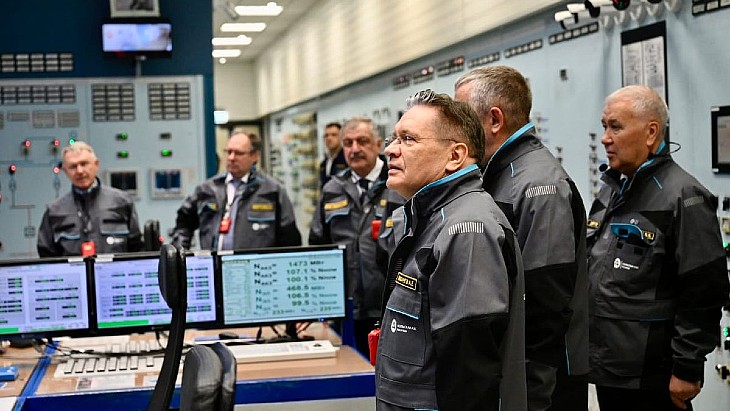
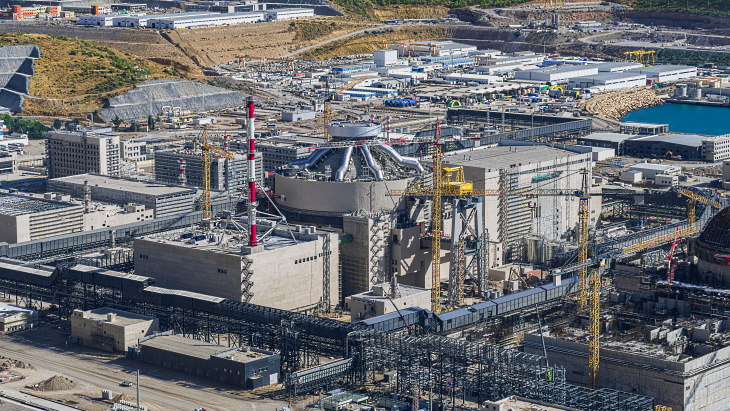
During a visit to the Kola nuclear power plant in the Murmansk region, Likhachev said that Kola II would be the first to feature the new medium-powered units designed for deployment in isolated areas in Russia and other countries.
He said that a further two units – which aim for a service life of 80 years – were planned for the site in the future.
“Kola NPP-2 will be the first station with modern 600 MW medium-capacity units. The implementation of the project will allow for the confident development of the region’s economy and will open up opportunities for launching new industrial projects on its territory. The medium-capacity project is innovative and meets modern energy system requirements, including manoeuvrability requirements, which is especially important for regions with grid limitations, including the Kola Peninsula,” Likhachev said.
In March Rosatom said that the new Kola II units would be VVER-S, and have the ability to participate in a closed nuclear fuel cycle with the use of uranium-plutonium fuel.
The VVER-S is a 600 MWe water-cooled reactor under development. The fundamental difference for VVER-S compared with other VVER reactors is in spectral regulation “of the change in the reactivity margin of the core during fuel burnout due to a change in the water-uranium ratio and the complete rejection of liquid boron regulation during reactor operation at power. In the VVER-S, excess neutrons, instead of being absorbed in boric acid, are absorbed by uranium-238” which produces plutonium, a new fissile fuel.
In Russia, MOX (mixed oxide) fuel is currently produced for fast neutron reactors, notably the BN-800 fast reactor at Beloyarsk. MOX fuel is manufactured from plutonium recovered from used reactor fuel, mixed with depleted uranium. Uranium-plutonium REMIX fuel has been developed for VVER reactors. Rosatom says that, if the proposed VVER-S reactors can use a full load of MOX fuel, it will cut its use of natural uranium by 50% and, over its lifetime – with high uranium prices – could save about the same amount as the capital cost of a unit.
The Kola nuclear power plant was the first to be built in the harsh climatic conditions of the Arctic, providing reliable energy supply to the northern part of the Republic of Karelia – where most of the region’s major industrial enterprises are located – as well as to more than half of the consumers in the Kola Peninsula.
Rosatom says that a project to expand the outdoor switchgear – a third 330kV line and substations – will increase electricity consumption in the north of the peninsula, which is required because of the construction of a liquefied gas plant. This work is due to be completed by the end of 2029.
There have been various plans for new capacity at Kola, with World Nuclear Association saying that in 2012 the replacement plant, about 10 kilometres from the existing site, was due to feature two VVER-TOI units. However in June 2021 the plant management announced that the plan was for construction to begin in 2028 for two VVER-S 600 MW reactors, with the first to be online in 2034. The ‘S’ signifies spectral shift control, with heavy water in the primary coolant. Russia’s future energy development plan in 2024 included three proposed VVER-S/600 units at the Kola II site between 2035 and 2040,
The state nuclear corporation says that the medium-power units will mean there is a full range of options for units, from small modular reactors to large-scale VVER-1200 units.