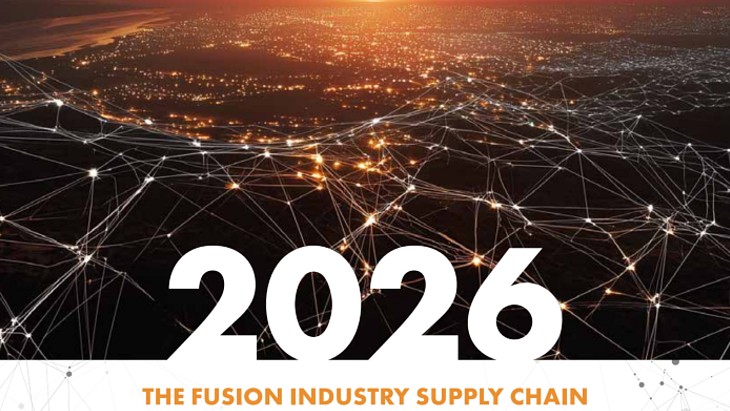
The figure, in the report, is based on interviews with 25 fusion companies and 67 fusion suppliers. It suggests that progress is being made to overcome the “chicken-and-egg” problem of fusion companies needing to ensure future supply chain capacity, but also having to ensure that suppliers have confidence in their plans to make investments.
According to the report, more than two-thirds of fusion companies have seen established suppliers “pivoting to fusion”. It reports that 75% of suppliers had made investments to expand their fusion capacity during 2025 but says “there is still work to do, as 69% continue to report a lack of long-term visibility of fusion needs, making planning and investment difficult”.
The main supply chain bottlenecks identified are power systems and power components (48%), heat management technologies (44%), and vacuum vessels and pumps (both 32%). Meanwhile 48% of fusion companies named fusion fuel cycle systems as a major future concern. Forty per cent of the companies also have future concerns about the need for commercial-scale access to materials which can withstand extreme conditions.
Andrew Holland, CEO of the Fusion Industry Association (FIA), said: “Our fourth annual report sees considerable progress in the relationship between fusion developers and their supply chain. We see signs of the chicken-and-egg gridlock raised in previous reports easing, as supplier relationships improve and new and existing suppliers invest in scaling up capacity to meet the sector’s growing needs.
“In large part, the winner of this race to fusion will not be the country that gets there first, but the one with the strongest, most integrated supply chain. Building that capability and capacity will need a truly collaborative effort between policymakers, investors, the supply chain and fusion companies.”
The recommendations set out in the report by the FIA include: Governments and investors should nurture specialist fusion suppliers with a focus on key bottleneck areas such as precision engineering, high-spec materials and components, and fuel-cycle technologies; Strengthen supplier-developer communication through regular industry forums, events, and matchmaking initiatives; De-risk supplier investment through demand visibility with fusion developers providing “clearer demand signals through long-term agreements, forward purchasing, and early supplier engagement; Accelerate standardisation and pre-competitive collaboration with shared standards, specifications, and testing protocols; Expand access to shared infrastructure and test facilities such as national labs; Close the supply chain funding gap which causes a “mismatch between funding for fusion developers and their suppliers”; Streamline regulation and enable global supply chains – governments worldwide should pursue harmonised regulatory frameworks, targeted tariff exemptions, and support for cross-border collaboration; Accelerate the development of fusion fuel systems supply chains infrastructure.
The Fusion Industry Association is a US-headquartered international non-profit independent trade association for the private nuclear fusion industry. It was founded in 2018. The report was launched at The Fusion Supply Chain Trade Show in New Mexico in the USA.