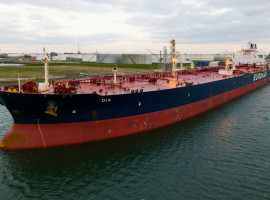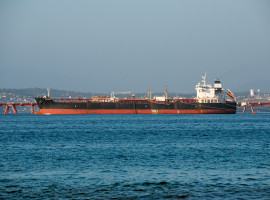
Only one oil tanker transited the Strait of Hormuz on Thursday, the lowest number of crossings since May 7, as war risks spiked this week to hike crude oil prices above $100 per barrel again.
Three tankers transited the Strait of Hormuz on Wednesday, but this number crumbled to just one on Thursday, according to Kpler’s vessel-tracking data cited by Reuters on Friday.
The New Giant, a supertanker loaded with about 2 million barrels of Basrah crude from Iraq, exited the Strait of Hormuz on Thursday, with China’s Rizhao port expected to welcome it in the middle of August, the data showed.
At the same time, no tanker made an inbound transit through the Strait into the Persian Gulf on Thursday.
Traffic at the Bab el-Mandeb Strait in the Red Sea held relatively high despite the Houthi attacks on vessels and threats of blockade at Saudi Arabia’s key export valve in the absence of Hormuz traffic.
However, some tankers were observed to have turned north in the Red Sea, toward the Suez Canal, to avoid being targeted by the Houthis, the Iran-aligned group in Yemen which emerged as the new threat to oil supply from the Middle East.
Voyages from the Red Sea through the Suez Canal, the Mediterranean, and around the southern tip of Africa make the delivery time of energy commodities to Asia three times longer than through the Bab el-Mandeb Strait.
Aramco, the Saudi oil giant that had managed to re-route most of its shipments away from Hormuz via Bab el-Mandeb, has begun offering crude loadings at Sidi Kerir, the Egyptian port on the Mediterranean, Reuters reports.
“Further escalation in the Persian Gulf and fears of a widening conflict are putting a significant amount of oil supply at risk,” ING commodity analysts said in a note on Friday, pointing out the Houthis’ attacks on Saudi tankers in the Bab el-Mandeb Strait and President Trump’s fresh threats against Iran.
By Tsvetana Paraskova for Oilprice.com
More Top Reads From Oilprice.com
- U.S. Refinery Utilization Hits 96.2% as Fuel Markets Tighten Worldwide
- LNG Importers Seek Lower Qatar and UAE Prices as War Upends Deals
- Saudi Crude Tanker Goes Dark to Slip Through Bab el-Mandeb