What was a flood of oil and gas leaving the Strait of Hormuz two weeks ago has now ground to a halt as the United States and Iran began firing missiles again and President Trump declared the ceasefire over, calling the Iranian leadership “scum”, “liars”, and “cheats”.
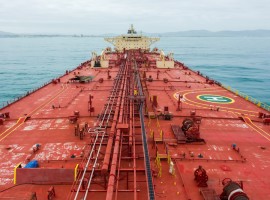
Bloomberg reports that, earlier today, there was only one tanker moving along the waterway, and it was a sanctioned very large crude carrier that passed along the Iran-controlled route along with an Iranian container ship. Meanwhile, on the route closer to the Omani coast, which is supposed to be under U.S. control, there was no traffic detected by ship-trackers.
The lull compares with 14 commodity-carrying vessels that traversed the Strait of Hormuz on Wednesday, Bloomberg noted in its report. In the past three weeks, following the ceasefire deal, Hormuz saw an average of 34 tanker crossings per day, peaking at 59 on June 24, data from Kpler showed.
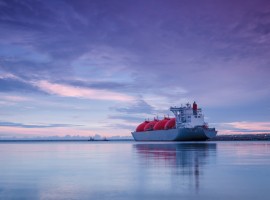
At least four oil and LNG tankers made U-turns from attempts to transit the Strait of Hormuz on Wednesday, vessel-tracking data compiled by Reuters showed yesterday. Three empty LNG carriers that were en route to move westward into the Gulf through the Strait of Hormuz turned away from the chokepoint late on Tuesday, according to the data compiled by Reuters from analytics firms Kpler and LSEG.
All three LNG carriers were en route to load cargoes at Qatar’s Ras Laffan facility in the Persian Gulf. A supertanker carrying crude to India also U-turned after Iran struck three vessels in the waterway on Tuesday.
Oil prices have spiked after the escalation, reversing a downward trend fueled by predictions of a glut returning to oil markets amid the tanker traffic recovery in Hormuz. It appears those predictions were a little premature in light of the latest developments in the Middle East.
By Irina Slav for Oilprice.com
More Top Reads From Oilprice.com
- U.S. LNG Exporter Reaps Windfall as Middle East Turmoil Drives Fees Higher
- Oil Prices Jump After Iran Attacks Commercial Vessels
- US Crude Oil, Product Inventories Fall Even As Hormuz Traffic Begins to Flow