Bloomberg
Nuclear energy is back in vogue in the US.
Utilities are restarting shuttered plants and the Trump administration is pushing for more reactors to be built. Dozens of startups are working on new technologies and buyers are already lining up for electricity they may eventually produce.
Get the Latest US Focused Energy News Delivered to You! It’s FREE:
The revival in interest won’t immediately transform the US power grid. The development of nuclear power, after all, takes a notoriously long time to come online. But the administration is attempting a series of moves to unleash a “nuclear renaissance,” including streamlining regulatory requirements and providing financial support.
What’s driving the renewed interest in nuclear energy?
Nuclear has been a steady contributor to the US grid for decades, accounting for around a fifth of electricity generation. There was limited appetite to build new reactors after the shale gas revolution, which overlapped with a long stretch of stagnant power demand. Nuclear plants have typically been beset by construction delays, high costs and wariness among the public about safety and the management of radioactive waste.
Nuclear Has Been a Steady Source of Power
US net electricity generation by technology share
But the landscape has shifted in nuclear’s favor amid the proliferation of power-hungry data centers. Technology companies are racing to ensure there’s enough energy to operate and cool the servers that underpin artificial intelligence models. In a high-growth scenario, data centers’ share of US power consumption could hit 17% by 2030, according to the Electric Power Research Institute, up from around 5% currently.
While the data center boom is spurring demand for new natural gas plants, the turbines for these power stations are in short supply, have multiyear wait times for delivery and are getting more expensive. Coal, once the backbone of the US grid, is struggling to compete with cheaper sources of generation. Developers are aware that the Trump administration’s pro-coal policies could be reversed by a more climate-friendly successor, making them less likely to invest in new assets now.
Solar and wind are set to lead additions in US generating capacity this year but their output fluctuates depending on the weather and time of day. These intermittent resources alone can’t supply the 24/7 power that data centers need and must be paired with more batteries to store excess energy and discharge it when required.
Nuclear is one of the few sources of carbon-free electricity that’s available around the clock, making it an attractive option for tech firms that have set clean energy targets. The public has been warming to the idea of more nuclear, as well. Some 59% of US adults were in favor of using more nuclear power in 2025, up from 43% a decade ago, according to polling by the Pew Research Center.
What’s the current state of the US nuclear fleet?
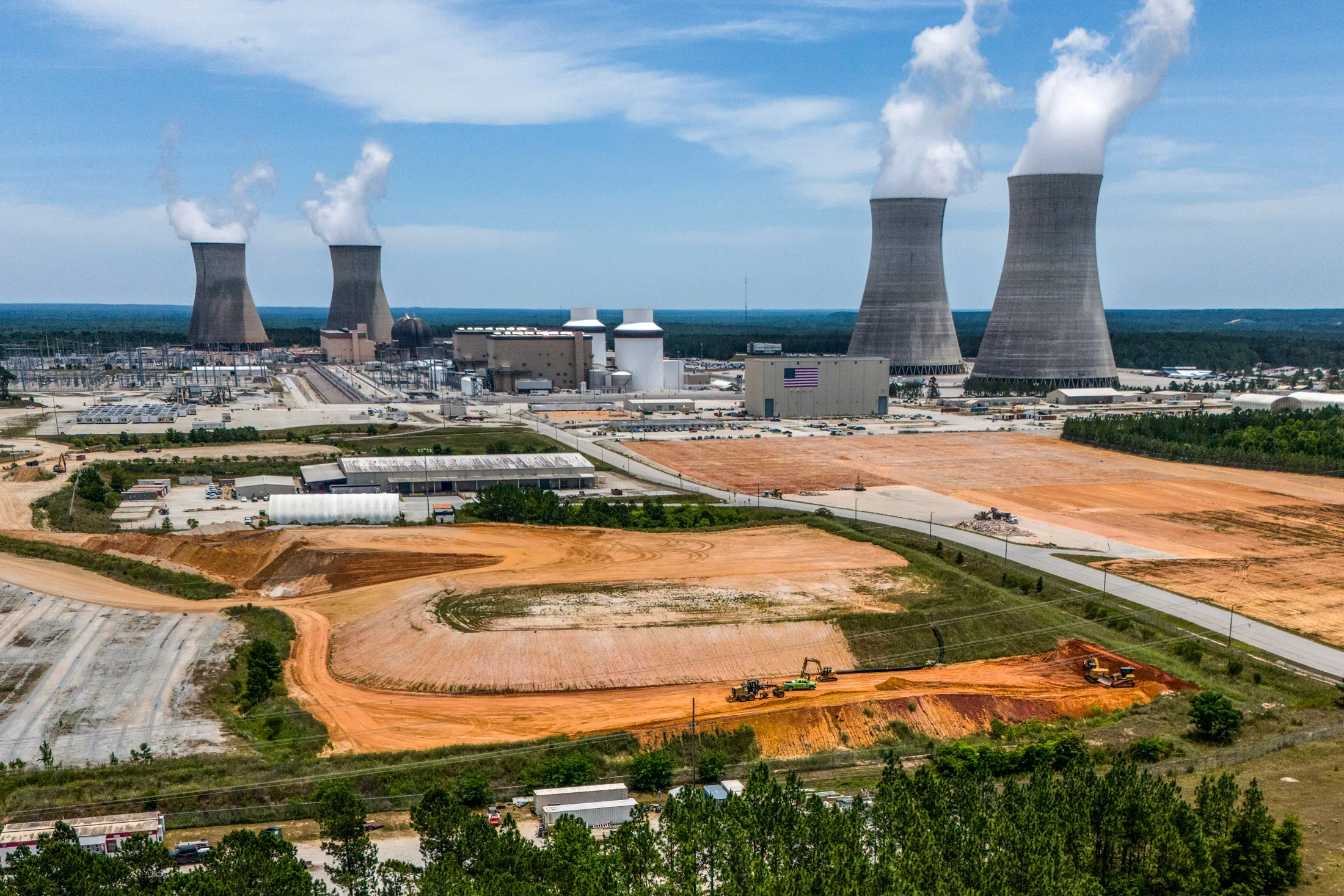
There are 94 operational nuclear plants spread across 28 states. Around 90% of the reactors came online in the 1970s and 1980s, and just three new ones were switched on this century. The last two to open were Vogtle Units 3 and 4 in Georgia, which were completed seven years late and cost more than double their initial budget. That overrun cast a long shadow over the country’s nuclear industry and the willingness to finance and build big new projects.
Eight states have longstanding moratoriums on new nuclear capacity. The number used to be higher, but six states have repealed their effective bans over the past decade. Some states, including California, are now reconsidering their restrictions to meet their energy needs.
Some States Have Restrictions on New Nuclear Capacity
Status of moratoriums across the US
The surge in US power demand has prompted a rethink on some mothballed nuclear facilities, as restarts are quicker than building from scratch. Holtec International Corp. is planning to reopen the Palisades plant in Michigan sometime this year, backed by state and federal financial support.
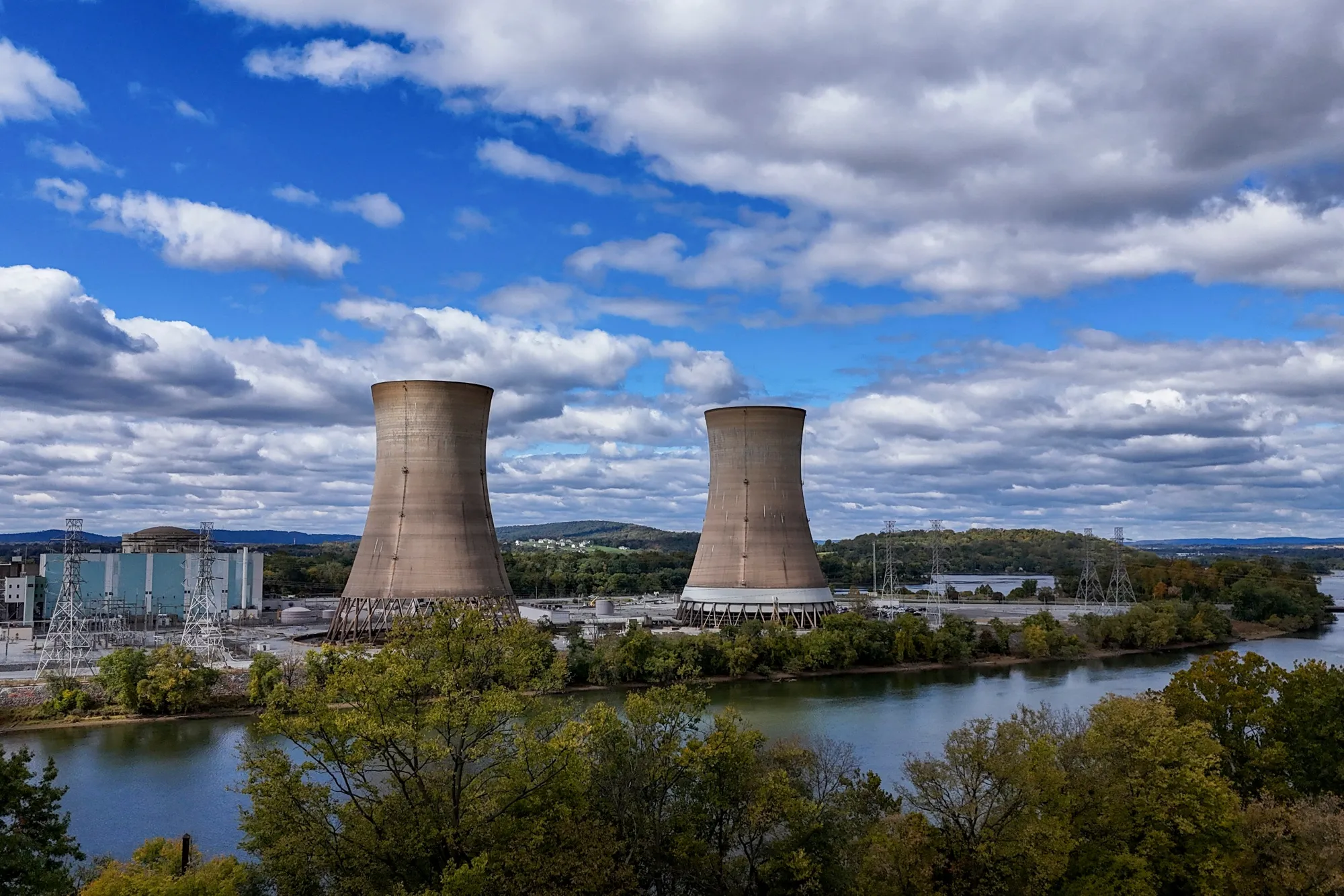
Three Mile Island in Pennsylvania is being brought back into service after Microsoft Corp. agreed to purchase its power for 20 years. While one of the site’s two units was closed permanently almost half a century ago after a partial core meltdown, Constellation Energy Corp. is targeting a en of the other reactor, which shut in 2019 because it couldn’t compete economically. NextEra Energy Inc. is similarly aiming to bring the Duane Arnold plant in Iowa back online in 2029 after reaching a 25-year power supply agreement with Google.
The US Has More Than 90 Operational Nuclear Reactors
Location of reactors, by status
How is the Trump administration supporting the nuclear industry?
President Donald Trump has set a goal for the US to quadruple its nuclear capacity to 400 gigawatts by 2050. In the shorter term, he’s seeking to have at least 10 big reactors under construction by the end of the decade.
To help things along, the Trump administration unveiled a commitment last year to support the construction of reactors designed by Westinghouse Electric Co., including the AP1000 that was installed at Vogtle. Deploying that technology across multiple projects could enable cost efficiencies by using the same supply chains.
Even with this funding, it could be to kick off construction by 2030. Besides long permitting timelines, developers must line up buyers for the power, hire thousands of skilled workers and secure critical components such as reactor vessels that can take as long as four years to manufacture and deliver.
The Trump administration wants to accelerate the yearslong regulatory process and has said that the Nuclear Regulatory Commission is too risk averse. In May last year, the president signed an executive order that directed the agency to evaluate new construction and operation licenses within 18 months, half the time it’s taken in the past. There are concerns that the deregulatory push could compromise nuclear safety. After Trump ordered the NRC to reconsider its radiation limits, saying that the standard of “as low as reasonably achievable” is scientifically flawed, the agency now plans to replace its longstanding guidance.
The Department of Energy set up a reactor pilot program last year to accelerate the testing of new nuclear technologies. It selected 11 projects to participate, including two from Sam Altman-backed Oklo Inc. The aim was for at least three advanced reactor designs to reach “criticality” by July 4, 2026. That means the reactor can sustain a controlled fission reaction and produce a steady release of energy. It’s an important technical achievement, although is far from a full-fledged power plant and doesn’t guarantee commercial viability.
Three startups in the program, Antares Nuclear Inc., Valar Atomics Inc. and Aalo Atomics, as well as one outside of it, Deployable Energy, hit the criticality milestone by the July deadline, according to the DOE. While the reactors still need an NRC license for commercial operation, the agency has proposed a rule change to expedite approvals for reactor designs that have already been authorized by the DOE and Department of Defense.
What progress has been made on new reactor technology?
Small modular reactors, such as those involved in the DOE’s pilot program, have emerged as the next generation of nuclear technology. Boosters promise they’ll be safer, cheaper and easier to build than the reactors currently in operation.
SMRs are smaller than conventional reactors. Whereas large-scale reactors usually start at 1,000 megawatts, SMRs are normally up to 300 megawatts and can be established individually or in clusters, depending on how much power is needed.
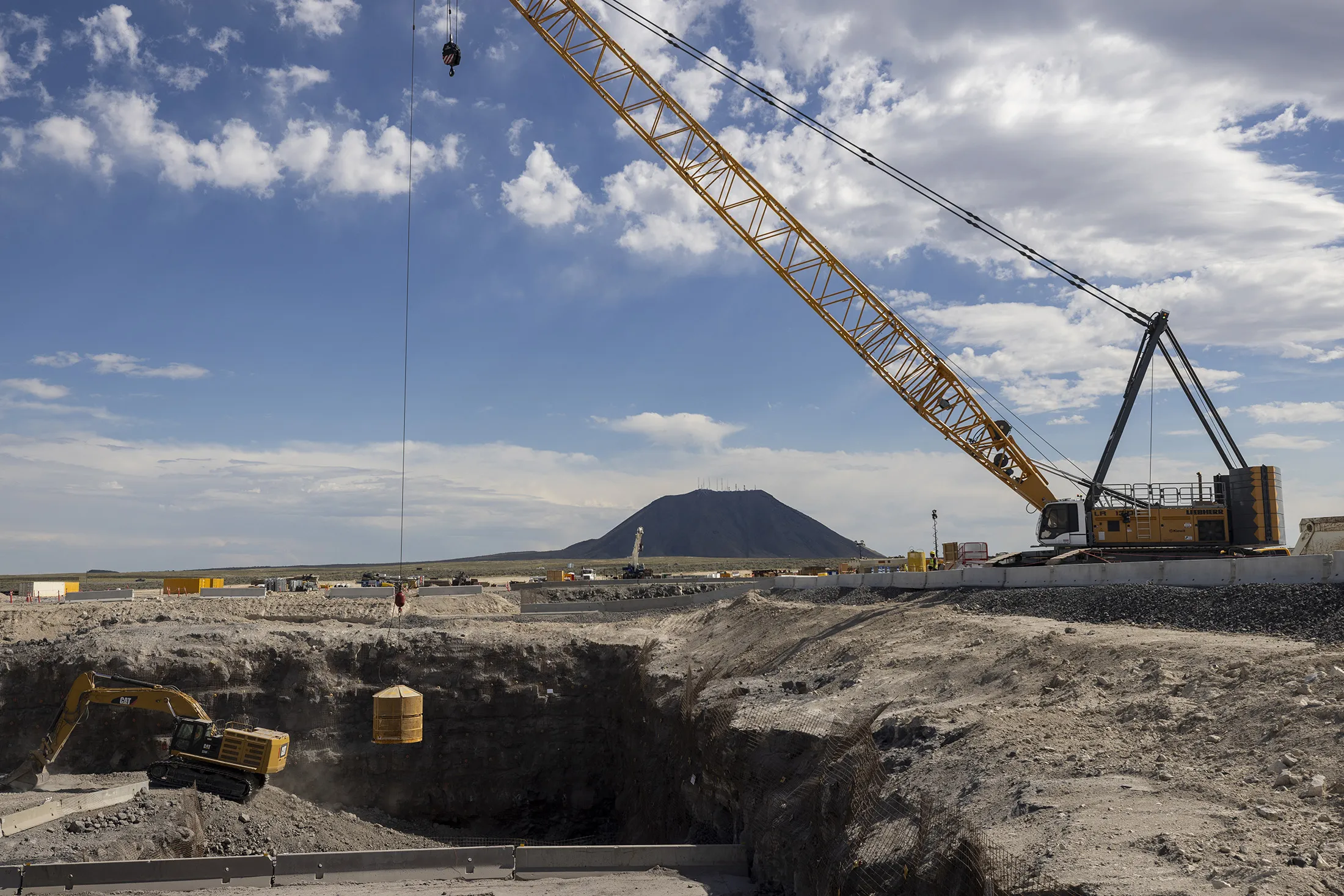
Proponents say SMRs will be more secure than conventional reactors because many have passive safety features. Some use molten salt and liquid metals as coolants in lieu of water, allowing the reactors to operate at higher temperatures and lower pressures. This means SMRs can rely on natural processes such as gravity to prevent overheating, rather than electric pumps and human intervention, which are more vulnerable to failures. SMRs, however, still have the problem of long-lived radioactive waste that must be stored safely for centuries.
These reactors are designed to be built largely in factories and then assembled on-site. The prefabrication of standardized components should, in theory, shorten construction times and lower upfront costs through economies of scale. This could avoid the schedule and budget overruns that have plagued traditional nuclear power plants and maybe even allow SMRs to compete with other power technologies that are readily available today. But the cost savings depend on there being enough demand for the reactors to be mass produced..
When are small modular reactors likely to join the US grid?
While a handful of companies have said that their first SMRs could go into service before 2030, that’s far from guaranteed. Of the dozens of reactors under development in the US, only a few have won regulatory approval. NuScale Power Corp. has received NRC approval for its designs and TerraPower LLC, which is backed by billionaire Bill Gates, has been granted a construction permit for a commercial reactor in Wyoming. However, no SMR firms have received an operating license to produce power.
The consensus is that SMRs will only start coming online in earnest in the early 2030s and that these will be expensive, first-of-a-kind systems. That long potential wait hasn’t deterred big tech companies, which are both investing in and signing agreements to buy electricity from SMR startups. Meta Platforms Inc., for example, has struck deals with both Oklo and TerraPower to power its AI data centers.
What about fusion?
SMRs and conventional reactors rely on nuclear fission, whereby heavy atoms, such as uranium, are split into smaller ones to release energy. Fusion involves fusing light atoms into a single heavier element and offers the prospect of abundant energy without any radioactive waste. But while this process works great inside the Sun, nobody has yet figured out how to make it work on Earth in a power plant.
The US has been a leader in the fusion space and developers there have attracted more than $10 billion of private capital. Even though a commercial fusion system could be a decade or more from becoming a reality, Big Tech is still hedging its nuclear bets and signing up for fusion, too. Google, for example, has invested in Commonwealth Fusion Systems and agreed to buy power from the startup’s first commercial plant.
Does the US have enough fuel for its nuclear reactors?
The US faces a widening uranium supply deficit, according to the Energy Information Administration. The country imports the majority of the enriched material needed for its fission reactors. Russia has for years been the top supplier, providing a fifth of the fuel used in US nuclear plants in 2024, the latest year for which EIA data is available.
There’s growing pressure to find an alternative source after the US introduced a ban on Russian uranium in response to the invasion of Ukraine. While some companies received waivers to allow them to keep making purchases, those exemptions are due to end in 2028.
The US is trying to build up its own uranium supply chain across all stages of the fuel cycle – from mining ore through to enrichment and fuel fabrication. The multistep process is highly regulated because the same procedure is used to make atomic weapons. It’s also capital intensive meaning many producers want to be sure of demand before they commit to invest in new capacity.
Right now, the US only has one commercial-scale uranium enrichment facility, operated by Urenco Ltd., a British, Dutch and German consortium. The company said in June that it plans to and pr at its New Mexico plant by almost 50%.
Standard nuclear fuel typically contains a 5% concentration of the uranium-235 isotopes needed for fission. Many SMRs require a more potent form of fuel known as high-assay low-enriched uranium, or HALEU, which has a U-235 concentration of up to 20%. Only Russia and China make HALEU at commercial scale right now.
The Trump administration is trying to boost domestic US supply. In January, it awarded a total of $1.8 billion to Peter Thiel-backed startup General Matter and a subsidiary of Centrus Energy Corp. to set up new HALEU production capacity.
Share This:
More News Articles