By
1 hour ago 3 min read
Low-grade iron ore has been converted into direct reduced iron (DRI) in Namibia using hydrogen under a German-led pilot project.
The SuSteelAG consortium, led by Germany’s Institute for Materials Research and Testing (BAM), concluded its first pilot test where 80 tonnes of untreated iron ore from Australia were turned into DRI through an electrically powered hydrogen rotary kiln.
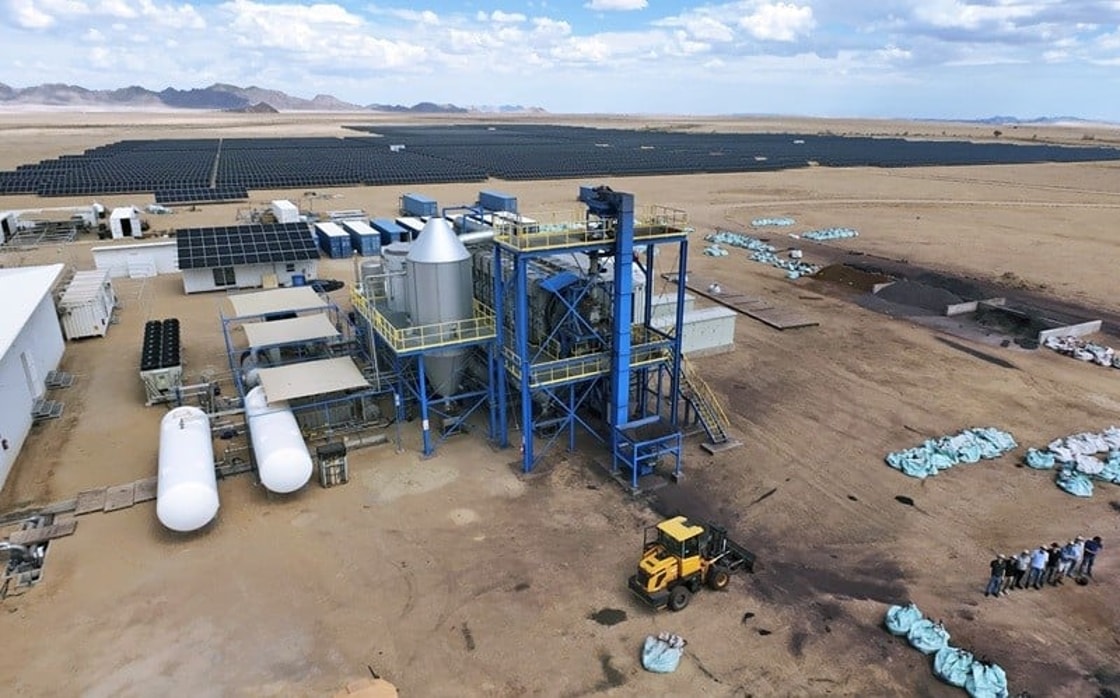
The Oshivela Project in Namibia’s Erongo region uses a 20MW solar installation to produce green hydrogen from 12MW alkaline electrolysers from China’s Peric Hydrogen Systems. It began operating in April 2025.
Operated by German-based HyIron, the project uses green hydrogen in a rotary kiln to process iron ore into DRI – a feedstock for electric arc furnaces to produce steel.
According to BAM, unlike existing processes, which use shaft furnaces, the Namibian installation was able to use untreated iron ore from Australia’s Fortescue with around 56% iron content.
The consortium said the trial showed the plant could refine low-grade ore with a throughput of around five tonnes per hour.
The DRI will now be shipped to Germany, where steel major Salzgitter will look at how the refined iron could be integrated into existing industrial processes.
“We have now reached a scale that is highly relevant for industrial production and demonstrated that hydrogen-based direct reduction of lower-grade ores can be operated economically,” said SuSteelAG coordinator Christian Adam from BAM.
The consortium has not released operating data for the trial.
Currently, hydrogen DRI processes work best with high-grade iron ore of around 67% iron content, leading to fewer impurities, better reaction efficiency, and lower energy use.
While low-grades can be used, it typically requires prior processing, increasing cost, energy use and complexity.
“This also means that green steel production need not be constrained by the limited availability of premium ores,” Adam said.
It comes as various Western steelmakers delay or shelve plans for green hydrogen-based steel operations due to the high costs of the molecule.
Analysis by the steel decarbonisation lobby group SteelWatch in 2025 said importing green hydrogen-based DRI from renewables-rich countries to could avoid costs for shipping and hydrogen.
H2 View webinars bring together industry leaders to discuss the hottest topics and biggest trends.
With H2 View webinars, you’ll get:
• Insightful talks from global hydrogen experts
• Live debates, discussion, and audience Q&A
• On-demand access to every past webinar
Register for or