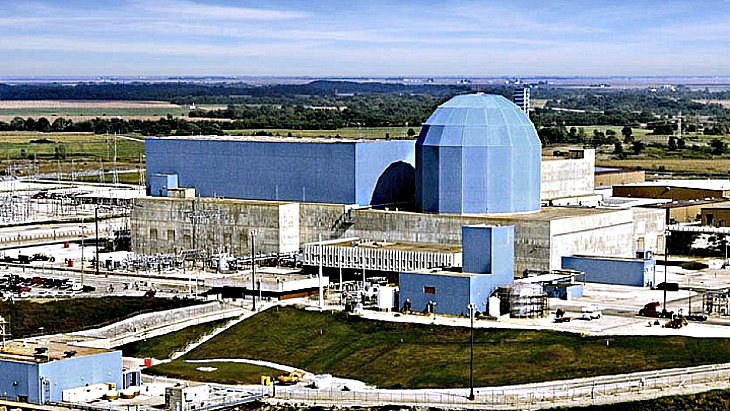
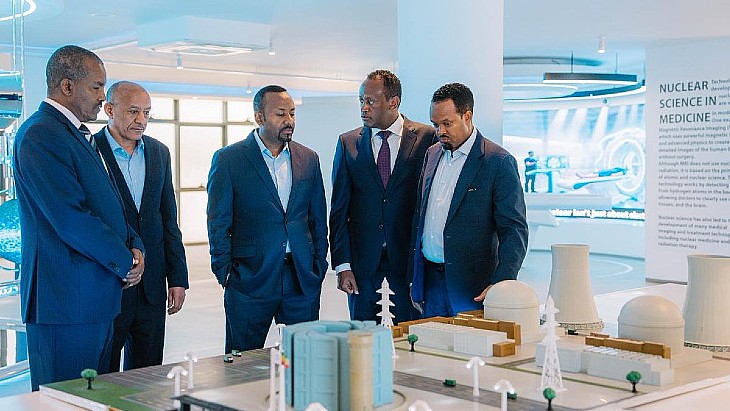
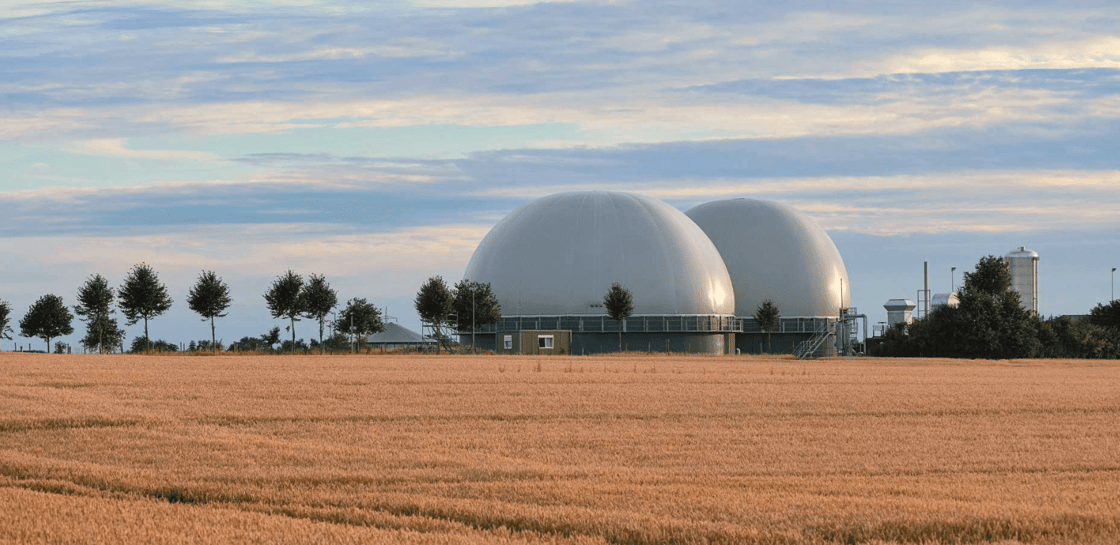
The MoU with NANO Nuclear Energy – which is developing a micro modular reactor based on a high-temperature gas reactor – aims to establish a framework for potential collaboration to advance the KRONOS MMR Energy System project at the University of Illinois Urbana-Champaign and to evaluate broader cooperation on future NANO Nuclear manufacturing and deployment activities. It brings together NANO Nuclear’s advanced reactor development programme with Hyundai Engineering’s engineering, procurement, construction, project-management, supply-chain, modularisation, logistics and industrial-project capabilities.
The KRONOS MMR is a 45 MW thermal, 15 MW electrical high-temperature gas-cooled reactor, using TRISO fuel in prismatic graphite blocks and has a sealed transportable core. NANO Nuclear signed a strategic collaboration agreement with the University of Illinois Urbana-Champaign in April 2025 to construct the first research KRONOS micro modular reactor on the university’s campus. The Construction Permit Application was submitted on 31 March this year.
NANO Nuclear and Hyundai Engineering initially intend to focus on project-execution planning, conventional and site-related work, procurement readiness, constructability, modularisation, logistics, supply-chain development and US localisation planning for the University of Illinois project, “while preserving clear interfaces with the university, existing expected contractors and applicable public-procurement requirements”.
Subject to technical and commercial evaluation, availability of scope, University of Illinois and regulatory requirements and separate definitive agreements, the parties may later expand Hyundai Engineering’s role to include architecture and engineering, engineering and procurement, engineering, procurement and construction (EPC), construction management, equipment or component fabrication, and support for future KRONOS MMR reactor fleet deployment.
The MoU provides a framework to evaluate future NANO Nuclear projects in the USA, including manufacturing and deployment activities, and to explore ways in which Korean and US industrial capabilities can be combined to support localisation, supplier development, project financing and future fleet execution. The parties may also evaluate future conventional balance-of-plant and infrastructure support for industrial heat, hydrogen, desalination, maritime and other applications.
“NANO Nuclear is deliberately assembling the industrial capabilities required to move advanced nuclear technology from design into repeatable deployment,” said Jay Yu, founder and chairman of NANO Nuclear Energy. “Our objective is not simply to develop an advanced microreactor; it is to build the broader platform around it. This includes engineering, manufacturing, fuel, transportation, project execution and the necessary supply chain that can support real projects at scale. Hyundai Engineering brings project-delivery capabilities that can become increasingly valuable as the KRONOS MMR system advances from design to regulatory licensing and into construction and ultimate commercialisation.”
NANO Nuclear Energy CEO James Walker added: “The next phase of advanced nuclear will be defined by execution. As our KRONOS MMR system progresses through US Nuclear Regulatory Commission review, constructability, procurement, logistics, modularisation, interfaces and a qualified supply chain become just as important as the reactor design itself. This MoU gives us a framework to bring Hyundai Engineering into that work early, while creating a pathway from the first University of Illinois project toward a standardised and repeatable fleet-deployment model.”
“This MoU establishes a foundation for cooperation with a promising advanced nuclear developer,” said Woo-Jeong Joo, CEO of Hyundai Engineering. “By participating in demonstration and first-of-a-kind project opportunities, we aim to build valuable project experience, strengthen our capabilities across the advanced nuclear project lifecycle and continuously identify new business opportunities in the global market.”
Cooperation with ARC
Meanwhile, Hyundai Engineering has also signed an MoU with ARC Clean Technology, developer of the 100 MWe ARC-100 sodium-cooled fast reactor.
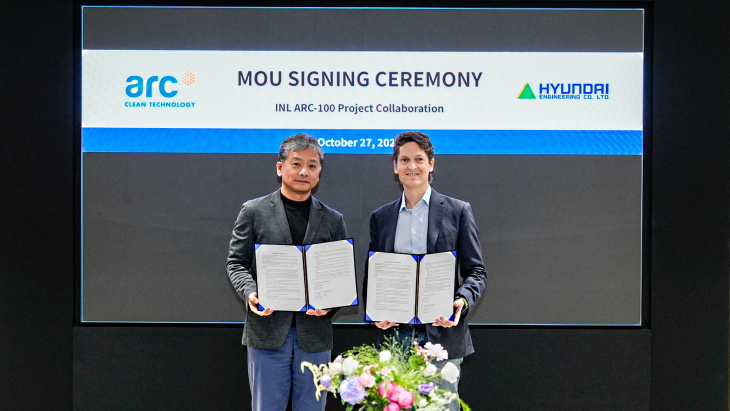
(Image: Hyundai Engineering)
In August this year, ARC signed an agreement aiming for the first-of-a-kind deployment of an ARC-100 at Idaho National Laboratory (INL). The multi-year framework agreement with Battelle Energy Alliance, the laboratory’s management and operating contractor, will see support cover “engineering and design, advanced materials and manufacturing, high-performance computing and modelling, irradiation testing, reactor commissioning and operation, and site development; covering the full lifecycle from detailed design through first-of-a-kind deployment”. That agreement will see the construction of a commercial demonstration plant of about 200 MWe on the INL site. ARC is considering expanding the project to around 600 MWe in the future,
The ARC-100 is a sodium-cooled fast reactor with a metallic uranium alloy core. It is designed for both on-grid electricity production and industrial heat applications. The design is based on the Experimental Breeder Reactor-II integral sodium-cooled fast reactor prototype which operated at the Argonne National Laboratory from 1961, finally shutting down in 1994.
Hyundai Engineering said it expects its MoU with ARC “to serve as an opportunity for it to expand its business scope into the field of fourth-generation reactor technology, including high-temperature gas reactors and sodium-cooled fast reactors, and to strengthen its position in the next-generation nuclear power market.”
“This collaboration with NANO Nuclear and ARC is expected to serve as a stepping stone to accelerate entry into the global SMR market and further expand business scope, based on the nuclear design capabilities and global business execution experience accumulated over the years,” the company said.
Since the establishment of its Nuclear Power Division in 1985, Hyundai Engineering has accumulated design capabilities by carrying out a total of 254 nuclear projects, including 145 designs for operating nuclear power plants, 31 nuclear fuel manufacturing and storage facilities, 32 research reactors and facilities, 20 site characterisation surveys, 14 radioactive waste treatment facilities, and six small modular reactor (SMR) technology development projects.
“Our accumulated nuclear design technology and experience in executing large-scale plants have served as the foundation for cooperation with global SMR companies,” a Hyundai Engineering official said in a statement. “Taking this participation in the demonstration project as an opportunity, we will further strengthen our full-cycle business capabilities from design to EPC and grow into a trusted key partner in the global SMR market.”