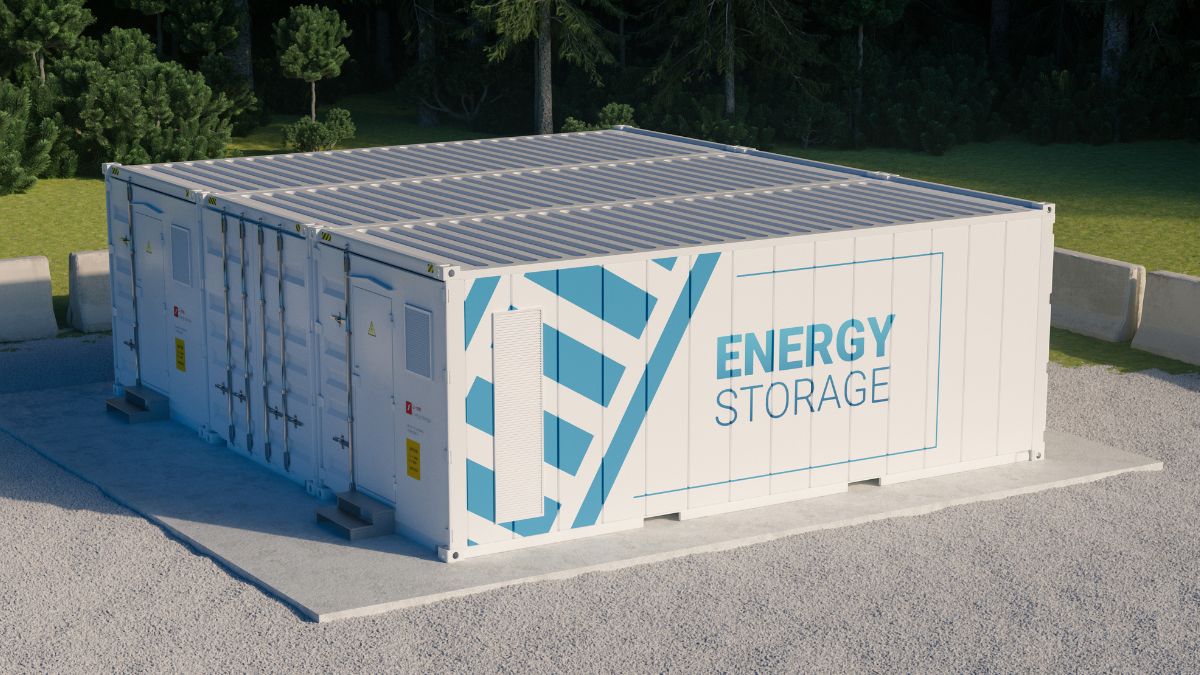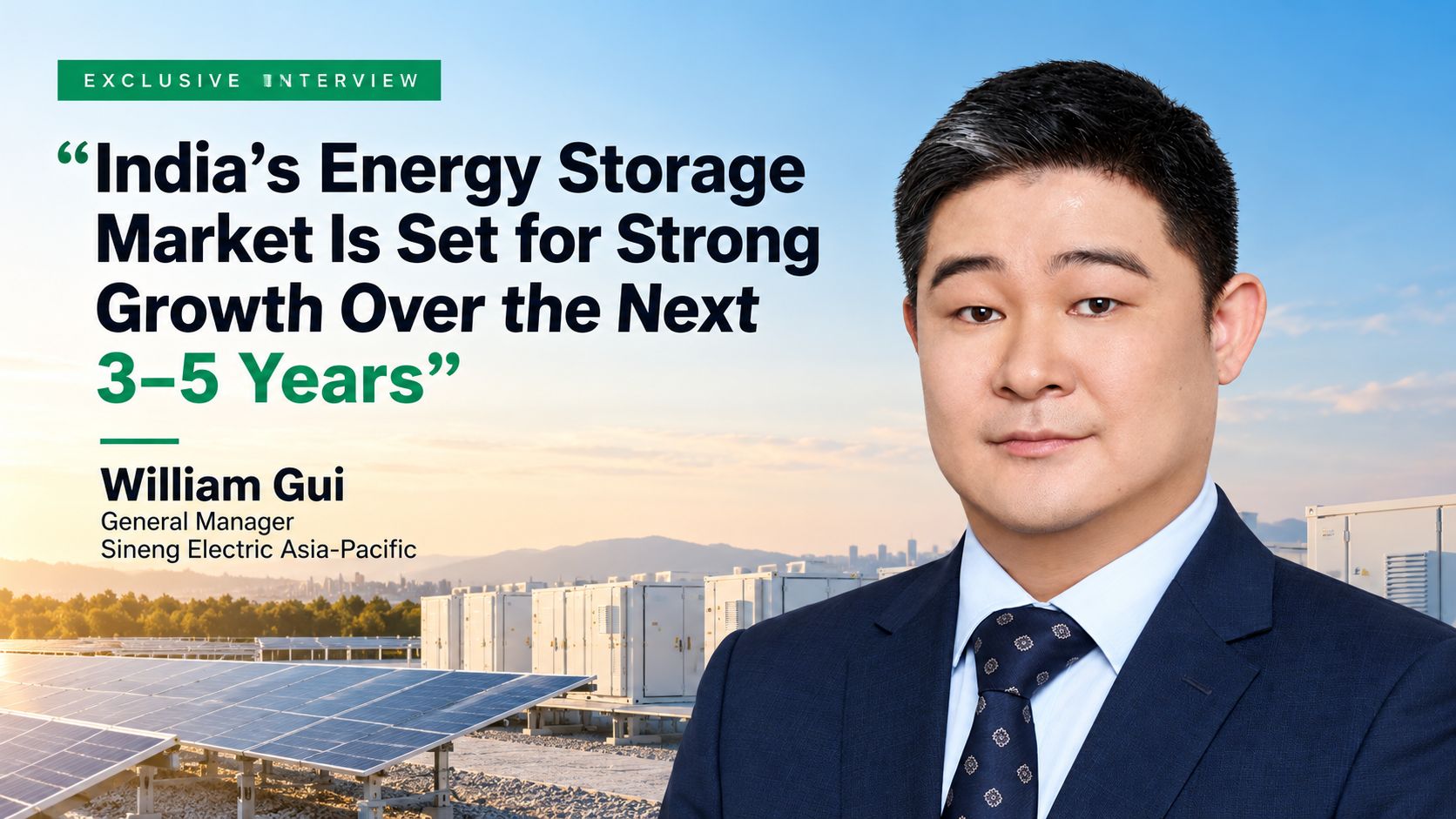
With India’s energy storage market poised for significant growth, the focus is shifting beyond capacity to grid stability, efficiency and advanced technologies. William Gui, General Manager of Sineng Electric Asia-Pacific, discusses how grid-forming PCS technology is shaping the future of utility-scale BESS, shares insights from Sineng Electric’s 1.44 GWh project in Gujarat, and outlines the company’s long-term vision for India’s evolving energy storage landscape.
1. How do you see India’s energy storage market evolving over the next 3–5 years?
We expect strong growth in India’s energy storage market over the next three to five years, driven by the expansion of solar and wind power and the need for a more flexible electricity system. Storage will become increasingly important for balancing renewable generation, meeting peak demand and maintaining a stable power supply.
We see significant opportunities in both standalone BESS and storage co-located with renewable energy projects. As the market develops, customers will increasingly look beyond how much energy a system can store to how effectively it responds to grid needs. Efficiency, operational flexibility and grid-forming capability will therefore become more important, together with reliability and lifecycle costs.
The pace of deployment will depend on how quickly awarded projects progress through financing, grid connection and commissioning. Close coordination between developers, utilities and technology providers will be essential to bringing these projects into operation and meeting performance expectations.
2. What are the key technology requirements for utility-scale BESS projects in India?
System design and equipment selection should be guided by the project’s operating requirements, including how often the system will charge and discharge, the grid services it needs to provide and the conditions in which it will operate.
Safety and reliability are fundamental. In India, high ambient temperatures make effective thermal management essential to maintaining system performance and availability over time. Our 1.725 MW central PCS, for example, uses composite temperature control technology to keep the core cabinet temperature rise below 10 K. Additionally, it features IP65-rated protection and C5-rated corrosion to support reliable operation in harsh environments.
Grid integration is equally important. The PCS must work reliably with the batteries and plant control systems and respond effectively to changing grid conditions. As renewable energy penetration increases, grid-forming capabilities will play a greater role in supporting voltage and frequency stability.
3. How can grid-forming PCS technology support India’s growing renewable energy grid?
As solar and wind account for a larger share of India’s electricity supply, the grid will need additional resources to maintain stable voltage and frequency. Grid-forming PCS allows battery storage to contribute directly by establishing a voltage and frequency reference and responding to changes in the power system. This is particularly valuable in areas with weak grid connections.
Our experience in Gujarat provides a practical example. At a 1.44 GWh BESS project, we have validated the black-start capability of our PCS through a series of tests.
- Grid-forming (Virtual Synchronous Generator, VSG) commissioning and control parameter optimization to enhance system stability and dynamic response;
- Seamless transition from on-grid operation to islanded operation following utility grid separation;
- Black start capability and progressive restoration of the electrical network using a single grid-forming 2 MW Central PCS unit;
- Parallel operation and power sharing between grid-forming and grid-following PCS units to ensure coordinated system operation;
- Dynamic voltage and frequency regulation under varying load conditions to validate the system’s adaptability and resilience.
These results show how grid-forming storage can contribute to both stable operation and power restoration.
4. What lessons from Sineng Electric’s global energy storage experience can be applied to India’s large-scale BESS deployment?
Our global experience has shown that a successful storage project starts with understanding where and how it will operate. Climate, grid conditions and daily operating demands vary from market to market, and system design needs to reflect those differences. For India, this means drawing on international experience while adapting solutions to local project requirements.
Another lesson is the importance of delivering value throughout the project lifecycle. At Sineng, this means improving efficiency, maintaining high availability and simplifying maintenance. These priorities guide our approach to India’s large-scale BESS projects, helping customers achieve reliable operation and long-term value from their investment.
5. What is Sineng Electric’s long-term strategy for India’s energy storage market?
India is a key market for Sineng Electric. Our long-term strategy is to build on our established local presence and apply our global expertise in PCS technology and energy storage projects to support the sector’s growth in India.
We already have a strong foundation in India: an 8,900 m² manufacturing facility with an annual production capacity of 20 GW, more than 280 local employees, seven service centers, seven spare-parts centers and two regional marketing centers. This network brings us closer to customers and supports project delivery, technical service and ongoing maintenance.
On the technology side, we will continue to develop our offering across central and string PCS, with a focus on efficient power conversion, reliability and advanced grid-forming capabilities. Working closely with developers, utilities and system integrators will help us align these solutions with India’s evolving grid and project requirements.
Our aim is to be a long-term technology partner, supporting customers in deploying energy storage that strengthens grid resilience and advances India’s energy transition.
Subscribe to get the latest posts sent to your email.