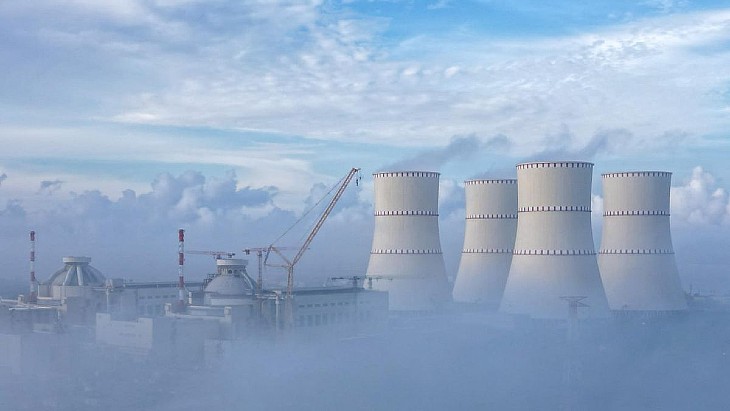
Nuclear fuel loading completed at Rooppur 1

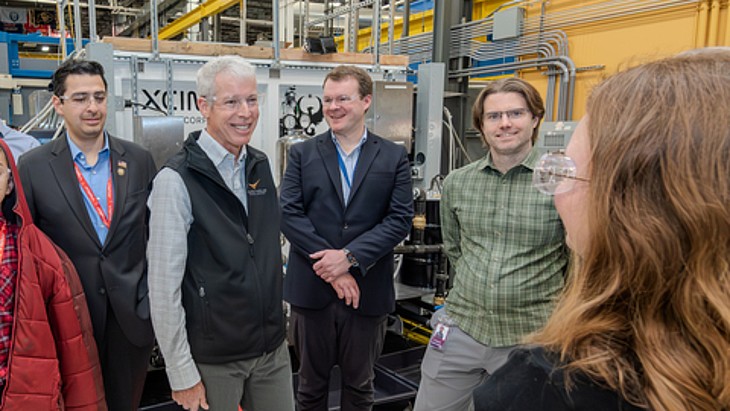
The loading of the fuel began on 28 April, and is a key step as the plant moves towards generating its first electricity.

Alexey Deriy, Atomstroyexport JSC Vice President for Projects in Bangladesh, said: “The work was conducted in strict compliance with the initial core loading programme, process regulations, and nuclear safety standards. The next stage is installing the upper reactor unit and connecting all necessary in-core instrumentation systems. We will conduct hundreds of further tests to prove the reliable and safe operation of all process systems.”

The reactor is expected to be brought to its minimum controllable power level “in the near future”, with tests and checks taking place before the power start-up – with further tests and checks before power levels are increased – and trial commercial operation of the unit.

Background

In February 2011 Russia’s Rosatom signed an agreement for two reactors to be built at Rooppur, about 160 kilometres from the capital Dhaka, for the Bangladesh Atomic Energy Commission. The initial contract for the project, worth USD12.65 billion, was signed in December 2015. The Bangladesh Atomic Regulatory Authority issued the first site licence for the Rooppur plant in June 2016, allowing preliminary site works, including geological surveys, to begin.

Construction of the first unit began in November 2017. Construction of the second unit began in July 2018. They have an initial life-cycle of 60 years, with a further 20-year extension possible.

The first batch of nuclear fuel was delivered to the site in October 2023 – the moment that the site got its status as a nuclear facility. In March last year, Rooppur unit 1’s turbine installation was completed, as were hydraulic tests to check the primary circuit systems and equipment, followed by hot functional tests. An operating licence was issued by the Bangladesh Nuclear Regulatory Authority on 16 April.
   

  • Related Posts

    KHNP, Southern to cooperate on nuclear engineering

    Under the agreement – signed at KHNP’s headquarters in Gyeongju in South Korea – both companies plan to strengthen their partnership by operating technology exchange programmes, holding workshops, and sharing…

    World Nuclear Fuel Cycle: How best to meet growing demand?

    The first panel of the two-day conference saw industry leaders set the scene, outlining accelerating plans for new nuclear deployment from countries with long-established nuclear programmes to newcomer countries and…

    Have You Seen?

    Analysis: Counting the costs of the Middle East crisis

    • May 12, 2026
    Analysis: Counting the costs of the Middle East crisis

    LanzaTech to develop ‘Europe’s first’ ethanol-based SAF facility in Belgium

    • May 12, 2026
    LanzaTech to develop ‘Europe’s first’ ethanol-based SAF facility in Belgium

    Nikkiso signs long-term marine service agreement with Maran Tankers

    • May 12, 2026
    Nikkiso signs long-term marine service agreement with Maran Tankers

    ISS Recommends Shareholders Vote Against Exxon Moving its Registration to Texas

    • May 12, 2026
    ISS Recommends Shareholders Vote Against Exxon Moving its Registration to Texas

    A Trump-Xi Deal Could Revive US Energy Exports to China

    • May 12, 2026
    A Trump-Xi Deal Could Revive US Energy Exports to China

    The Battle for Hormuz Risks Sparking the Next Iran Clash: Bousso

    • May 12, 2026
    The Battle for Hormuz Risks Sparking the Next Iran Clash: Bousso

    Trump’s Gas Tax Holiday Would Cost US$3.5 Billion a Month

    • May 12, 2026
    Trump’s Gas Tax Holiday Would Cost US$3.5 Billion a Month

    U.S. Asks to Keep Collecting Trump’s Tariffs After Court Loss

    • May 12, 2026
    U.S. Asks to Keep Collecting Trump’s Tariffs After Court Loss

    Shell Moves to Exit French Fuel Retail Market in Strategic Pivot

    • May 12, 2026
    Shell Moves to Exit French Fuel Retail Market in Strategic Pivot

    ADNOC Gas Targets 80% Habshan Recovery by End-2026

    • May 12, 2026
    ADNOC Gas Targets 80% Habshan Recovery by End-2026