The renewed hostilities and attacks on vessels in the Strait of Hormuz again put an abrupt end to the steady flow of oil and gas tankers moving in and out of the Persian Gulf.
At least four oil and LNG tankers have made U-turns from attempts to transit the Strait of Hormuz in the past 12 hours, vessel-tracking data compiled by Reuters showed early on Wednesday.
The Iranian attacks on three commercial ships on Tuesday, including an oil tanker and an LNG carrier, have prompted some shipowners and operators to pause attempts to transit the Strait of Hormuz as the security situation has sharply deteriorated.
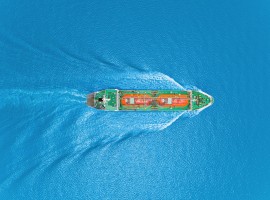
Three empty LNG carriers that were en route to move westward into the Gulf through the Strait of Hormuz turned away from the chokepoint late on Tuesday, according to the data compiled by Reuters from analytics firms Kpler and LSEG. All three LNG carriers were en route to load cargoes at Qatar’s Ras Laffan facility in the Persian Gulf.
A fourth vessel, a fully-laden India-flagged supertanker carrying 2 million barrels of crude from Kuwait, loaded last week and moving eastward, also turned away from the Strait off the tip of Oman, the data showed.
The Strait of Hormuz has seen an uptick in traffic in recent weeks as more vessels have moved out of the chokepoint carrying cargoes to buyers. Inbound traffic of empty tankers has also increased as Gulf oil and gas producers are racing to move the commodities out of the Middle East to restart the production they had to shut in as early as March.
A Marshall Islands-flagged Qatari LNG carrier and a Saudi-owned supertanker, both running dark at the time of the attack, were hit by the attacks on Tuesday.
“Six vessels were rerouted from the southern corridor to the central corridor in immediate response, and one LNG tanker carrying approximately 902,200 barrels of cargo halted its transit and anchored midway in the Strait,” maritime intelligence firm Windward said.
“The Strait of Hormuz is functionally contested again.”
By Tsvetana Paraskova for Oilprice.com
More Top Reads From Oilprice.com
- Oil Prices Jump After Iran Attacks Commercial Vessels
- US Crude Oil, Product Inventories Fall Even As Hormuz Traffic Begins to Flow
- Trump Targets California Again In SpaceX Feud