Oil prices jumped by nearly 4% early on Wednesday as concerns about crude supply from the Middle East intensify with threats to shipping at both chokepoints in the region, the Strait of Hormuz and the Bab el-Mandeb Strait.
Brent Crude prices jumped by 3.75% to trade at $94.42, following reports that the Iran-aligned Houthis are ready to attempt the closure of Bab el-Mandeb, which would choke supply from the Saudi port of Yanbu on the Red Sea.
The U.S. benchmark, WTI Crude, was rising by 3.69% to trade at $87.45 per barrel.
Saudi Arabia has managed to divert most of its crude oil exports to Yanbu to bypass the Strait of Hormuz. But with the Bab el-Mandeb Strait now also under threat, the market fears a wider supply disruption.
The Joint Maritime Information Center (UKMTO), a global monitoring body for naval security, late on Tuesday said in an advisory note that “Sources close to the group stated that the Houthis have completed preparations to attack shipping, including the deployment of missiles and drones positioned near Bab el-Mandeb.”
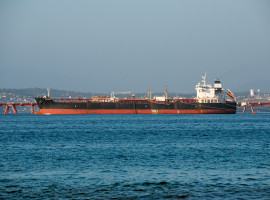
In recent hours, tankers have either made U-turns or slowed and stalled in and near the Red Sea, amid growing uncertainties about how safe passage through the Bab el-Mandeb Strait is now.
For example, three Saudi oil tankers U-turned in the Red Sea on Tuesday after the Houthis declared a blockade on Saudi oil passing through the Bab el-Mandeb.
As attacks continue, there is currently little sign of diplomatic progress, with U.S. President Donald Trump signaling that military operations are likely to intensify and saying the United States currently has “no interest” in renewed negotiations.
Flashpoints outside the Middle East are also lending support to oil prices.
“The disruptions facing the market don’t end in the Middle East. In the Black Sea, Russia’s CPC terminal has stopped receiving oil from Kazakhstan, with loadings suspended following ongoing attacks on tankers,” ING’s commodities strategists Warren Patterson and Ewa Manthey wrote in a note early on Wednesday.
By Charles Kennedy for Oilprice.com
More Top Reads From Oilprice.com
- Houthis Force Saudi Oil Tankers To U-Turn in Red Sea
- Fossil Fuels Still Generate 57% of the World’s Electricity
- Japan’s Power Prices Soar to 3.5-Year High