Crude oil futures continued to rise today, Samer Hasn, Senior Market Analyst at XS.com, highlighted in a market analysis sent to Rigzone on Wednesday, pointing out that WTI and Brent were both increasing by more than four percent.
“The rise in oil prices comes amid the dissipation of the main assumption that substantially helped keep prices low: that the war could not last long,” Hasn said in the analysis.
“While markets have long tried to cling to that assumption, today we see many signs that contradict it,” he added.
“After 11 days of continuous strikes on Iran, there is no signal indicating that we are on the path to returning to negotiations,” Hasn continued.
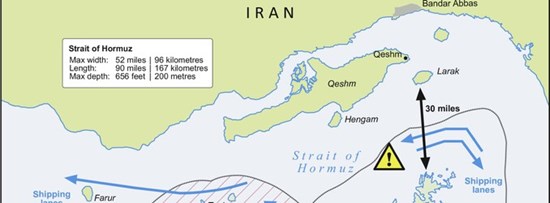
The senior market analyst warned in the analysis that prolonging the war carries the risk of deepening damage to oil supplies flowing from the region, “not only by obstructing tanker movements but also by targeting infrastructure responsible for extracting and exporting crude and natural gas, whether in Iran or in the Gulf states”.
“This damage would be structural and might not be repairable for years, keeping a chronic supply shortage in place. This has actually happened on several occasions, and it is not imaginary,” he added.
Hasn went on to conclude in his analysis that “betting the war cannot last long is a losing bet, unless we see a comprehensive, solid agreement with detailed wording on managing the Strait of Hormuz first and the nuclear agreement second”.
“Without such an agreement, the risks of escalation and of the conflict spiraling out of control remain, threatening to exacerbate structural and chronic damage to global supplies,” he warned.
Standard Chartered Bank Energy Research Head Emily Ashford told Rigzone on Wednesday that the market is pricing in a potential deterioration in security in the Red Sea, which Ashford said extends beyond just risks to Saudi exports in the bank’s view, as well as a broadening of the Middle Eastern conflict, “even as regional mediation efforts have stepped up”.
“If the Houthi’s threat to Saudi exports is deemed significant enough by shippers and insurance companies, then we would expect to see: increased insurance premiums; adjusted transit routes, potentially increasing times and fuel consumption and an effective tightening of tanker availability, raising freight rates; refineries (particularly in Europe) sourcing incremental Atlantic Basin barrels, reshuffling global trade flows and widening regional dislocations in price; increased price and volatility in refined products (impacted in addition by the Ukrainian attacks on Russian refinery and oil logistics infrastructure); [and] Saudi Arabia potentially having to choke-back production again,” Ashford told Rigzone.
Waleed Said, Technical analyst at GivTrade, said in a market analysis sent to Rigzone today that oil prices were rising on Wednesday “mainly because the market is adding a geopolitical supply-risk premium”.
“Repeated U.S.-Iran attacks, President Trump’s threat of severe retaliation, reduced traffic through the Strait of Hormuz, threats to crude-carrying vessels, and disruption to Kazakh supply are increasing fears of delayed shipments, higher insurance costs, and tighter physical availability,” Said warned.
“Strong refined-product margins also suggest that fuel markets remain tight, making crude more sensitive to any additional disruption,” he added.
“However, the rise is being limited by increasing U.S. crude and distillate inventories, which indicate that immediate domestic supply remains manageable,” he continued.
In a quick take analysis posted on its website on Wednesday, Saxo Bank noted that crude oil extended its rally today, adding that the move “reflects the ongoing U.S.-Iran conflict, now in its 11th day, a Houthi threat to Red Sea shipping, and production shut-ins as Tropical Storm Bertha moves through the Gulf of Mexico”.
Nikolas Plonski, Oil Market Analyst for the Americas at Sparta Commodities, highlighted a “re-escalation of the conflict over the Strait of Hormuz” in a report sent to Rigzone on Wednesday.
In this report Plonski warned that the conflict “may look to intensify further with the threat of escalation spreading to the Bab el-Mandeb Strait, with oil tankers beginning to U-turn in the region, adding further risk to the upside”.
J.P. Morgan analysts revealed, in a report sent to Rigzone by the JPM Commodities Research team late Tuesday, that the estimated value of open interest in energy markets “increased sharply by 10 percent WoW ($72 billion WoW) to $821 billion”.
“This was driven by a significant increase in prices across the energy complex (Brent/WTI +16 percent, Gasoil +13 percent, TTF +18 percent WoW),” the analysts added, noting that “the ongoing crisis in the Strait of Hormuz has escalated”.
In the report, the J.P. Morgan analysts revealed that confirmed crude shipments in the Strait of Hormuz had dropped from 12.5 million barrels per day to 5.1 million barrels per day and Persian Gulf product exports had fallen from 3.0 million barrels per day, pre-war, to 1.2 million barrels per day.
“We understand that both sides still prefer negotiations over seeking prolonged conflict and reiterate our price forecast of $86 per barrel Brent for Q3,” the analysts said in the report.
The J.P. Morgan analysts went on to note that the estimated value of open interest in natural gas markets increased by 10 percent over the week to $197 billion.
“This was driven by an increase in prices across European and Asian benchmarks, further supported by net contract-based inflows of $2 billion,” they said.
“Following the recent re-escalation of the Middle East conflict, LNG transit through the Strait of Hormuz has virtually halted,” they added.
“We believe the market is beginning to price in a risk premium around Qatar winter volumes, marking a sea-change compared to the prevailing market view prior to the escalation that Qatar would be fully back by winter,” they continued.
To contact the author, email