Oil is rocketing towards $100 per barrel, adding more than $14 per barrel in just a week.
At the time of writing, Brent is up more than four percent today and trading at $98.25 per barrel, which marks a $14.02 per barrel increase over its July 16 close of $84.23 per barrel.
In a market analysis sent to Rigzone on Thursday, Naeem Aslam, CIO Zaye Capital Markets (ZCM), highlighted Brent’s increase today and said ZCM sees the latest advance “being driven mainly by a larger geopolitical supply premium rather than a sudden improvement in global fuel consumption”.
“President Trump’s warnings of heavy strikes against Iranian nuclear locations, continued U.S. military involvement, possible retaliation against Red Sea disruption, and further action around Iran have increased fears that crude shipments through the Strait of Hormuz and Bab el-Mandeb could face simultaneous pressure,” he added.
“The supply-route risk is central to the oil price outlook because restrictions across either corridor could delay tanker movements, raise insurance and freight costs, tighten prompt physical supplies, and transmit higher energy costs into transport, manufacturing, and consumer inflation,” he continued.
Aslam predicted that oil could continue towards $100 per barrel if military escalation materially interrupts exports or shipping access.
“Conversely, evidence of negotiations, uninterrupted Iranian production, restored maritime security or weaker global demand could remove part of the geopolitical premium and pull prices lower,” he said.
“This means current oil strength remains highly sensitive to each change in military activity, diplomacy and tanker traffic,” Aslam noted.
The ZCM CIO also highlighted in the analysis that OPEC’s latest outlook “reduced expected 2026 global oil demand growth to roughly 780,000 barrels per day, while participating producers planned an output increase of 188,000 barrels per day”, which he said provided “a bearish counterweight to the conflict-driven rally”.
Aslam went on to state that the IEA “reported that global supply recovered by 4.1 million barrels per day to 98.8 million barrels per day in June, although production remained approximately 9.4 million barrels per day below pre-conflict levels”.
“Yesterday’s U.K. economic data showed annual consumer inflation slowing to an actual 2.6 percent in June from 2.8 percent in May, with core inflation at 2.6 percent and services inflation easing to 3.6 percent. These figures support expectations for less restrictive policy and improved consumer purchasing power, but crude above current levels could reverse part of that inflation relief,” he added.
Aslam went on to project that today’s EUR main refinancing-rate decision, monetary policy statement, press conference, and U.S. unemployment claims will influence whether traders prioritize demand resilience, currency movements, or renewed inflation risk.
“A more restrictive European policy message or U.S. claims below forecast could support growth confidence, but higher yields and a stronger dollar may restrict oil’s upside,” he said in his analysis.
“A softer message or claims above forecast could weaken the dollar and support dollar-priced crude, although a substantial increase in claims could also raise recession concerns and reduce expected fuel demand,” he added.
“At Zaye Capital Markets, we see oil trading between geopolitical supply disruption and softer demand forecasts,” he continued.
“Analysts should monitor tanker movements, shipping insurance, inventories, the dollar, unemployment claims and whether Brent can hold above $96 before treating a move toward $100 as sustainable,” he said.
Renewed Test of Oil Market Resilience
In a research note sent to Rigzone by the HSBC team on Wednesday, HSBC Senior Global Oil and Gas Analyst Kim Fustier said the “calm” that followed the mid-June U.S.-Iran memorandum of understanding had “given way to a renewed test of the oil market’s resilience”.
“Brent is back above $90 per barrel, just weeks after falling to pre-conflict lows around $70 per barrel,” Fustier highlighted.
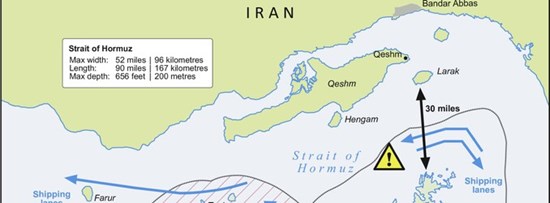
“Since 7-8 July, the ceasefire has frayed as Iranian attacks on vessels transiting the strait of Hormuz prompted U.S. retaliatory strikes. The core issue remains unresolved: whether passage is administered, and by whom,” Fustier added.
“In hindsight, the more traffic was rising through the U.S.-managed Omani lane, the less this outcome suited Iran,” Fustier continued.
The HSBC analyst outlined that near-term direction in the oil market “hinges on whether diplomacy can restore predictable transit within the MoU’s 60-day negotiation window to mid-August”.
“A renewed agreement would support a recovery towards broadly normal conditions by end-September (as per our base case, which now looks optimistic). Failure would imply lower sustained flows and upside risks to oil prices and our own Brent price assumptions,” Fustier warned.
In the research note, Fustier revealed that Hormuz crossings had fallen back towards the April-May lows, “with several days at single-digit vessel transits, down 90 percent from normal once again”.
“That implies Hormuz liquids flows of less than two million barrels per day in the last six days, down from over six million barrels per day in June and over 10 million barrels per day in early July before the breakdown,” Fustier pointed out.
Fustier went on to state in the note that, in HSBC’s view, Houthi threats to impose a blockade on Saudi exports via the Red Sea are “overstated”.
“Even if Bab el‑Mandeb became at risk, we think there is a workable alternative route north via the Suez canal and the SUMED corridor, which have spare capacity,” Fustier said.
“The trade-off would be longer sailing times to Asia and a greater reliance on ship-to-ship transfers and smaller vessels, pushing up freight costs,” Fustier added.
Fustier also noted that there is rising momentum behind regional pipeline projects to bypass Hormuz, beyond the existing Saudi East-West and the UAE’s ADCOP pipelines.
“The UAE’s second ADCOP line should start around mid-2027, while additional projects in Saudi Arabia and Iraq remain longer-dated and uncertain,” Fustier highlighted.
However, Fustier went on to warn that, “taken together, existing plus new bypass pipeline capacity (under construction and under study) of up to c.11 million barrels per day remains well short of fully offsetting 19-20 million barrels per day of normal Hormuz transit”.
Two Choke-Point Problem
In a report sent to Rigzone by the Standard Chartered team on Wednesday, Standard Chartered Bank Energy Research Head Emily Ashford warned that Middle East risk is now a “two choke-point problem”.
“The 20 July Houthi threat to prevent Saudi-linked vessels from transiting the Bab el Mandeb Strait, which is the southern entrance to the Red Sea, raises the possibility of disruption to both eastern and western export routes,” Ashford warned in the report.
“Saudi Arabia has increased loadings at the Yanbu port on the Red Sea to c.4.5 million barrels per day, as it pivoted exports from the Arabian Gulf. Coupled with flows south from the Suez Canal, approximately seven million barrels per day of oil transits through Bab el-Mandeb at present,” Ashford highlighted.
Ashford outlined in the report that, in Standard Chartered Bank’s view, “the significance extends beyond Saudi exports”.
“The Red Sea, together with the Suez Canal and SUMED pipeline represent the shortest maritime connection between Europe and Asia,” Ashford pointed out.
“The Suez Canal is not equally accessible to all tankers; VLCCs that can transport two million barrels of crude are too large to transit fully laden, given draft restrictions,” Ashford added.
“Crude/cargo is typically loaded onto smaller Suezmax tankers, or discharged at Ain Sokhna, before crossing Egypt via the SUMED pipeline, and then loaded onto tankers in the Mediterranean,” Ashford said.
“Any serious deterioration in security would: (one) increase war-risk insurance premiums, (two) cause shipping companies to adjust voyages to transit via the Cape of Good Hope, increasing voyage times and bunker fuel consumption, tightening tanker availability, delaying arrivals and raising freight rates,” Ashford warned.
“The cost of moving barrels is likely to increase while the risk persists, and Saudi Arabia will have no choice but to choke back output once more,” the Standard Chartered Bank Energy Research Head stated.
To contact the author, email