By
28 min ago 3 min read
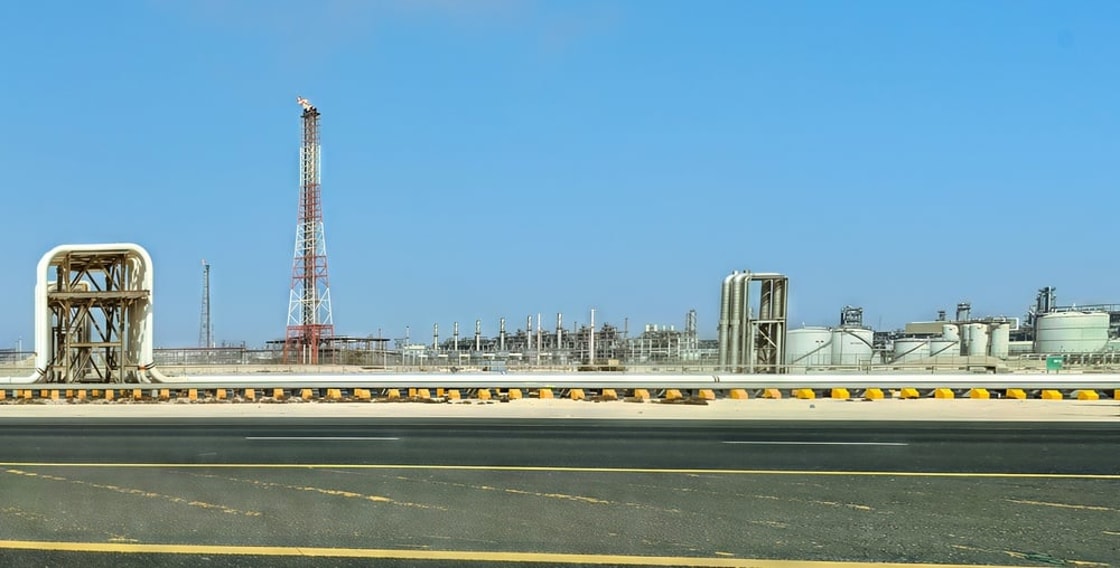
Repairing Qatar’s Pearl GTL complex and Barzan gas plant will cost $5.8bn and take between ‘four and 12 months’, according to latest Wood Mackenzie research.
The attack on Pearl GTL and Barzan explosion removed around 4.5 billion cubic feet per day (bcfd) of gas-processing capacity: two LNG trains totalling 12.7 million tonnes per annum (mmtpa), one GTL train, and Barzan’s domestic lean-gas processing.
The outages account for roughly 17% of Qatar’s LNG export capacity. The Barzan shutdown alone removes 35% of Qatar’s 4 bcfd domestic gas supply, the research firm added.
Iran’s position is structurally different but no less serious. Strikes on the Assaluyeh processing hub, which handles around 30% of South Pars output, and on Phase 13 facilities at Kangan have disrupted production across multiple field phases.
South Pars supplies 40-50% of Iran’s fuel demand and around 80% of its power generation. The country has no LNG export infrastructure, no meaningful energy diversification, and peak summer gas demand that surges to over 11 bcfd.
Iran relies on liquid fuels to cover any supply shortfall, a gap the current disruption is widening, the paper added.
Alexandre Araman, Director, Middle East Upstream, Wood Mackenzie, said Qatar is managing $5.8bn in repairs and recovery timelines of up to a year while commissioning the largest LNG expansion programme in the world.
“That timing matters because 54 mmtpa of uncontracted Qatari volumes will reach the market by 2035, and buyers are making long-term security decisions right now,” he said. “What this conflict has done is turn a well-understood geographical concentration risk into an operational reality across the entire value chain, from wellhead to export terminal.”
Strikes on Qatar’s North Field and Iran’s South Pars have taken capacity offline across a resource base that holds 25% of the world’s gas and supplies 10% of global production, creating cascading implications for LNG markets, buyer behaviour, and long-term energy security.
In a new development, QatarEnergy is looking to replace LNG capacity lost due to Iranian attacks .
North Field East, North Field South, and North Field West were set to add a combined 48 mmtpa of new liquefaction capacity and lift plateau production to 28 bcfd by 2033.
Qatar also hosts the world’s largest post-FID carbon capture, utilisation, and storage development at Ras Laffan, targeting around 11 mmtpa of CO2 capture, supplies around one-third of global helium demand, and underpins sulphur and ammonia production serving international industrial and agricultural markets.
Qatar exported more than 80 million tonnes of LNG in 2025, with India receiving 11.9 million tonnes, Taiwan 8.2 million tonnes, and Europe accounting for 11% of total supply.