In a market update sent to Rigzone late Monday, Rystad Energy warned that 2.5 million barrels per day of Saudi oil is at risk as the Houthis “threaten to enact [a] naval blockade”.
“The Houthis have announced their intention to impose a naval blockade against Saudi Arabia, marking a significant deterioration in the Middle East risk outlook,” Rystad noted in its update.
Rystad pointed out that oil prices had pulled back below $88 per barrel, from around $91 per barrel, “as traders focus[ed] on Qatar’s proposed ten-day ceasefire and an easing of Hormuz shipping restrictions”. The company cautioned, however, that the price decline “reflects diplomatic optimism rather than any meaningful improvement in the physical supply picture”.
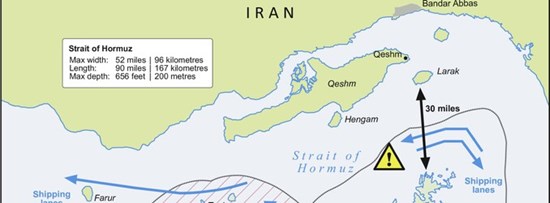
“The Strait of Hormuz remains almost at a standstill, and Saudi Arabia’s Red Sea export route, which has been carrying the bulk of Gulf crude to market, is now directly in the line of fire,” Rystad warned.
In the update, Jorge Leon, senior vice president and head of geopolitical analysis at Rystad Energy, said, “while the Houthis have not yet clarified how the blockade would be enforced, their previous campaign against commercial vessels demonstrates both the capability and willingness to disrupt Red Sea shipping”.
“The threat is particularly significant because Saudi Arabia has increased exports from Yanbu to around four million barrels per day as it seeks to bypass the Strait of Hormuz,” he added.
“Rystad Energy vessel-tracking data indicates that approximately 2.5 million barrels per day of these volumes are currently moving south through Bab el-Mandeb, leaving a critical alternative export route directly exposed to potential Houthi action,” he warned.
“This comes as traffic through the Strait of Hormuz remains almost at a standstill, with only very limited and sporadic vessel movements by Gulf exporters,” Leon continued.
Leon highlighted in the update that, “with the Gulf’s primary maritime outlet largely closed, the market is increasingly dependent on Saudi Arabia’s East-West pipeline and Red Sea terminals to maintain export flows”.
He warned that any disruption at Bab el-Mandeb “would therefore threaten not only Saudi shipments but one of the few remaining routes capable of compensating for the severe reduction in Hormuz traffic”.
“If a ceasefire does not materialize and Hormuz remains largely closed while the Houthi threat to Red Sea shipping intensifies, the risk of a significant rebound in oil prices would be substantial,” he said.
In a market analysis sent to Rigzone on Tuesday, Naeem Aslam, CIO Zaye Capital Markets, outlined that oil prices remained “elevated but volatile as traders balance the possibility of diplomatic progress against the continuing risk of physical supply disruption”.
“Expectations surrounding a proposed 10-day ceasefire have reduced part of the immediate geopolitical premium, encouraging some profit-taking after the recent rally,” he said in the analysis.
“However, military strikes, threats to tankers and uncertainty surrounding regional energy infrastructure are preventing a deeper decline because any disruption to production or shipping routes could rapidly tighten global supply,” he added.
Aslam said U.S. President Donald Trump’s warnings of further action against Iran, “including the possibility of targeting energy infrastructure, are directly increasing uncertainty across the oil ecosystem”.
“A strike affecting production facilities, export terminals or maritime routes could raise freight rates, insurance costs and replacement-supply expenses, potentially pushing Brent back above $90 per barrel,” he warned.
“His additional 50 percent tariffs on selected Canadian products may also increase North American trade friction and corporate costs, although the exclusion of energy limits the immediate effect on crude flows,” he added.
“The result is a market caught between diplomacy-driven selling and conflict-driven supply protection,” Aslam said.
In the analysis, Aslam went on to note that yesterday’s U.S. Leading Economic Index declined 0.2 percent in June to 99.1, compared with the forecast 0.1 percent fall, which he pointed out reversed May’s 0.1 percent increase.
“This weaker than expected forward-growth indicator is limiting oil demand optimism because slower business activity, consumer spending and industrial momentum could reduce future fuel consumption,” he said.
“At the same time, tighter U.S. crude and gasoline inventories are providing near-term support, creating a divide between softer economic expectations and stronger physical-market conditions,” he added.
“Oil may therefore remain sensitive to inventory changes, refinery demand and evidence that economic weakness is spreading into transportation and manufacturing,” he continued.
Aslam projected in the analysis that today’s GBP Claimant Count Change and Average Earnings Index 3m/y “could influence crude prices through global demand expectations, currency movements and bond yields”.
“Higher than forecast claimant numbers combined with weaker wage growth would reinforce slowdown concerns and could pressure oil, while fewer claimants and stronger earnings may improve demand expectations but strengthen the dollar, limiting gains in dollar-priced crude,” he said.
Aslam pointed out that the broader supply-demand outlook also remains divided, “with one producer-group forecast pointing to approximately 1.0 million barrels per day of demand growth in 2026, while another international assessment anticipates a decline of roughly 1.0 million barrels per day before a 2.0 million barrel per day rebound in 2027”.
“Geopolitical risk is supporting current prices, but a sustained breakout requires either actual supply disruption or stronger evidence that global demand is holding firm,” he concluded.
To contact the author, email