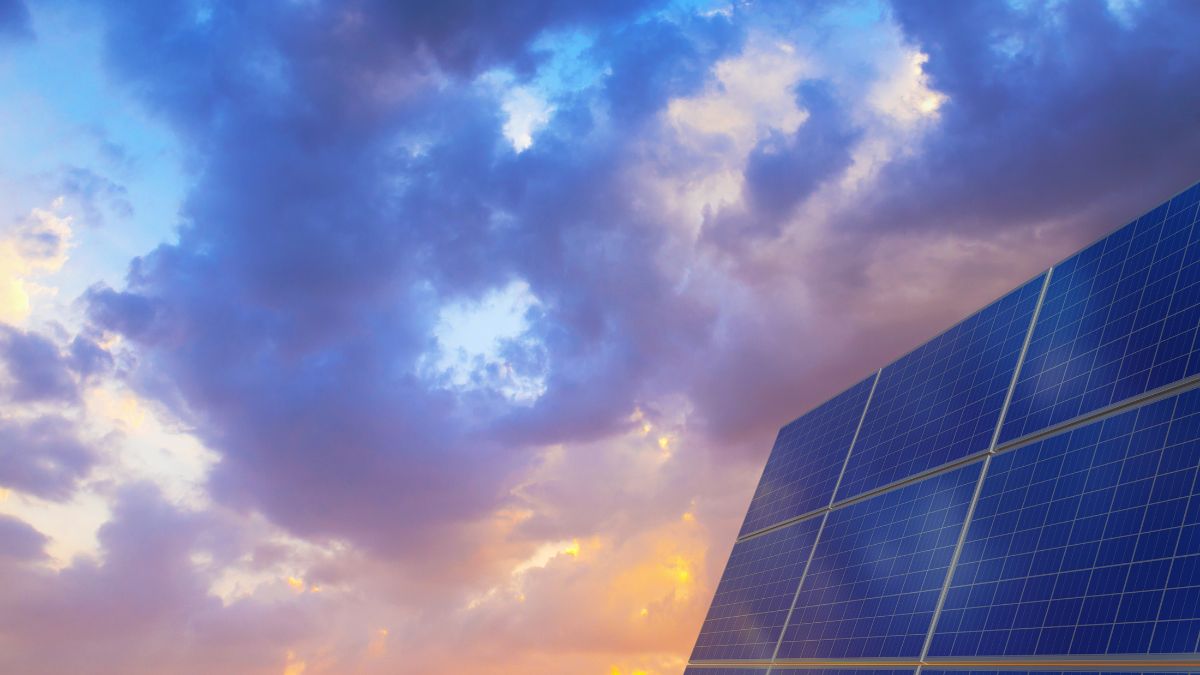
SolarBank Corporation has announced plans to develop a 4.584 megawatt (MW) direct current (DC) ground-mounted solar power project, known as the Forest Hill Rd project, located in upstate New York. The initiative is part of the company’s expanding development pipeline, which now exceeds one gigawatt, and underscores its ongoing commitment to advancing community solar and clean energy access across the region.
The site lease for the Forest Hill Rd project has already been secured, and the interconnection study is currently in progress. This study is a critical step in evaluating the feasibility of connecting the solar installation to the existing power grid. If successful, the company will proceed with obtaining the required permits and securing financing to support construction.
The project will be eligible for compensation through New York’s Value of Distributed Energy Resources (VDER) mechanism, under case 15-E-0751 of the New York Public Utility Commission. VDER provides a compensation framework for distributed energy resources that deliver electricity to the grid. For this project, the year-one average compensation is projected at $0.0971 per kilowatt-hour (kWh), offering a competitive return for clean energy generation.
Additionally, the Forest Hill Rd project is expected to qualify for incentives through the New York State Energy Research and Development Authority (NYSERDA) under the NY-Sun Program. This program supports solar development through one-time payments that aid in project financing. The company is targeting incentives of up to $0.345 per watt DC for this installation, which would provide significant support in advancing the project toward completion.
Once operational, the Forest Hill Rd project will function as a community solar project. Community solar involves the installation of centralized solar panels that generate electricity fed into the local grid. Residents, including renters and homeowners who may not have the option to install solar panels on their own properties, can subscribe to the project and receive credits on their electricity bills based on their share of the solar power generated. This model broadens access to renewable energy, reduces electricity costs for participants, and supports local sustainability efforts.
To ensure smooth project implementation and maximize participation, SolarBank has partnered with Solar Simplified to handle all customer-facing aspects of the community solar initiative. Solar Simplified will be responsible for subscriber acquisition, enrollment, and ongoing customer management. This partnership allows SolarBank to focus on core project development activities while ensuring that projects are fully subscribed and generate maximum revenue from the outset. The alignment between both companies’ business models supports accelerated development and the successful rollout of more community-based solar projects.
Dr. Richard Lu, CEO of SolarBank, said in a statement, “We continue to execute on our development pipeline of community solar projects. I also want to comment on the recent announcement of increased tariffs on south-east Asia solar cells and SolarBank’s plans to manage its supply chain. SolarBank has not been importing solar panels from any of the four countries that are subject to the tariffs announced by the U.S. Department of Commerce on April 21, 2025. As a result its present operations are not affected by this announcement.”
He further continued, “In addition, SolarBank has been exploring sourcing solar panels from other jurisdictions such as the Middle East and North America, where (domestic assembled) solar panels are becoming cost competitive with the panels imported from Asia. SolarBank also has significant development opportunities in Canada where solar panels are not subject to the same tariffs. Finally, I am expecting that electricity costs will increase in response to these tariffs which will further mitigate the financial impact on projects. Overall, SolarBank is well positioned to manage this risk.”
However, SolarBank also acknowledges the inherent risks associated with developing utility-scale solar projects. These include the need for successful completion of the interconnection process, receipt of required permits, availability of third-party financing, and timely execution of contracts. Furthermore, any changes in government policy or the reduction or elimination of solar incentives could impact the economic viability of the project.
Despite these uncertainties, the Forest Hill Rd project represents a significant step forward in SolarBank’s mission to drive clean energy adoption and provide accessible solar power solutions to more communities. The project illustrates how community solar can be a powerful tool in advancing energy equity and accelerating the transition to a more sustainable power system.