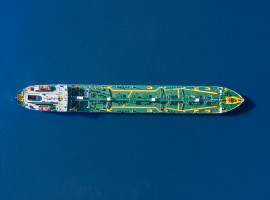
South Korea is sending a senior government official to Oman, Kazakhstan, and Saudi Arabia in a bid to secure crude oil supply that does not need to pass through the Strait of Hormuz, Reuters has reported.
Kang Hoon-sik, the presidential chief of staff, will hold talks with government officials in the three countries, energy companies, and shipping operators. South Korea has already managed to secure 110 million barrels of crude for April and May, Reuters noted in its report.
The official told the media that the need to secure alternative oil supplies was urgent because South Korea depended on cargoes transited via the Strait of Hormuz for as much as 61% of its crude oil imports and 54% of its naphtha imports.
Oman sits outside the Strait of Hormuz, which makes it geographically suitable for alternative supplies, and Saudi Arabia has rerouted its oil flows from the east to the west, where it exports the crude via the Red Sea. Most of Kazakhstan’s crude oil reached global markets via the Caspian Pipeline Consortium, which terminates at the Russian port of Novorossiysk. The CPC pipeline has recently become a target for Ukrainian drone strikes.
South Korea is among the world’s most import-dependent nations when it comes to energy commodities and as such, one of the first to feel the pinch from the closure of Hormuz. Last month, Seoul had to set a ceiling on fuel prices—for the first time in three decades—to stabilize the market and shield the economy.
The country also imposed driving limits for civil servants in March to handle the potential fuel shortages coming its way. Later in the month, Seoul was reported to consider extending those limits to other drivers as well, if oil prices hit $120 per barrel. These are the first driving restrictions South Korea has had to enforce since the early 1990s and the Gulf War.
By Irina Slav for Oilprice.com
More Top Reads From Oilprice.com
- Iraq Prepares to Ramp Up Production After War Disruption
- WTI Prices Soar Past Brent
- Somalia Set To Begin First Ever Offshore Oil Drilling In April