In May last year, Taiwan’s Legislative Yuan passed an amendment to the Nuclear Reactor Facilities Regulation Act that allows nuclear power plant operators to apply for a 20-year licence renewal beyond the existing 40-year limit, potentially extending a plant’s operating lifespan to 60 years.
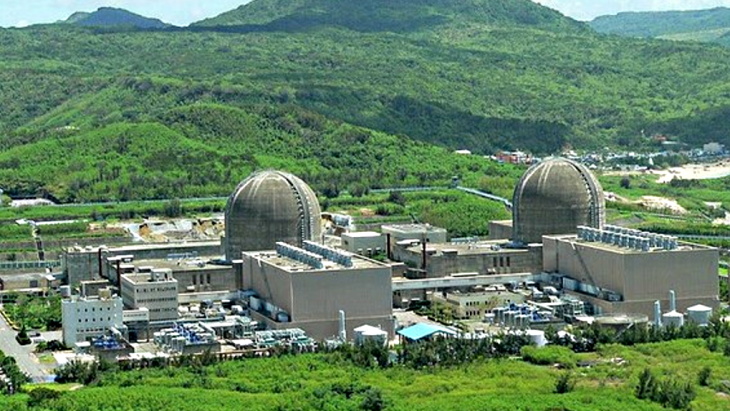
Taiwan Power Company (Taipower) announced it has now submitted a licence renewal application and related documents for the Maanshan plant, which it says has already been approved by the Ministry of Economic Affairs, to the Nuclear Safety Council (NSC). The plan includes five main parts: the current status and planned schedule of the unit; manpower allocation and training; reactivation items and regular maintenance of the facility; planning of regulations during operation; and quality verification and audit plan.
The NSC said it will first conduct a procedural review of the documents that Taipower has now submitted. After confirming that the application documents are complete, it will proceed with the substantive technical review. The NSC said it will invite external scholars and experts, along with NSC colleagues, to form a special review team.
“This team will conduct a rigorous review in accordance with regulations and international practices to ensure that Taipower has submitted a proper plan for all aspects of the restart plan and that it meets quality assurance requirements before approving the plan,” it said. “During the implementation of the restart plan, the NSC will also conduct on-site verification to confirm that Taipower is implementing the plan accordingly. After Taipower completes the relevant procedures according to the reactivation plan, it must submit an implementation report to the NSC for review, as required by regulations. In addition, Taipower must also submit documents related to aging assessment and management, radiation-related issues verification and assessment, and seismic safety assessment, as required by regulations.”
“Even if the restart plan is approved by the Nuclear Safety Council, it cannot start generating electricity immediately,” Taipower noted. “Further independent safety inspections are still required. These inspections will take approximately 18 to 24 months, after which a report must be submitted to the Nuclear Safety Council for review. The review time is determined by the Council. Only after the review is approved and a new operating licence is issued will the plant be qualified to operate.”
Taiwan’s nuclear energy policy
Taiwan’s Democratic Progressive Party (DPP) was elected in January 2016 with a policy of creating a “nuclear-free” Taiwan by 2025. Under this policy, Taiwan’s six operable power reactors would be decommissioned as their 40-year operating licences expired. Shortly after taking office, the DPP government passed an amendment to the Electricity Act, passing its phase-out policy into law. The government aimed for an energy mix of 20% from renewable sources, 50% from liquefied natural gas and 30% from coal.
However, in a referendum held in November 2018, voters chose to abolish that amendment. The Ministry of Economic Affairs said the amendment was officially removed from the Electricity Industry Act on 2 December.
Nevertheless, then Minister of Economic Affairs Shen Jong-chin said in January 2019 “there would be no extension or restarts of nuclear power plants in Taiwan due to subjective and objective conditions, as well as strong public objection”.
In May 2025 – just days before the final closure of Maanshan unit 2, marking Taiwan’s exit from nuclear power – Taiwan’s legislature approved an amendment proposed by the main opposition party (Kuomintang) to the Nuclear Reactor Facilities Regulation Act, allowing nuclear reactor lifespans to be extended from 40 to 60 years. The move was aimed at bolstering energy security amid rising demand from AI growth and to curb reliance on imported liquefied natural gas.