Trump Offers US Oil Companies a Poisoned Chalice in Venezuela

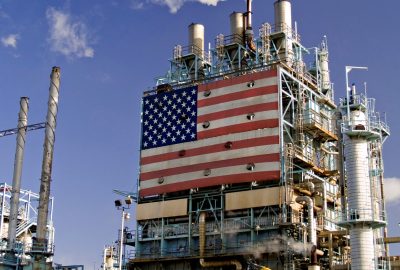
El Palito refinery of the Venezuelan state oil company PDVSA, in Puerto Cabello
The Venezuelan flag has been fixed on the El Palito refinery of the Venezuelan state oil company PDVSA, in Puerto Cabello, Venezuela February 10, 2024.

(Reuters) – U.S. President Donald Trump is giving U.S. energy companies the opportunity to revive Venezuela’s massive, derelict oil industry. It’s an offer they may want to refuse.

After the U.S. military’s ouster of Venezuelan President Nicolas Maduro at the weekend, representatives of the Trump administration plan to meet with oil executives later this week to discuss boosting Venezuelan oil production, Reuters reported on Monday.

Tapping Venezuela’s vast oil reserves – the world’s largest at over 300 billion barrels, or roughly one-fifth of the global stock – may be a tempting prospect for Exxon Mobil, Chevron and ConocoPhillips.


Get the Latest US Focused Energy News Delivered to You! It’s FREE:


The potential to increase Venezuela’s oil production is enormous. Following years of mismanagement and U.S. sanctions, the Latin American country’s production has slumped from a record of over 3.5 million barrels per day (bpd) in the 1970s, when it made up around 8% of global supplies, to below 1 million bpd last year, less than 1% of today’s supply.

An opportunity approaching this scale has only been seen on a handful of occasions in recent decades, including following the collapse of the Soviet Union in the early 1990s, when Western oil majors scrambled to acquire cheap oil and gas assets, and after the fall of Saddam Hussein in Iraq the following decade when energy companies did much the same.

It could be particularly appealing now, as company boards have been green-lighting billions in investment to locate new resources around the world in a rush to increase market share.

But Trump’s proposal is far from a slam-dunk.

BELOW-GROUND RISKS

To start, most of Venezuela’s oil reserves, located in the Orinoco belt, are classified as heavy and extra‑heavy. These highly viscous grades must be blended with diluent and upgraded into lighter oil to be extracted, transported and processed. All this raises the production costs.

The energy-intensive upgrading process also increases the carbon footprint of these heavy grades, which could push up costs further if more governments start taxing emissions or raising existing levies.

Breakeven costs for key grades in the Orinoco belt already average more than $80 a barrel, according to estimates by consultancy Wood Mackenzie. That places Venezuelan oil at the higher end of the global cost scale for new production. By comparison, heavy oil produced in Canada has an average breakeven cost of around $55 a barrel.

Exxon’s breakeven target for its global oil production by 2030 is $30 a barrel, driven by low-cost fields in Guyana and the U.S. Permian shale basin. Chevron has a similar target, while Conoco has a long-term plan to generate free cash flow even if oil prices fall to $35 a barrel. Oil , currently trades at around $60.

While energy boards have increasingly supported greater exploration in recent years, they are insisting that this be done with spending discipline in mind in the face of rising global supplies and uncertainty over the energy transition.

Convincing U.S. majors to invest billions to extract pricey Venezuelan barrels may therefore be a rather hard sell.

“The opportunity must be compelling enough to offset the substantial political risk that will persist in the years ahead,” according to Carlos Bellorin, an analyst at consultancy Welligence Energy.

As it stands, Venezuela doesn’t seem to fit the bill. Of course, that could change if a new industry-friendly Venezuelan government were to make changes to taxation and royalty policies, greatly reducing the average cost. But that remains a big “if.”

Venezuela's hydrocarbon production
Venezuela’s hydrocarbon production

ABOVE-GROUND RISKS

Oil companies are no strangers to political risk, of course. Over the past few decades, they have often had to navigate abrupt regime change, social unrest and conflicts in hotspots such as Libya, Iraq, Angola and Venezuela, just to name a few.

But even by these standards, the current situation in Venezuela – with its highly uncertain power transition – looks like more trouble than it’s worth.

Until Caracas has a new government capable of gaining the confidence of international investors and banks, oil companies will be reluctant to make any major commitments. Buying assets for pennies on the dollar may be tempting, but it’s a lot less attractive if you can’t trust the contract.

What’s more, U.S. majors have in recent decades gone to great lengths to distance themselves from American foreign policy, emphasizing their independence to convince investors that they are focused solely on shareholder returns.

They will thus be loath to be seen as doing the U.S. president’s bidding. Trump claimed on Sunday that he had spoken to all of the major U.S. energy firms about his plans for investing in Venezuela “before and after” Maduro’s capture, a claim company executives refuted.

Contradicting Trump also carries risks for companies, however, potentially very large ones at a time when government involvement in the economy is increasing rapidly.

The U.S. oil giants will thus likely acquiesce to the White House’s plan, at least in part, by signalling a willingness to explore opportunities in Venezuela.

But will they agree to pour billions of dollars into a country long considered the poster child for corruption and economic mismanagement? That might be hard to swallow.

Ron Bousso Editing by Marguerita Choy

Share This:


More News Articles


  • Related Posts

    Oil Shipments Rise in Hormuz Although Questions Grow Over Iran’s Transit Terms

    Oil shipments through the Strait of Hormuz picked up on Friday after the United States and Iran signed a ceasefire deal, with Gulf producers preparing to raise exports despite concerns…

    Iran Closes Strait of Hormuz Again and Says its Negotiating Team With U.S. is Heading to Switzerland

    The Associated Press Iran has closed the Strait of Hormuz after Israel’s continued attacks in Lebanon. DUBAI, United Arab Emirates — Iran dealt two quick blows to the interim agreement…

    Have You Seen?

    Kuwait Says Oil Output Could Hit 2 Million Bpd Within a Week

    • June 21, 2026
    Kuwait Says Oil Output Could Hit 2 Million Bpd Within a Week

    Oil continues flowing through Hormuz despite Iran’s closure claim

    • June 21, 2026
    Oil continues flowing through Hormuz despite Iran’s closure claim

    Oil Shipments Rise in Hormuz Although Questions Grow Over Iran’s Transit Terms

    • June 20, 2026
    Oil Shipments Rise in Hormuz Although Questions Grow Over Iran’s Transit Terms

    Oil Suffers for 8% Weekly Loss as Traders Weigh US-Iran Truce Outlook

    • June 20, 2026
    Oil Suffers for 8% Weekly Loss as Traders Weigh US-Iran Truce Outlook

    Iran Closes Strait of Hormuz Again and Says its Negotiating Team With U.S. is Heading to Switzerland

    • June 20, 2026
    Iran Closes Strait of Hormuz Again and Says its Negotiating Team With U.S. is Heading to Switzerland

    UP Invests ₹5,400 Crore In Green Energy Corridor-II To Support 22 GW Solar Ambitions

    • June 20, 2026
    UP Invests ₹5,400 Crore In Green Energy Corridor-II To Support 22 GW Solar Ambitions

    GERC Reviews Dispute Over 2.64 MW Captive Solar Project Delay And Bank Guarantee Encashment

    • June 20, 2026
    GERC Reviews Dispute Over 2.64 MW Captive Solar Project Delay And Bank Guarantee Encashment

    KERC Proposes New Solar Tariffs For 2026-29, Aims To Boost Rooftop Solar Adoption In Karnataka

    • June 20, 2026
    KERC Proposes New Solar Tariffs For 2026-29, Aims To Boost Rooftop Solar Adoption In Karnataka

    ScottishPower Energy Networks Highlights The People Driving The UK’s Electricity Network Transformation

    • June 20, 2026
    ScottishPower Energy Networks Highlights The People Driving The UK’s Electricity Network Transformation

    EBRD Marks 10 Years Of Green Cities Programme With High-Level Talks On Sustainable Growth And Investment

    • June 20, 2026
    EBRD Marks 10 Years Of Green Cities Programme With High-Level Talks On Sustainable Growth And Investment