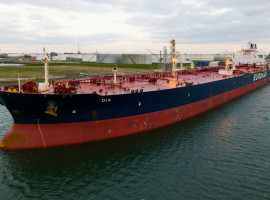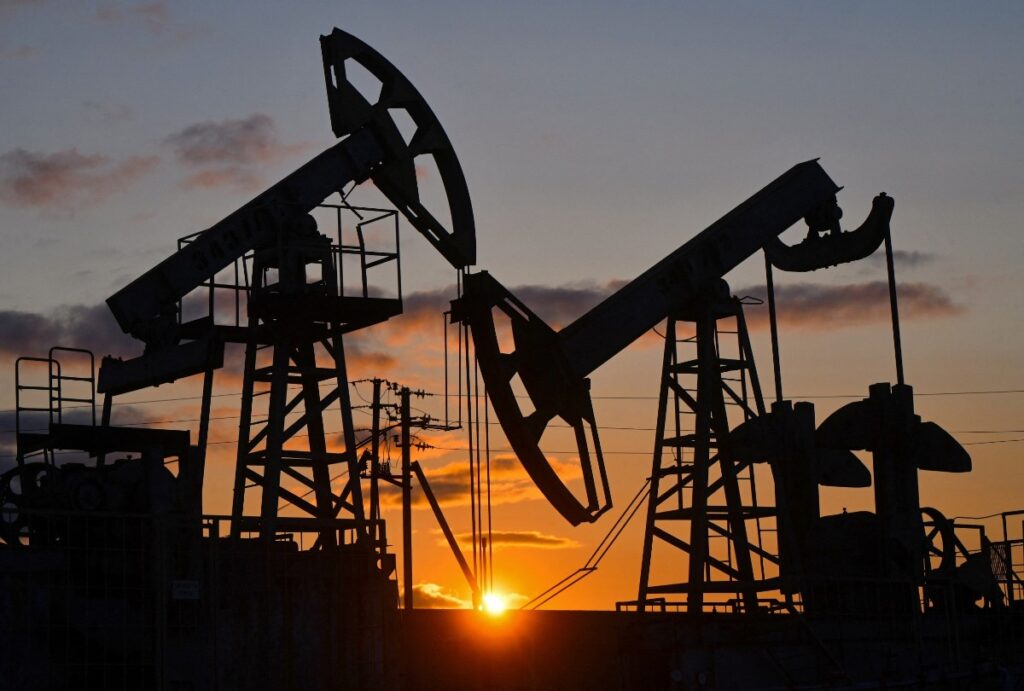
(Reuters) – President Donald Trump plans to import previously sanctioned Venezuelan oil into the U.S., tearing up the global energy playbook and underscoring the seriousness of the administration’s ambition to dominate the Western Hemisphere. China may be the ultimate target of this “Donroe Doctrine”- Trump’s rebranding of a 19th-century doctrine that asserted Washington’s zone of influence in the Americas. But U.S. oil companies could become the unintended casualties. Caracas has agreed to export up to $2 billion worth of Venezuelan crude to the U.S., Trump said on Tuesday. This was just days after the U.S. ousted Venezuelan President Nicolas Maduro and began demanding that the Latin American country open up its energy industry to American oil companies – or risk further military intervention. Venezuela will be “turning over” between 30 million and 50 million barrels of sanctioned oil to the U.S., Trump said in a social media post. The deal’s time frame has not been disclosed, but the shipments will likely start soon.
Energy Secretary Chris Wright said the U.S. needs to control Venezuela’s oil sales and revenue indefinitely to drive the changes it wants to see in the country.
Get the Latest US Focused Energy News Delivered to You! It’s FREE:
Trump’s plan will mostly come at the expense of China, which accounted for roughly 400,000 barrels per day of Venezuela’s oil exports last year. That is over 50% of total exports, according to Kpler data, and around two-thirds of Venezuela’s sanctioned oil exports, according to ROI calculations. By rerouting 50 million barrels of sanctioned Venezuelan oil away from China, the U.S. would thus be seizing the equivalent of around four months of Chinese supplies and roughly 55 days of Venezuela’s current production of around 900,000 bpd. On top of this, the Trump administration has reportedly told Venezuela’s interim president Delcy Rodriguez to sever economic ties with China. The most significant Chinese-owned oil asset in Venezuela is PetroSinovensa, a major joint venture with the Venezuelan state-owned firm PDVSA and China National Petroleum Corp. The JV operates in the Orinoco belt, producing around 65,000 bpd.
Taken together, the Trump administration’s actions in Venezuela appear to be part of a much broader geopolitical strategy.
“This is more than redirecting barrels originally headed to China’s refiners. It signals President Trump’s intent to push China, Russia, and Iran out of their deep footholds in Venezuela,” Bob McNally, president of consultancy Rapidan Energy Group and a former White House official.
‘DONROE DOCTRINE’ IN ACTION
The developments over this past week are aligned with the National Security Strategy document the White House published late last year. It called for cementing U.S. dominance in the Western Hemisphere by pushing out competitors and restoring American control over energy and supply chains.
The so-called “Donroe Doctrine” harkens back to the foreign policy of former U.S. President James Monroe, who in 1823 declared that the Americas were no longer open to future colonisation by European powers. The Trump administration’s renewed threats this week to take over Greenland, a self-governing Arctic island that is part of Denmark, are also in line with these ambitions.
Trump’s words and actions suggest that investors may want to start taking the White House’s national security strategy more seriously – and literally.
Speaking to reporters on Saturday after announcing Maduro’s arrest, he said “American dominance in the Western Hemisphere will never be questioned again.”
BEIJING BLOWBACK
The American actions in Venezuela put U.S. companies, particularly oil firms, in a very tough spot. If a U.S. company such as Exxon Mobil or Chevron enters into an agreement with the Venezuelan government to invest in assets previously owned by Chinese or Russian companies, it could face future legal challenges.
What’s more, Trump’s unilateral actions could lead to retaliation by China, putting U.S. companies’ foreign assets at risk. U.S. oil majors have numerous operations jointly owned with Chinese firms. For example, Exxon wholly owns and operates a massive petrochemical plant in southern China, which started operations last year following a $10 billion investment.
Similarly, Chevron owns stakes in upstream joint ventures in China as well as downstream operations in fuels and lubricants.
Both companies also have large liquefied natural gas supply contracts with Chinese buyers.
The risk expands beyond China, of course. Host governments in other jurisdictions where American firms operate may be more cautious about working with U.S. companies if they are increasingly viewed as de facto arms of the state. The U.S. president may see little downside in shrugging off international rules and conventions, but American companies could ultimately bear the cost.
Want to receive my column in your inbox every Monday and Thursday, along with additional energy insights and links to trending stories? Sign up for my Power Up newsletter here. Enjoying this column? Check out Reuters Open Interest (ROI),your essential new source for global financial commentary. ROI delivers thought-provoking, data-driven analysis. Markets are moving faster than ever. ROI can help you keep up. Follow ROI on LinkedIn and X.
Ron Bousso Editing by Marguerita Choy
Share This:
More News Articles