Bloomberg News
Secretary of State Marco Rubio said the U.S. will use leverage over oil to force further change in Venezuela as he seizes a long-awaited chance to try to shape Latin America in Washington’s favor.
Rubio, 54, emerged Sunday as the administration’s chief public voice on Venezuela, laying out hints of strategy after the U.S. swooped into Caracas to remove President Nicolas Maduro and fly him to New York for trial.
Get the Latest US Focused Energy News Delivered to You! It’s FREE:
The U.S. raid on Saturday suggests that the former U.S. senator from Florida — long one of the most vocal policymakers on Venezuela — won out with his skepticism about negotiating with Maduro, whom the U.S. considered an illegitimate president and accuses of “narco-terrorism” that killed Americans.
With questions swirling about how the U.S. will deal with Venezuela’s post-Maduro leadership, Rubio demanded that they sever ties with Iran, Hezbollah and Cuba, stop drug trafficking and ensure that its oil industry doesn’t benefit U.S. adversaries.
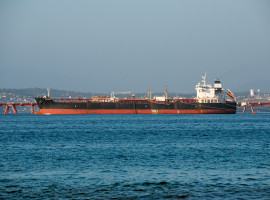
“There’s a quarantine right now in which sanctioned oil shipments — there’s a boat, and that boat is under U.S. sanctions, we go get a court order — we will seize it,” Rubio said on CBS’s Face the Nation. That’s “a tremendous amount of leverage” for the U.S. to press for change in Venezuela, he said.
It’s a moment Rubio has been building toward since growing up in a Cuban exile community in Miami known for anti-communist and anti-authoritarian fervour. His father joined an attempt to oust right-wing Dominican Republic dictator Rafael Trujillo in 1947, and a young Rubio role-played with his grandfather about overthrowing Cuba’s communist rulers, according to his 2012 autobiography An American Son.
A U.S. official said Rubio — who has spent his career criticizing Maduro and his predecessor, Hugo Chavez — would take the leading administration role.
While Trump prompted questions about how the U.S. would run Venezuela without a presence on the ground, Rubio suggested that would involve a continuing pressure campaign now focused on acting President Delcy Rodriguez.
“It’s running policy,” he told NBC. “We want Venezuela to move in a certain direction because not only do we think it’s good for the people of Venezuela, it’s in our national interest.”
Trump issued a warning on Sunday to Rodríguez, who had called for Maduro’s release. “If she doesn’t do what’s right, she is going to pay a very big price, probably bigger than Maduro,” he told the Atlantic magazine.
Delcy Rodríguez, Venezuela’s vice president, during a 2023 news conference at Miraflores Palace in Caracas. Photo by Carlos Becerra /Photographer: Carlos Becerra/Blo
Steeped in the region’s politics, Rubio seemed in line to become the top Latin America policymaker when Trump nominated him as secretary of state last year.
Even so, conflicting priorities within the administration over engaging with Maduro played out in the buildup to last week’s raid. The U.S. wanted him to accept Venezuelan deportees and U.S. companies sought to bolster energy production from Venezuela, an OPEC member.
Now Rubio appears to have come out on top of the administration’s internal debate over its approach to Latin America. At the same time, he has become a loyal Trump lieutenant, a decade after fighting him for the 2016 Republican presidential nomination.
From his early days as secretary of state, Rubio pressed Latin American governments to confront drug cartels, curb China’s influence and stop undocumented migration.
On Sunday, Rubio expanded on the administration’s strategy of relying on an oil “quarantine” to bring about change in Venezuela, backed by a large U.S. naval deployment. The U.S. already interdicted at least three large oil tankers in the Atlantic and Caribbean waters around Venezuela and surrounding countries in December.
“The important thing to point out is that the key to what that regime relies on is the economy fueled by oil,” he said on Face the Nation.
The U.S. blockade on sanctioned oil shipments remains in place “until we see changes that do not just further the national interest of the United States, which is number one, but also that lead to a better future for the Venezuelan people,” he said.
Trump suggested Saturday that U.S. oil companies would spend billions of dollars to rebuild Venezuela’s oil industry. Rubio said a global shortage of heavy crude could spur that transition.
“I haven’t spoken to U.S. oil companies in the last few days but we’re pretty certain that there will be dramatic interest from Western companies,” Rubio said on ABC’s This Week. “Non-Russian, non-Chinese companies will be very interested. Our refineries on the Gulf Coast of the United States are the best in terms of refining this heavy crude.”
“There will be tremendous interest — if it can be done the right way,” he said.
Rubio sidestepped a question on CBS on when Venezuela might hold elections as part of a transition to democracy.
“We’re going to make an assessment on the basis of what they do, not what they say publicly in the interim” and on “what they do moving forward,” he said.
— With assistance from Gabriella Borter, Jennifer A. Dlouhy and Kasia Klimasinska.
Share This:
More News Articles