Monday, 17 March 2025
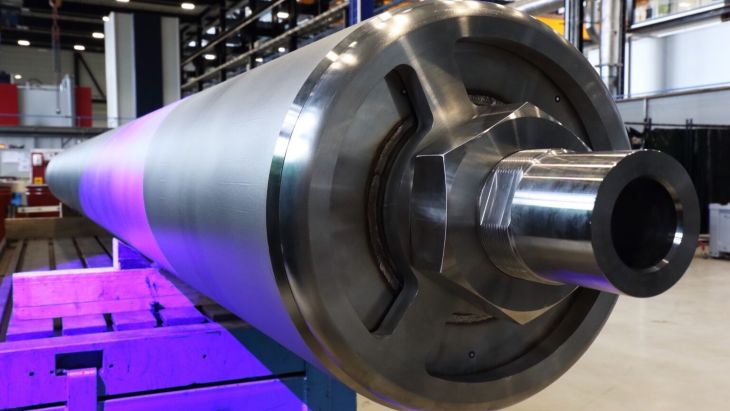
The project, under the UK Department for Energy Security and Net Zero’s (DESNZ) Energy Entrepreneurs Fund, began in December 2022. It has been instrumental in validating Deep Isolation’s patented borehole disposal technology for used nuclear fuel and high-level radioactive waste, the company said, elevating its technology readiness level (TRL) from TRL 3 to TRL 6, a significant milestone towards deployment.
“Moreover, AMRC’s assessment of UK manufacturing capabilities identified supply chain challenges, particularly in sourcing the canister shell. The team proposed solutions to reduce manufacturing barriers, leading to projected cost reductions and a clearer pathway for future production at scale,” the company said.
Using performance feedback, a second prototype has now been fabricated for additional testing which Deep Isolation said will be used “to further demonstrate the safety and feasibility of its disposal solutions, strengthening industry confidence and regulatory acceptance”.
Borehole disposal is a proposed method of managing used nuclear fuel and radioactive waste by encapsulating it in corrosion-resistant canisters placed within deep boreholes in suitable isolated rock formations, some 1-3 kilometres below ground. A 2023 study conducted by Deep Isolation for the UK’s Nuclear Decommissioning Agency found that such an approach would be both operationally and commercially suitable for a portion of the country’s inventory.
The prototype canister fabricated in the project is designed to encapsulate a used pressurised water reactor assembly for dry storage, transport, and final disposal. In parallel with the UK project, Deep Isolation said it has refined its performance models for long-term safety, leveraging corrosion resistance and post-closure gas migration studies, supported by data from a joint US Department of Energy-funded project. “These findings strengthen the case for deep borehole disposal as a scalable, retrievable, and regulatory-compliant solution,” the company added.
Deep Isolation CEO Rod Baltzer described the project as a “game-changer” for deep borehole disposal canisters. “It not only validates key aspects of our technology but also advances manufacturability, cost efficiency, and supply chain readiness – paving the way for future deployments,” he said.
“Developing a viable, cost-effective solution for nuclear waste disposal is a critical challenge, and this project has demonstrated the manufacturability and scalability of Deep Isolation’s innovative canister design,” said Charles Carpenter, head of research for AMRC’s Nuclear Manufacturing Group. “By collaborating with industry leaders, we’ve not only validated key technical aspects, but also identified pathways to strengthen the supply chain for advanced nuclear waste disposal solutions.”
According to DESNZ information about its 2022 funding announcement, developing a canister tailored to UK requirements would also give UK manufacturers an early-mover advantage in a global borehole disposal market, with the market for high-quality disposal canisters worth potentially over GBP100 billion over the next 20-30 years.