By
37 min ago 3 min read
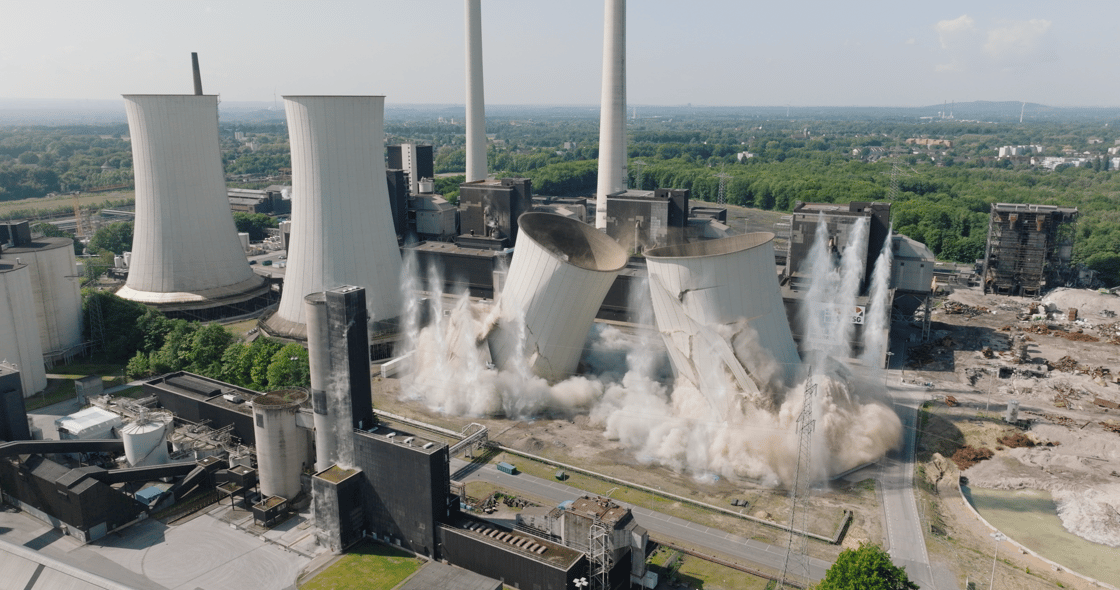
Uniper has started demolition at the Gelsenkirchen-Scholven coal-fired power plant to make way for a hydrogen-ready combined cycle gas turbine (CCGT).
Two 114-metre cooling towers at the site were destroyed on 9 May as the energy firm looks to install the 870MW “hydrogen-capable” CCGT.
Power generated by the new plant – due to begin operations using natural gas – is planned to be auctioned under a draft law aimed at paying energy providers to maintain backup power when renewable energy is insufficient.
A timeline for the plant’s operation has not been revealed or a switch to hydrogen.
In addition to the CCGT, Uniper intends to install an ammonia cracking demonstration with Thyssenkrupp Uhde, which could inform commercial plants in the port of Wilhelmshaven
Dr Arne Bayer, Head of Asset Development at Uniper, said the demolition paves the way for a “future-proof energy infrastructure” and demonstrates the firm’s commitment to Germany’s clean energy transition.
The demolition comes shortly after Uniper also secured preliminary approval for an 890MW CCGT at its Staudinger site in Hesse, Germany.
It comes as Germany prepares to of new gas-fired power generation capacity, which would require plants to begin operating on hydrogen by 2045.
Hydrogen gas power plants are also gaining interest for their ability to use stored renewable energy from curtailed wind during periods of low generation.
and recently opened calls for tenders for such plants.
However, think tank the Institute for Energy Economics and Financial Analysis recently warned that committing to the build-out of generating assets ahead of certain clean hydrogen demand could contribute to a €45bn($52.9bn) gap in Germany’s public finances.
IEEFA analyst Alasdair Docherty told H2 View current modelling effectively positioned hydrogen as baseload generation rather than backup or peaking capacity under Germany plans.
Gain access to the insights, data, and analysis trusted by hydrogen professionals worldwide.
With a H2 View subscription, you get:
- Unlimited access to 15,000+ articles
- Monthly digital magazine + H2 Review
- Exclusive interviews, webinars and reports
- Expert analysis shaping the hydrogen conversation