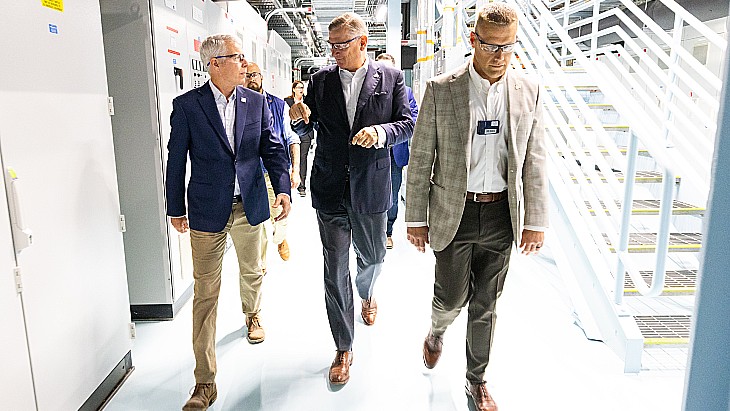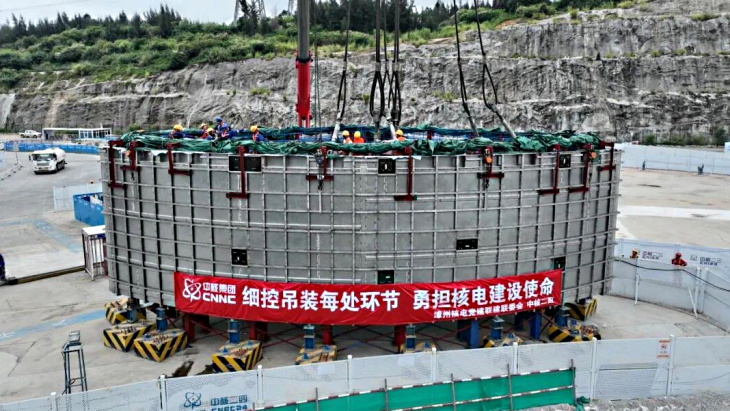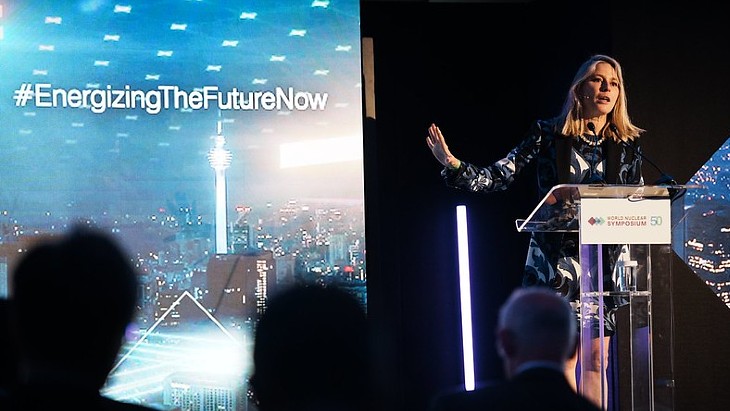
Over three days, 1,122 registered delegates from 59 countries explored the evolving role of nuclear energy in a rapidly changing world, with a clear message: Global momentum is with nuclear, so the time is now for our sector to lead with a bold mindset and deliver what the world demands – a secure, sustainable energy future.
A legacy of leadership and transformation
The Symposium’s commemorative reflections traced its journey from the first meeting in 1976, hosted by the Uranium Institute, to today’s expansive forum led by World Nuclear Association. .
This year marked a significant high point. The showed that 2024 was a record year, with nuclear reactors supplying more electricity than ever before – 2667 TWh – and avoiding 2.1 billion tonnes of carbon dioxide emissions (of coal equivalent generation).
While we were celebrating our 50th Symposium, many delegates were joining us for the first time. That in itself demonstrates how the industry has shifted its messaging and engagement, turning inside out, from speaking amongst ourselves to engaging influential external stakeholders. This Symposium wasn’t looking back, it was looking forward and outwards.
Listen to highlights from Symposium on the World Nuclear News podcast:
Finance and energy users signal demand for nuclear
Perhaps most striking was the significant engagement of the financial community. Banks, investors, and multilateral institutions were here in greater numbers than ever before (including the likes of the World Bank, UBS, Deutsche Bank, JP Morgan, and HSBC). At the Finance Summit they spoke of the unprecedented appetite for nuclear from investors and the opportunity ahead, but also of the need for standardisation and de-risked financial models. For the first time in decades, nuclear is being discussed in boardrooms and investment committees as a serious growth sector. That shift cannot be overstated.
On the demand side, the Energy Users Summit highlighted how diverse industries – from heavy industry to high-tech – are actively looking to nuclear. A landmark moment came when . This signals a powerful alignment between the digital economy and nuclear energy, and a partnership that can accelerate deployment and deliver on climate goals.
Fuel cycle: Investment decisions must be made now
At the same time, we cannot rapidly expand nuclear capacity without also investing in the resilience of the fuel cycle, supply chains, and workforce.
The , its 22nd edition, reinforced the urgency of action in the front end. In its reference scenario, nuclear capacity is projected to double to 746 GWe by 2040, with uranium requirements rising to 150,000 tU.
Primary uranium now meets 90% of requirements, and while resources in the ground are sufficient, new mines must be developed to bring this material into supply. Conversion and enrichment services face regional constraints shaped by geopolitics, and fuel fabrication capacity must expand – not only to meet growing demand, but also to support new reactor types. The choices made in the next few years will determine whether supply keeps pace with ambition.
Partnership and delivery
A recurring theme across the Symposium was the need for deeper, broader partnerships to turn ambition into reality. Delivery at scale cannot rest on isolated projects or single actors; it will depend on governments, industry, financiers, and energy users working together.
Delegates spoke of moving from projects to programmes, from prototypes to fleets. Whether through regional cooperation, supply chain integration, or joint financing models, partnership is the essential ingredient. The Symposium showed clearly that nuclear’s future will be written not by individual players, but by those willing to collaborate and deliver together.
Final thoughts
World Nuclear Symposium 50 was not just a celebration of history – it was a turning point. With mounting pressure to decarbonise, secure energy supplies, and meet growing electricity demand, nuclear energy is stepping into a new era of prominence.
The Summits and Symposium did not simply ask questions; they provided consistent, credible answers. They pointed beyond what nuclear does, to whom it serves, why it matters, and – most urgently – how and when it must be delivered.
The last 50 years proved the essential value of nuclear. The next 25 will decide its impact. The conversations in London made one thing clear: the world is asking for nuclear energy, and now is the time for the nuclear industry to answer.