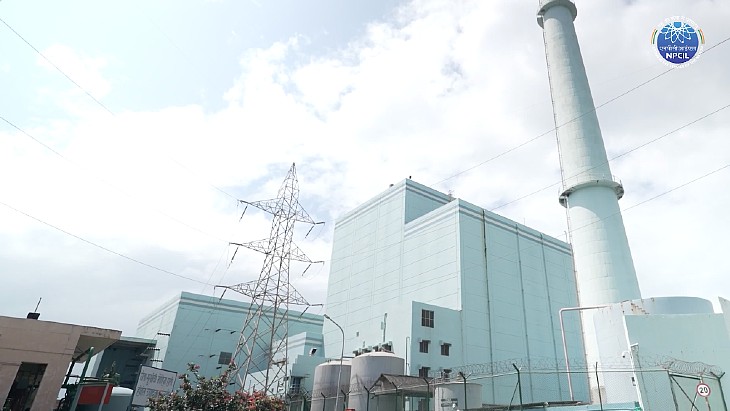
Tarapur 1 and 2 are BWR units commissioned at the site in Maharashtra in 1969 as India’s first commercial nuclear power plant. Built by GE on a turnkey contract, the units were originally rated at 200 MWe but were subsequently downrated to 160 MWe (gross). They underwent six months’ refurbishment in 2005-06, and have both been offline since 2020 for major refurbishment work.
The Atomic Energy Regulatory Board announced last month that it had approved the restart and continued operation of unit 2 at the Tarapur power plant in Maharashtra on 7 May following the completion of the refurbishment undertaken by Nuclear Power Corporation of India Limited (NPCIL).
The refurbishment included the complete replacement of reactor coolant recirculation piping with forged piping and fittings made of advanced corrosion-resistant stainless steel, the regulator said, as well as safety upgrades including the commissioning of the reactor containment filtered venting system and the alternate cooling water system. During the extended outage, inspections of critical reactor components such as reactor pressure vessel welds were carried out as part of the assessment of the unit’s ageing status and residual operating life. “The evaluations have shown that the reactor can continue safe operation with the normal maintenance and surveillance programme,” the AERB said.
The regulator has given permission for the unit – known as TAPS (for Tarapur Atomic Power Station) unit 2 – to operate for a further 10 years. It issued a permit for TAPS unit 1 to restart after its refurbishment last December: that unit is now operating at its rated power of 160 MWe.
NPCIL said, in a post on social media site X, that the reconnection of both units was “a major milestone in India’s nuclear power programme … this achievement reaffirms the enduring legacy of India’s first nuclear power station and reflects the dedication, technical expertise and unwavering commitment of Team NPCIL. For over five decades, TAPS-1 & 2 have contributed to the nation’s energy security and development while providing clean, reliable and low-carbon electricity. The successful operation of both units marks another significant milestone in India’s nuclear energy journey and demonstrates the strength of indigenous capabilities, engineering excellence and a robust safety culture. As India advances towards a cleaner and more secure energy future, Tarapur continues to stand as a symbol of innovation, resilience and technological excellence”.
As well as the BWR units, the Tarapur Atomic Power Station site is home to two operating Indian-designed pressurised heavy water reactors, Tarapur 3 and 4, connected to the grid in 2005 and 2006, respectively. It has also been proposed as the site for the construction of the lead units of two Indian-designed small modular reactors: the BSMR-200, a 200 MWe reactor based on pressurised water reactor technology, and the 55 MWe SMR-55.