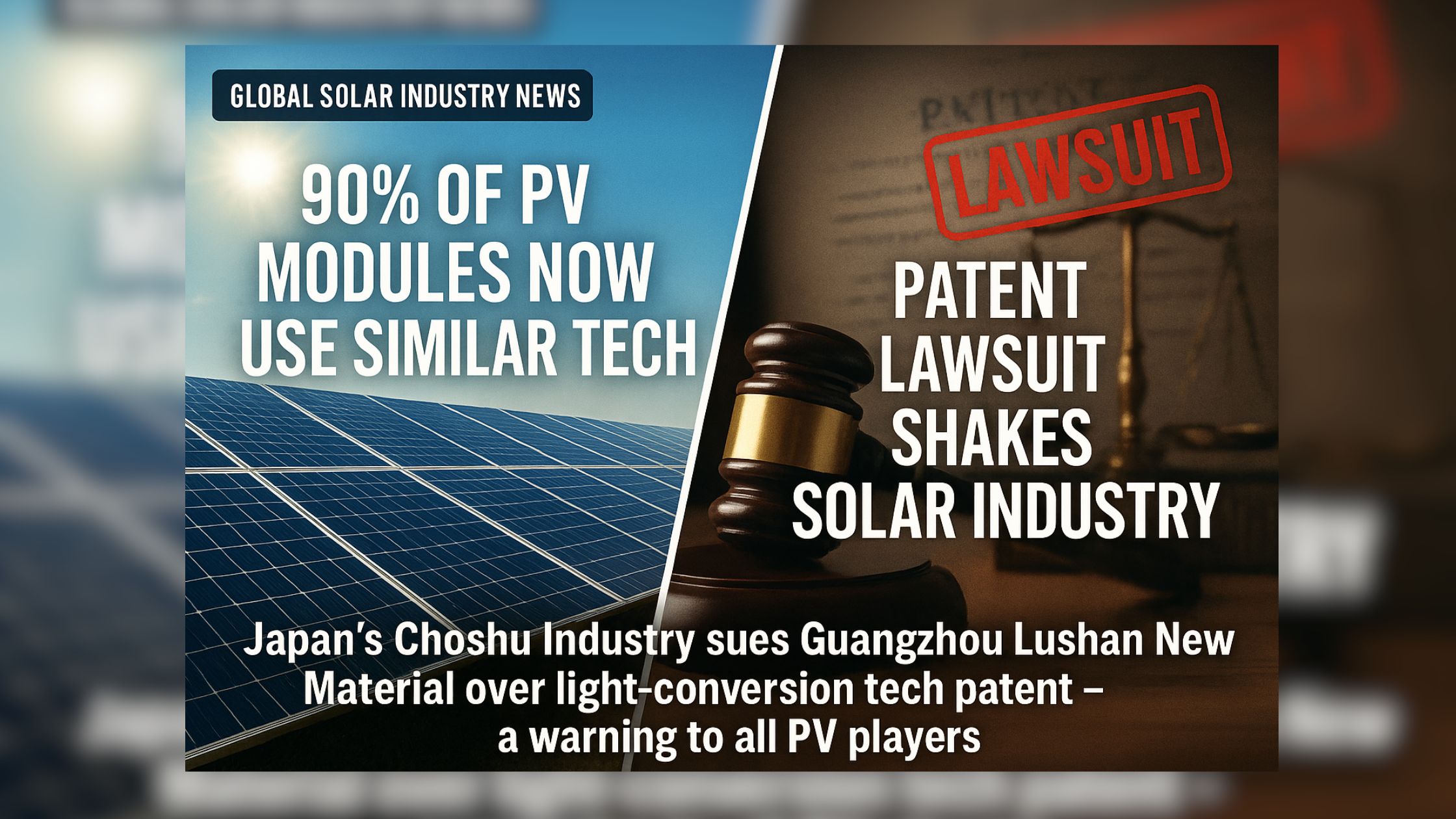
Against a backdrop of increasing homogenous competition in the photovoltaic (PV) industry, intellectual property (IP) protection has become a prominent issue. Industry data indicates that nearly 90% of PV modules now use TOPCon technology, resulting in a continuous increase in product similarity. At the SNEC International Solar Photovoltaic and Smart Energy Conference & Exhibition in Shanghai, leading companies like GCL Technology and Trina Solar jointly issued a call to “strengthen IP protection within the industry.” This initiative was further amplified at a seminar on the digital and IP development of the PV industry chain, hosted by the China Photovoltaic Industry Association, where experts collectively concluded that “IP protection in the PV industry is at a critical and urgent juncture.”
On the policy front, the Ministry of Industry and Information Technology’s newly released “Conditions for the Photovoltaic Manufacturing Industry (2024 Edition)” explicitly identifies IP protection as a central focus, mandating that companies establish robust IP compliance management systems. Market practices indicate that patent disputes have become commonplace, and upholding rights through legal means is now an industry consensus. According to statistics, all of the top six domestic module manufacturers have launched patent enforcement actions, with overseas patent disputes also on the rise.
Against this backdrop, a patent lawsuit concerning core technology for PV encapsulants is drawing attention. The Japanese company, Choshu Industry Co., Ltd. (hereinafter “Choshu Industry”), recently sued Guangzhou Lushan New Material Co., Ltd. (hereinafter “Lushan New Material”) and its related subsidiaries for alleged infringement of its invention patent and imitation of its protected technical solutions. A Chinese intellectual property court has accepted and docketed the case.
The patent, which covers light-conversion organic compounds and their use in PV encapsulants, was filed more than a decade ago by a well-known Japanese multinational corporation. The patent document discloses a specific molecular structure, with a portfolio that covers key markets including Japan, China, and the United States. The technology has been in use in Japan for ten years, and some Chinese companies have legally obtained licensing rights. Public records indicate that the core patent has been challenged by multiple invalidation requests in China, all of which were rejected by the China National Intellectual Property Administration, which ultimately affirmed the patent’s validity.
Industry experts point out that in today’s deeply globalized PV industry, technological innovation and market strategies are no longer confined by national borders, creating a highly integrated international industrial ecosystem. In this environment, companies must not only adhere to domestic IP regulations but also strictly comply with the IP laws of every country in which they operate. Experts warn that any company deliberately infringing on IP rights will face serious consequences. Such actions could not only worsen the international perception of China’s PV industry but also lead to more frequent trade friction and technical barriers. Ultimately, this would harm the collective interests and long-term development of all Chinese companies in the global market, negatively impacting the entire industrial ecosystem and international cooperation.
Subscribe to get the latest posts sent to your email.