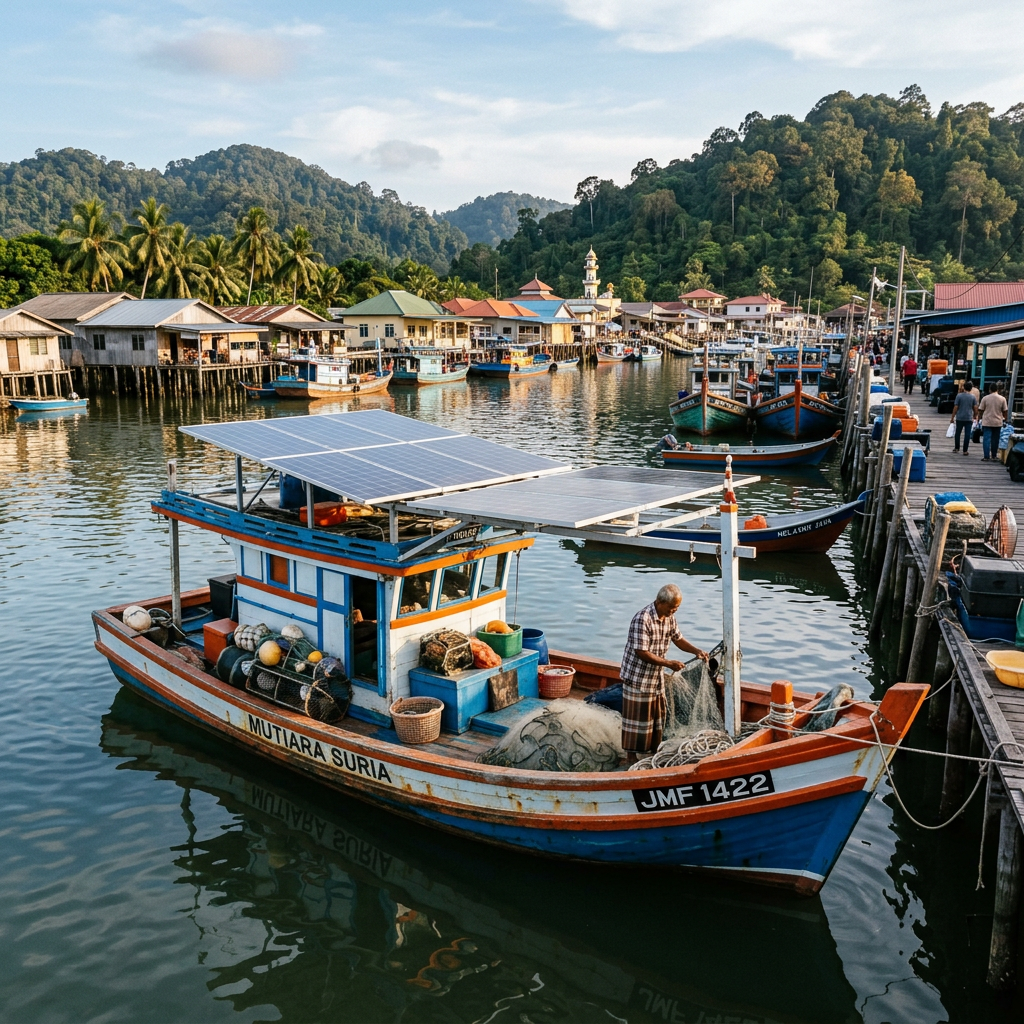
Bank Islam Malaysia Berhad has introduced a new sustainable initiative in Mersing to support local fishermen by upgrading 25 boats owned by the B40 income group. The project focuses on installing solar photovoltaic (PV) systems on these boats, aiming to reduce dependence on diesel fuel and promote the use of clean energy in the fishing sector.
The initiative is part of the bank’s ongoing social finance efforts, which are designed to improve the livelihoods of lower-income communities. According to Mohd Zikri Mohd Shairy, the project is intended to shield fishermen from the uncertainty of global fuel prices. For many small-scale fishers, fluctuations in diesel costs directly affect their daily earnings, making income unstable. By shifting to solar energy, the fishermen can manage their expenses better and gain more predictable financial outcomes.
The solar PV systems installed on the are used to power essential equipment such as navigation systems, lights, and communication devices. Earlier, these functions depended entirely on diesel engines or generators, which increased operational costs and required frequent maintenance. With the introduction of solar technology, fuel consumption is reduced, leading to lower running costs and improved efficiency.
Apart from financial benefits, the project also contributes to environmental protection. Reduced use of diesel helps cut carbon emissions and lowers the risk of oil spills in the surrounding waters. This is particularly important for coastal areas like Mersing, where marine ecosystems play a key role in supporting local livelihoods. The move toward renewable energy is expected to support cleaner fishing practices while preserving the natural environment.
The initiative also reflects the bank’s commitment to environmental, social, and governance (ESG) goals. By focusing on the B40 group, the project aims to strengthen economic resilience among vulnerable communities. The cost savings from reduced fuel use can help fishermen allocate more resources to household needs, including education and daily expenses.
Local residents and community leaders have responded positively to the project, viewing it as a practical step toward combining traditional livelihoods with modern technology. The initiative demonstrates how renewable energy can be applied in sectors like fishing without disrupting existing practices. As the program progresses, it may encourage similar efforts in other coastal regions across Malaysia, showing that sustainable solutions can also support economic growth and community development.
Subscribe to get the latest posts sent to your email.