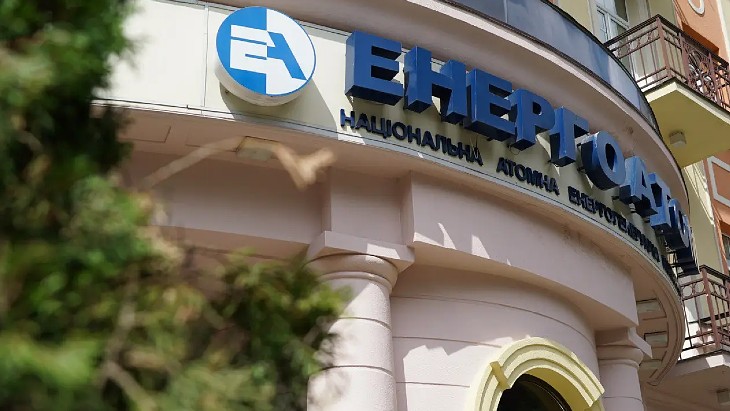
This would “would widen the pool” from which the next CEO can be drawn, with the board also authorising the retention of an international executive search firm to “support the merit-based selection of the Chief Executive Officer, Chief Nuclear Officer, Chief Financial Officer, and other positions appointed by the Supervisory Board”.
It added: “A merit-based selection process, conducted free of interference, is the only way to attract candidates of the calibre this Company requires, and the only basis on which Energoatom’s international partners – whose financing and operational support are essential – will sustain their engagement.”
At its meeting on 8 May, this Supervisory Board – which held its inaugural meeting in February – received information from the National Anti-Corruption Bureau of Ukraine, it said, after which it: directed an internal investigation be opened; suspended “several company employees” pending the investigation; and outlined an organisational restructuring to take place by 16 June, including “reorganisation of specific structural units of the Company responsible for physical protection and economic security”.
In a message to Energoatom’s 30,000-plus staff, the Supervisory Board praised the way they had maintained safe operation of the nuclear fleet during four years of war and their successful transition away from Russian nuclear fuel – as well as the financial contribution Energoatom had made to the country’s defence.
The board added that Energoatom staff “have done all of this notwithstanding a series of unacceptable behaviours and harmful actions in recent years that have undermined the compliance culture on which a nuclear operator depends. The Supervisory Board is determined to bring these to an end, restore integrity, and rebuild that culture … Energoatom’s employees deserve governance worthy of their service, and this Supervisory Board is determined to provide it”.
The seven-member Supervisory Board of Energoatom is chaired by independent member Rumina Velshi, former CEO of the Canadian Nuclear Safety Commission. Another of the four independent members, Patrick Fragman, former CEO of Westinghouse, is vice chairman. The Supervisory Board’s remit is to “oversee and regulate the activities of the executive body and ensure effective management and strategic development” and “establish a professional and independent body composed of individuals with relevant experience in the public and/or private sectors”.
Ukraine has 15 reactors, capable of generating half its electricity, at four existing nuclear power plants, including the six-unit Zaporizhzhia plant which has been under Russian military control since early March 2022. The country has plans for at least nine Westinghouse AP1000 units and has also been considering potential for small modular reactors in the future.