By
The US and Iran have been locked in a stalemate since agreeing to a ceasefire in April. They’ve been unable to reach a deal to end a monthslong war that has killed thousands of people and sparked a global energy crunch.
Get the Latest US Focused Energy News Delivered to You! It’s FREE:
Tensions remain high as Iran maintains a tight grip on shipping through the Strait of Hormuz and the US refuses to lift its naval blockade on Iranian-linked vessels. President Donald Trump has threatened to resume strikes, while Iran has warned that its retaliation would extend beyond the Middle East.
There are big gaps between their demands for ending the hostilities, although Iran has signaled that those differences may have narrowed. Both parties seem to be circling a short-term agreement that addresses the Hormuz logjam while leaving thornier subjects, such as the future of Iran’s nuclear program, to be negotiated more fully at a later date. Here are some of the key hurdles to a lasting, comprehensive peace settlement.
The Strait of Hormuz
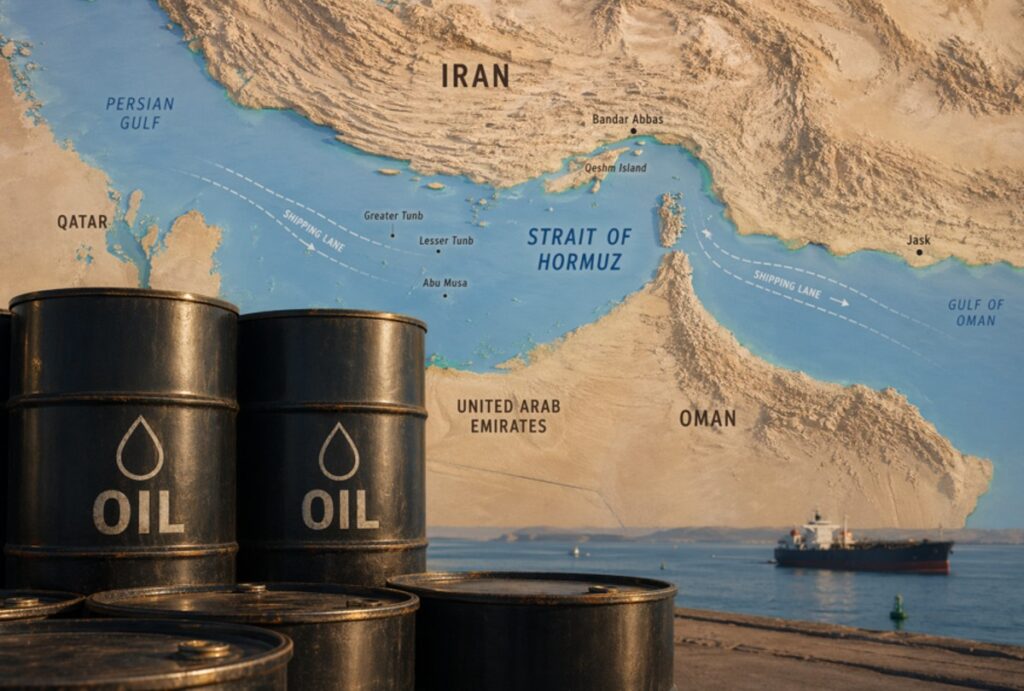
Situated between Iran to its north and Oman to the south, the Strait of Hormuz normally handles around a fifth of the world’s oil and liquefied natural gas supply. It’s a crucial trade route for other commodities as well.
Iran throttled traffic through this waterway after the war began on Feb. 28, sending energy prices soaring and piling inflationary pressure on governments and consumers worldwide. It continued to move its own crude exports through the strait and has only allowed certain other vessels to cross, often after talks for safe passage and sometimes after requesting payments of as much as $2 million.
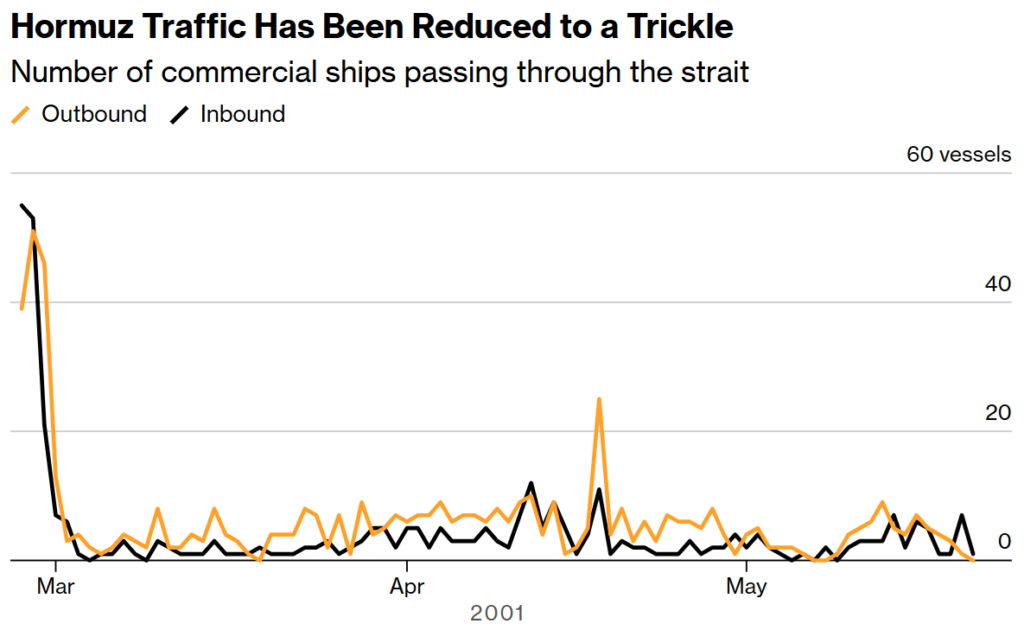
Note: Daily count of visible commercial ships based on AIS signals. Total transits in both directions observed until early May 21.
Source: Vessel tracking data from various platforms compiled by Bloomberg
The US has tried to apply economic pressure on Iran to restore Hormuz as a toll-free zone, imposing a blockade on ships that have called at or are heading to Iranian ports. That’s led to a standoff: Iran has said that it won’t reopen the strait until the US blockade ends, while Trump has insisted that the blockade will remain in place until a deal is signed.
Iran is unlikely to give up its leverage over the waterway — and by extension the global economy — easily or without concessions from the US. It has repeatedly stated that it wants to maintain control of the strait in the longer term. The Iranian ambassador to France, Mohammad Amin-Nejad, said that Iran is discussing with Oman how to set up some form of permanent toll system.
Iran’s nuclear program
The US wants Iran to be stripped of its nuclear capabilities, except for the power plant at Bushehr, so that it can’t produce an atomic bomb. Iran has long denied it wants to develop nuclear weapons — a claim met with skepticism by some Western governments — and insists that it has a right to enrich uranium for civilian purposes.
The Trump administration has pushed for a fixed-term moratorium on Iran’s uranium enrichment activities. Iran is open to a shorter suspension than the 20 years proposed by the US, the Wall Street Journal reported, citing people familiar with the matter.
As well as future enrichment, there’s also the issue of Iran’s existing stockpile of enriched uranium. The last time the United Nations nuclear watchdog was able to verify Iran’s reserves was prior to the US and Israeli strikes in June 2025. Inspectors from the International Atomic Energy Agency determined that Iran had amassed 441 kilograms (972 pounds) of uranium enriched to 60%, which, if processed further, would have been enough material for around a dozen nuclear bombs.
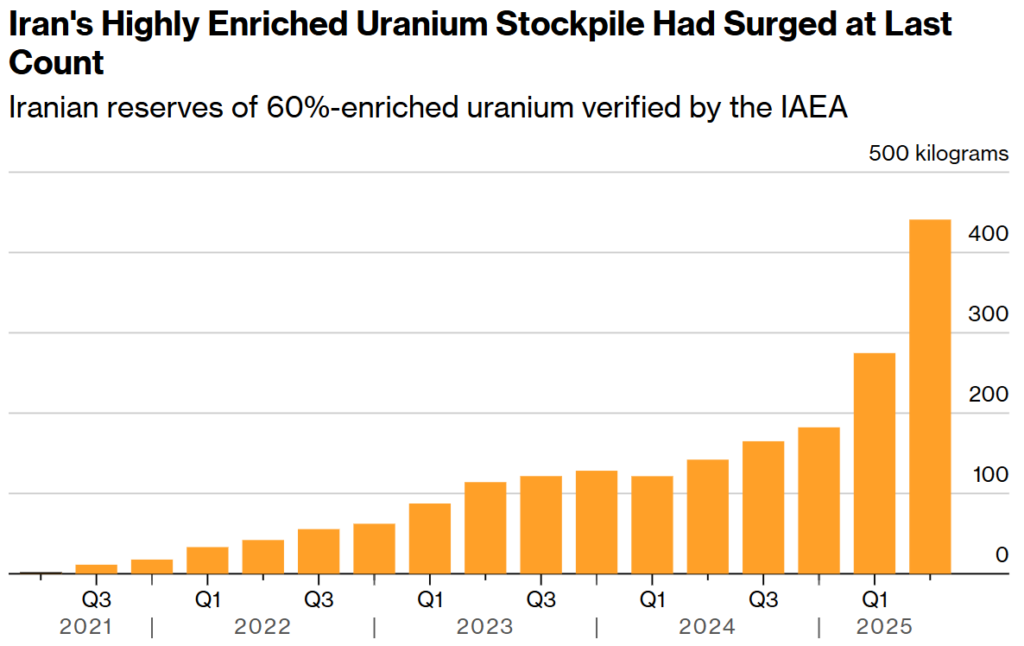
Source: International Atomic Energy Agency data compiled by Bloomberg
The US says that Iran must surrender its enriched uranium. There is precedent for this: Iran transferred material to Russia as part of the landmark nuclear deal struck in 2015. But Iran’s Supreme Leader Mojtaba Khamenei has issued a directive that the country’s near-weapons grade uranium shouldn’t be sent abroad, according to Reuters, which cited two unnamed Iranian people familiar with the matter.
Israel’s Prime Minister Benjamin Netanyahu has said that the US-Israeli war with Iran isn’t over because this nuclear material needs to be removed and any remaining enrichment capacity dismantled. An agreement that doesn’t meet these criteria risks renewed Israeli military action.
The Lebanon conflict
Iran has insisted that an agreement to end the war also stops the fighting in Lebanon, where Israel has been waging a parallel war against Iran-backed militant group Hezbollah.
The US has pursued a separate diplomatic track to try to deescalate the Lebanon conflict. It brokered a tenuous truce between Israel and Lebanon that has been in place since mid-April. The two sides have met for talks in Washington and further negotiations are scheduled for June. Hezbollah isn’t party to the discussions.
The talks have yet to yield a breakthrough, and Israel and Hezbollah have carried out strikes since the ceasefire was announced. One of Israel’s key demands is that Hezbollah disarm. Hezbollah has rejected attempts to dismantle its military assets, and Lebanon’s government has failed to disarm the group in the past.
Sanctions, ballistic missiles and militias
Iran’s other conditions for a peace deal include a lifting of sanctions and the release of its frozen funds. The US offered concessions in these areas in a proposal in May, Axios reported. Iran has also made demands that are likely non-starters, such as compensation for war damage and a withdrawal of US combat forces from the region.
The US has pushed for Iran to limit its ballistic missile program. These weapons pose a conventional military threat that can reach beyond the Middle East and could be used as a delivery system for a nuclear warhead, if Iran wanted to develop such capabilities.
The Trump administration has also demanded that Iran stops arming and funding militias in the region, such as Hezbollah in Lebanon and the Houthis in Yemen, both of which are designated terrorist organizations by the US. Iran views its network of proxies as part of an “axis of resistance” to project its influence in the Middle East.
Trump may be willing to compromise on his maximalist demands and leave some key issues unresolved as he comes under political and economic pressure to find an off-ramp from the war. The conflict pushed US gasoline prices above $4.50 a gallon for the first time since 2022, squeezing consumers ahead of the midterm elections later this year.
Share This:
More News Articles