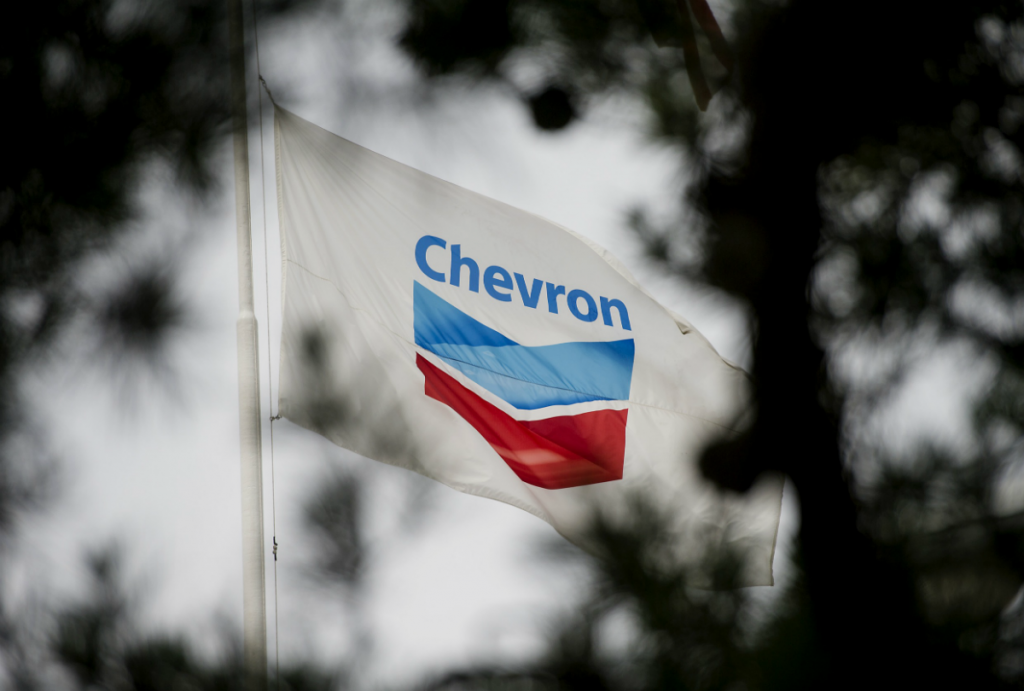
(Reuters) – Chevron will allow rival oil producers to buy a chemical technology it developed to boost production from shale wells, the company said on Wednesday, as part of a broader push to increase U.S. oil output.
The move comes as the U.S. shale industry, which transformed global energy markets nearly 20 years ago through the fracking boom, grapples with declining well productivity, which experts say is pushing companies either to drill more wells or adopt new technology to sustain output.
Get the Latest US Focused Energy News Delivered to You! It’s FREE:
Chevron said it will license its chemical surfactants technology to chemicals manufacturer ZL Chemicals, which will oversee the sales process to other oil companies.
The chemicals that are being licensed to ZL have improved production from newly drilled wells by up to 20% during the first year, and also reduced production decline in existing wells by between 5% and 8%, Chevron said.
“With constraints on energy in the world today, there’s a call on oil and gas companies to get more energy to market,” Chevron’s Chief Technology and Engineering Officer Ryder Booth said in an interview. “This is a way that we can answer the call to help boost production.”
U.S. President Donald Trump recently urged oil companies, including Chevron and ExxonMobil, to increase oil output and help bring down gasoline prices during the U.S.-Israeli war with Iran.
IMPROVING OIL RECOVERY
Chemical surfactants can help reduce damage to the shale formation from the fracturing process and act similarly to soap, cleaning out particles that can get lodged in cracks in the shale rock and prevent oil from flowing. The chemicals then aid the separation of the oil from the underground rock so that it can more easily reach the surface.
During a recent Reuters tour of a Chevron technology lab in Houston, researchers showed a glass vial of crude oil that clung to the sides of the bottle when shaken around.
In another vial that contained both crude and chemical surfactants, the oil flowed easily through the bottle without sticking to the glass, and the oil eventually separated from the surfactants, illustrating how the process can help oil detach from shale rock.
Industry experts say the oil recovery rate in shale is just 10%, with the industry leaving the remaining 90% in the ground because technology is not yet advanced enough to squeeze the rest of the oil out of tight, compacted rock.
Improving the recovery rate is critical because the best drilling areas have been tapped out over time.
“We’re at the point where big gains are not there anymore,” said Bob Fryklund, chief upstream strategist at S&P Global Energy, though he added that technology advancements have helped the oil industry consistently beat forecasts.
In addition to its own wells, Chevron also holds a royalty interest in some wells in the Permian Basin that are operated by other companies. Licensing the previously proprietary chemical technology means the company could benefit from higher oil production across the top U.S. oilfield.
“This helps unlock production at a bigger scale beyond just the Chevron-operated areas,” Booth said.
The company will begin testing a new version of the chemicals technology in the third quarter, he added.
Reporting by Sheila Dang in Houston; Editing by Nathan Crooks and Sonali Paul
Share This:
More News Articles