By
19 min ago 3 min read
Australian clean tech firm MCi Carbon has completed low-carbon cement trials with construction materials company Boral.
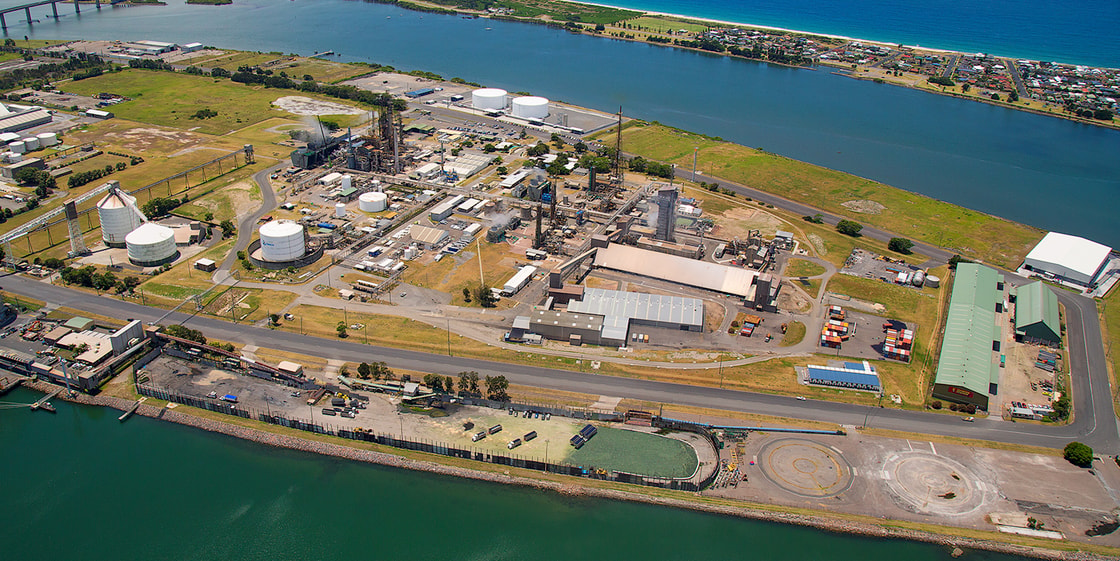
Material was produced at MCi Carbon’s Myrtle demonstration plant in Newcastle – which officially opened last month – and Boral used it in concrete field trials at its Maldon Cement Works at its Maldon Cement Works in New South Wales (NSW).
SmartCrete Cooperative Research Centre led the project, with Transport for NSW and University of Technology Sydney as partners.
The project investigated new supplementary cementitious materials for potential use in lower-carbon concrete for infrastructure applications.
Concrete produced for the trial incorporated a low-carbon cement material ‘Pozzlock’ – a synthetic pozzolan.
In the mineral carbonation process, carbon dioxide reacts with mineral-rich feedstocks to form stable carbonates while generating a cementitious material that can partially replace high-emissions clinker in concrete. Each tonne of MCi cementitious material can potentially avoid approximately 0.5 tonnes of CO2.
The Myrtle facility provides a platform for scaling MCi Carbon’s technology from pilot research to industrial deployment.
Marcus Dawe, Founder and CEO of MCi Carbon, said producing Pozzlock is a critical step in commercialising at scale.
“What’s particularly significant about this project is how it brings together industry, research and government to demonstrate how innovation in concrete can be delivered in practice. It’s a strong example of how new low-carbon materials can be validated and integrated into existing construction processes, accelerating their pathway to adoption,” he said.
Ali Nezhad, Head of Sustainability and Innovation at Boral, said decarbonising its cement manufacturing operations is a key focus. He said the trial aligned with work developing low-carbon supplementary cementitious materials, such as calcined clay.
Cement has long been viewed as one of the world’s most difficult industries to decarbonise. Responsible for around 8% of global CO2 emissions, it sits alongside steel and chemicals as a sector where deep emissions reductions cannot be achieved through electrification alone.
Progress is being made though. Thailand has reduced carbon dioxide equivalent (CO2e) emissions by more than 3.8 million tonnes since 2019 through the that requires less clinker, according to the Thai government.
For many producers, carbon capture is beginning to represent more than a compliance exercise.
Each tonne of cement manufactured generates approximately 0.9 tonnes of CO2, creating one of industry’s largest and most consistent sources of concentrated CO2.
Synthetic fuels have developed into one of the most promising markets. E-methanol, e-kerosene and other synthetic fuels are produced by combining captured CO2 with renewable hydrogen generated through electrolysis.
As investment accelerates across sustainable aviation fuel and low-carbon shipping fuels, demand for concentrated industrial CO2 is expected to grow alongside electrolyser capacity.
Read more on cement and CCUS in the August edition of gasworld Global