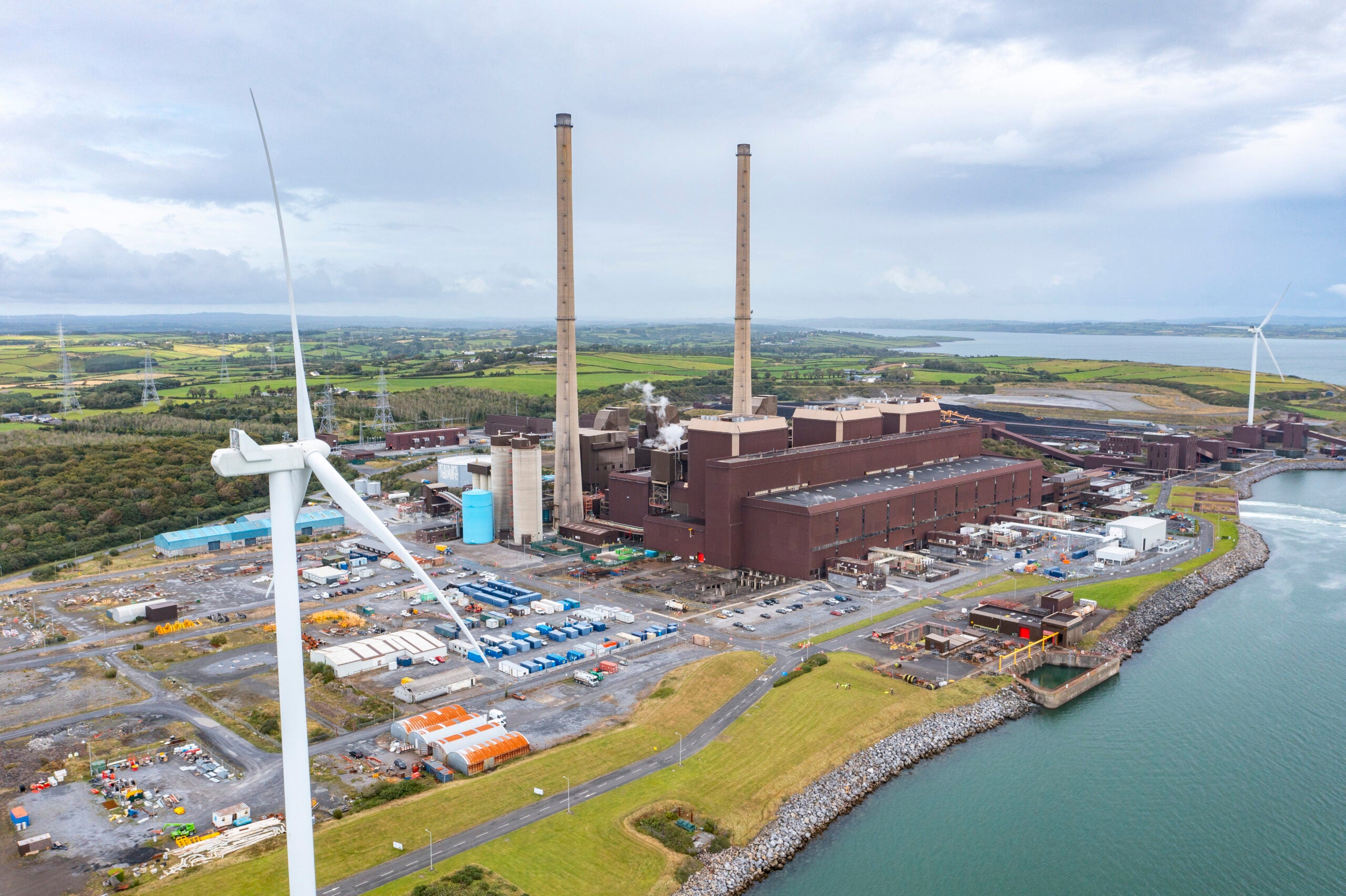
The Department of Energy (DOE) has issued an emergency order to delay the closure of Consumer Energy’s 1,560-MW J.H. Campbell coal-fired power plant in West Olive, Michigan, citing urgent reliability concerns for the Midcontinent Independent System Operator (MISO) grid as the Midwest braces for peak summer electricity demand.
The by Energy Secretary Chris Wright, compels Consumers Energy and MISO to keep the three-unit subcritical coal-fired facility operational through Aug. 21, 2025—three months past its planned May 31, 2025, shutdown. Unlike most recent 202(c) emergency orders, which like hurricanes or extreme weather and focused on short-term generation dispatch actions, Wright’s order preemptively delays a scheduled coal retirement amid warnings of tight reserve margins in the Midwest.
The order—the first of its kind in the mainland U.S. in recent history—comes a week after Wright invoked Section 202(c) to compel the Puerto Rico Electric Power Authority (PREPA) to dispatch more than 50 fossil-fueled generation units and accelerate transmission corridor vegetation clearing after two major blackouts underscored the island’s acute reliability crisis. As , those May 16 directives followed a full island-wide outage and warned that without immediate intervention, Puerto Rico could face up to 135 days of forced load shedding this summer.
According to the order, the emergency action follows warnings from the North American Electric Reliability Corporation (NERC), which in its 2025 Summer Reliability Assessment of operating reserve shortfalls, particularly during August and periods of high demand or low resource output.
MISO, acknowledged the elevated risk “due to the potential for extreme weather events and the continued decline in accredited capacity.” However, it anticipates adequate resources to serve summer demand. Peak demand could reach nearly 123 GW, with about 138 GW of regularly available generation expected across the MISO footprint, it said.
Consumers Energy earlier this month also said it is “prepared to deliver safe, reliable and affordable power to customers across the region throughout the summer.” The utility emphasized that its “integrated energy strategy—featuring a balanced mix of generation sources, preparation and customer programs—ensures that homes and businesses stay powered during peak demand periods.” It added: “Consumers Energy’s forward-looking supply plan features a robust mix of flexible generation resources that continue to evolve through strategic investments, like the acquisition of the Covert facility and recent expansion of the Zeeland Generating Station. We will also continue the operation of the Jackson Generating Station and the Karn 3 and 4 combined cycle units.”

Mandatory Operation and Dispatch Instructions
However, the DOE in its order noted that Michigan has retired about 2,700 MW of coal-fired generation, while its nuclear generation has declined with the decommissioning of Big Rock Point in 1997 and Palisades in 2022. While Palisades is scheduled to restart later in 2025, it will not be available for the summer peak. Campbell’s “retirement would further decrease available dispatchable generation within MISO’s service territory, removing additional such generation along with the other 1,575 MW of natural gas and coal-fired generation that has retired since the summer of 2024,” the order said.
“MISO’s Planning Resource Auction Results for Planning Year 2025-26, released in April 2025, note that for the northern and central zones, which includes Michigan, ‘new capacity additions were insufficient to offset the negative impacts of decreased accreditation, suspensions/retirements and external resources,’” the order notes. “While the results ‘demonstrated sufficient capacity,’ the summer months reflected the ‘highest risk and a tighter supply-demand balance,’ and the results ‘reinforce the need to increase capacity.’”
The order compels both MISO and Consumers Energy to keep the Campbell plant operational and available for dispatch throughout the emergency period. “MISO and Consumers Energy shall take all measures necessary to ensure that the Campbell Plant is available to operate,” it states.
‘Economic Dispatch’
To limit cost impacts, the DOE further instructs MISO to “take every step to employ economic dispatch of the Campbell Plant to minimize cost to ratepayers.” That generally means that while the plant will not be expected to run continuously, it must be ready to generate power whenever needed. Economic dispatch allows grid operators to prioritize the use of the plant only when it is more cost-effective than alternatives, helping reduce financial strain on consumers.
While authorizing emergency use, the order also acknowledges potential conflicts with environmental rules. “Operation is limited to the hours necessary to meet the emergency and serve the public interest,” it says, and the plant must comply with environmental laws “to the maximum extent practicable while operating consistent with the emergency conditions.”
Under the order’s timeframe, MISO will be expected to report daily to the DOE on the plant’s operational status and compliance and submit a full update by June 15 outlining all steps taken to ensure availability, environmental mitigation, and any operational issues. Consumers Energy, meanwhile, is directed to pursue cost recovery through the Federal Energy Regulatory Commission (FERC). The DOE explicitly noted that “Consumers Energy is directed to seek necessary tariff revisions or waivers at the Federal Energy Regulatory Commission (FERC) for cost recovery, as allowed under the Federal Power Act.”
According to the DOE, the move is in line with President Trump’s of a national energy emergency. “It will ensure the power generation availability in the region does not dip below 2024 capacity levels,” the agency said on Friday.
“Today’s emergency order ensures that Michiganders and the greater Midwest region do not lose critical power generation capability as summer begins and electricity demand regularly reach high levels,” Secretary Wright said. “This administration will not sit back and allow dangerous energy subtraction policies to threaten the resiliency of our grid and raise electricity prices on American families.”
—Sonal Patel is a POWER senior editor (, ).